
Robert Torrens
Anglo-Irish Royal Marine, economist, and chair of South Australian Colonisation Commission
About Robert Torrens
Lived 1780 – 1864 (aged 83–84). Robert Torrens was a British economist, politician, businessperson, army officer and political economist.
Robert Torrens (1780 – 27 May 1864) was a Royal Marines officer, political economist, part-owner of the influential Globe newspaper, and a prolific writer. He also chaired the board of the London-based South Australian Colonisation Commission created by the South Australia Act 1834 to oversee the new colony of South Australia, before the colony went bankrupt and he was sacked in 1841. He was chiefly known for championing the cause for emigration to the new colony, and his name lives on in Adelaide's main river, the Torrens, the suburb of Torrensville and a few other places.
He is sometimes referred to as Colonel Robert Torrens, but his final army rank is disputed in various sources. His son, Sir Robert Richard Torrens, spent many years in South Australia, even serving for a short time as the state Premier, and became known for his land reform.
Early life and family Torrens was born in Hervey Hill, Derry, Ireland, the son of Robert Torrens of Hervey Hill and his wife Elizabeth, née Bristow. He married Esther Sarah, née Serle, in September 1820.
Military career Torrens entered the Royal Marines in 1796. He achieved renown in 1811 by overseeing the defence of the Baltic island of Anholt against superior Danish forces in the Walcheren Expedition, during which he was severely wounded and was awarded the title of brevet major for his bravery. On the 200th anniversary of the battle of Anholt, the sword presented to Torrens was purchased by the Royal Marines Museum.
After divesting the island in August 1812, the garrison was redeployed to Northern Spain in the winter of 1812 with Major James Malcolm, alongside Spanish forces. Torrens returned to London on 31 August, however, and was ordered to report to Woolwich Divisional Headquarters. Although the Dictionary of National Biography (1885-1900) makes reference to his being "appointed Colonel of a Spanish Legion", this claim has yet to be substantiated by other sources. There is a letter dated 16 January 1813, co-signed by Torrens and Edward Nicolls, requesting that Torrens not be seconded to the Spanish army, but that Nicolls should take his place. The outcome is unclear, but it appears that a Capt. Baillie went instead.
Torrens was subsequently appointed the officer commanding the Marines on HMS Blenheim, and performed this duty from 23 June 1813 to 11 January 1814. His final deployment was off the Low Countries during the winter of 1813–1814, at the siege of Antwerp. He was back in Portsmouth in March 1814.
Confusion about rank According to DNB, Torrens was promoted to the rank of Lieutenant-Colonel in 1819, and to that of Colonel in 1837; however, he had retired on half-pay in 1835.
He is referred to as "Colonel Torrens" in Hansard from November 1826 to August 1832, and in the report of the 1831 parliamentary select committee on steam carriages, on which he sat (published in 1834). He is similarly named in an 1832 piece in Cobbett's Political Register, opposing his policies.
The DNB entry for his son, Sir Robert Richard Torrens, refers to the elder Torrens as "Lieutenant-Colonel".
Economist
Torrens was elected a Fellow of the Royal Society in December 1818.
He was an independent discoverer of the principle of comparative advantage in international trade, which principle is usually attributed to David Ricardo although Torrens wrote about it in 1815, two years before Ricardo's book On the Principles of Political Economy and Taxation was first published. He was a strong advocate of Catholic Emancipation, publishing a tract and a novel on the subject.
Torrens was a founder member of the Political Economy Club. He was also one of the first to theorise about the optimal tariff, predating J. S. Mill's thoughts on the subject by 11 years. His advocacy of reciprocity rather than unconditional free trade in the 1840s was highly controversial, and he was later cited as a precursor by supporters of Joseph Chamberlain's tariff reform campaign.
Torrens was a strong advocate of state-sponsored emigration to relieve population pressure in the United Kingdom (particularly in Ireland; he argued that Irish living standards could only be improved by making Irish agriculture more profitable, but that at the same time this would lead to massive short-term displacement of labourers who must somehow be supported during the transition period).
South Australia
He had earlier been interested in a plan to found a settlement in New Zealand, in 1825 becoming a director of the New Zealand Company, a venture chaired by the wealthy John George Lambton, Whig MP (and later 1st Earl of Durham), that made the first attempt to colonise New Zealand. He was also interested in Thomas Peel's Swan River Colony (1829), but he only became personally involved in actual emigration schemes with the South Australian Land Company in 1831. After the failure of the SALC, he joined the South Australian Association, possibly hopeful of being appointed as Governor of South Australia.
Politics He represented Ipswich, Suffolk as a Whig in the House of Commons in 1826, Ashburton, Devon in 1831 and, as its first MP, the new constituency of Bolton, Lancashire from 1832 to 1835.
Writer The Annual Register says: "He was an indefatigable writer; the productions of his pen, which include a great variety of tracts on subjects of political economy, some able pamphlets on the currency, and some literary efforts of a lighter class, extend over a period of fifty years. For some time Colonel Torrens was a part proprietor and editor of the Globe newspaper. He was a skilful and lucid writer, and succeeded in throwing considerable light upon some of those abstruse questions connected with monetary science which are the stumbling block of economical students." However, in the 1840s he helped to reform companies which mined copper and built railways in South Australia.
Don’t just read it —
keep it.
Full-length biographies made to live with: read them, listen on the way to work, watch them tonight.
- E-book
- Audio
- Video
Instant download · yours to keep · every purchase keeps this site free
Important facts
People in Robert Torrens's life
Named in this biography and alive at the same time



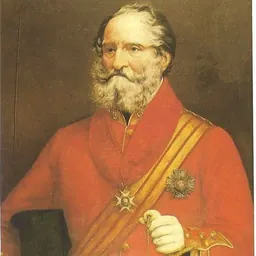
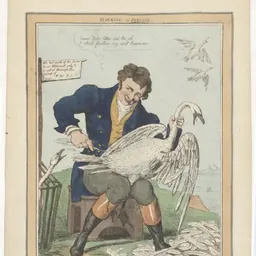
Related people
Same field, nearest in time

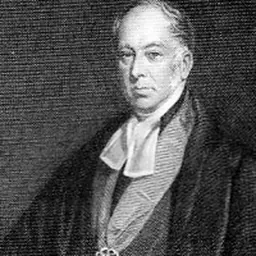

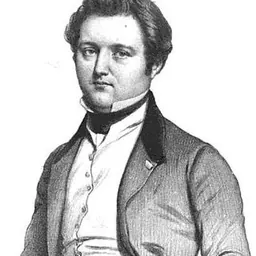
Contemporaries
People whose lives overlapped Robert Torrens's



Frequently asked questions
Who was Robert Torrens?
Anglo-Irish Royal Marine, economist, and chair of South Australian Colonisation Commission (1780-1864)
When was Robert Torrens born?
Robert Torrens was born in 1780 in Derry.
When did Robert Torrens die?
Robert Torrens died on 27 May 1864 in London.
What was Robert Torrens's occupation?
Robert Torrens was an economist, politician, businessperson, army officer and political economist.
What nationality was Robert Torrens?
Robert Torrens was British.
Sources & further reading
· DBpedia: Robert Torrens (economist)
Cite this page
APA: Biography.guide. (2026). Robert Torrens. https://biography.guide/robert-torrens-economist/
MLA: "Robert Torrens." Biography.guide, https://biography.guide/robert-torrens-economist/.
Chicago: "Robert Torrens." Biography.guide. https://biography.guide/robert-torrens-economist/.
Data last updated: 2026-09-22 · Spot an error? Report a correction.
Page generated 2026-09-27 05:15 UTC