
About Robert Tear
Lived 1939 – 2011 (aged 72). Robert Tear was a British opera singer, conductor, singer, music educator and musician.
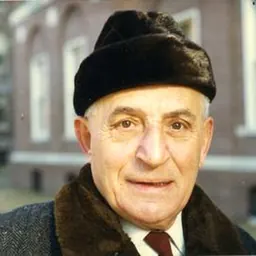
Robert Tear, CBE (8 March 1939 – 29 March 2011) was a Welsh tenor singer, teacher and conductor. In 1957 he won a choral scholarship to King's College, Cambridge, where he studied English. His biographer Raymond Holden counts as his chief university influences the critic and teacher F. R. Leavis, the writer E. M. Forster and the conductor David Willcocks. In January 1961 he married Hilary Thomas; they had two daughters.
Tear made his operatic debut in 1963 as the Male Chorus in Britten's The Rape of Lucretia with the English Opera Group (EOG); the composer approved of Tear's performance, and invited him to understudy Peter Pears in the original production of Curlew River at the Aldeburgh Festival in 1964.
Tear was never a member of Britten's inner circle; he failed to treat the composer with the required reverence, and was seen as a threat to Pears's preeminence as leading tenor. He continued to perform in Britten's operas and concert works, but never saw the composer again. in Haydn's Paukenmesse, conducted by Sir Malcolm Sargent. His repertoire ranged from Tudor music to the most modern works. At Covent Garden and elsewhere he sang many leading roles, such as Captain Vere in Billy Budd, the title role in Peter Grimes, Aschenbach in Death in Venice, Lensky in Eugene Onegin, Herod in Salome, Loge in Das Rheingold, Belmonte in The Seraglio, and David in Die Meistersinger. A greater part of his operatic repertoire consisted of character roles, in which, in the view of The Times, "his humour and his sharp human perceptions were given free rein".
Honours and publications In 1984 Tear was appointed CBE.
Tear published two volumes of memoirs: Tear Here (1990) and Singer Beware (1995). In a memorial tribute Robert Ponsonby commented that they were both written "in a style so odd, so metaphysical and so idiosyncratic as sometimes to defy comprehension", although Tear's "seriousness and his interest in things spiritual (he had discovered Buddhism) were self-evident – as they were in his paintings and drawings)." Roles that he sang on disc range from Uriel in Haydn's The Creation to the painter in Berg's Lulu, and from Pitichinaccio in Offenbach's The Tales of Hoffmann to Sir Harvey in Donizetti's Anna Bolena. His many classical recordings include performances of Bach, Handel, Monteverdi, Mozart, Beethoven, Mahler, Bruckner, Stravinsky, Janáček, Wagner and Messiaen. In the English canon, he also recorded songs by Elgar, Vaughan Williams, Butterworth and Britten.
Don’t just read it —
keep it.
Full-length biographies made to live with: read them, listen on the way to work, watch them tonight.
- E-book
- Audio
- Video
Instant download · yours to keep · every purchase keeps this site free
Important facts
People in Robert Tear's life
Named in this biography and alive at the same time



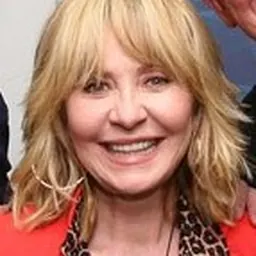
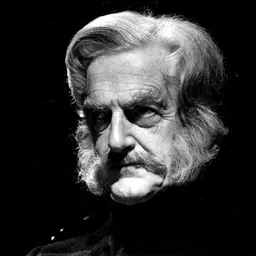


Related people
Same field, nearest in time
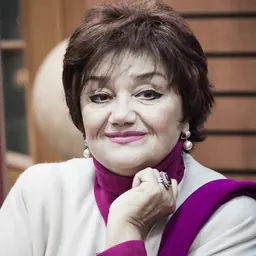


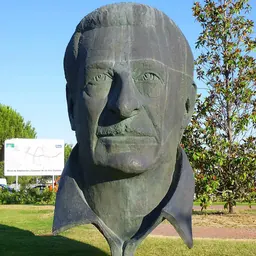
Contemporaries
People whose lives overlapped Robert Tear's

Frequently asked questions
Who was Robert Tear?
Welsh tenor singer and conductor (1939–2011)
When was Robert Tear born?
Robert Tear was born on 8 March 1939 in Barry.
When did Robert Tear die?
Robert Tear died on 29 March 2011 in Greater London.
What was Robert Tear's occupation?
Robert Tear was an opera singer, conductor, singer, music educator and musician.
What nationality was Robert Tear?
Robert Tear was British.
Sources & further reading
Cite this page
APA: Biography.guide. (2026). Robert Tear. https://biography.guide/robert-tear/
MLA: "Robert Tear." Biography.guide, https://biography.guide/robert-tear/.
Chicago: "Robert Tear." Biography.guide. https://biography.guide/robert-tear/.
Data last updated: 2026-09-20 · Spot an error? Report a correction.
Page generated 2026-09-27 05:26 UTC