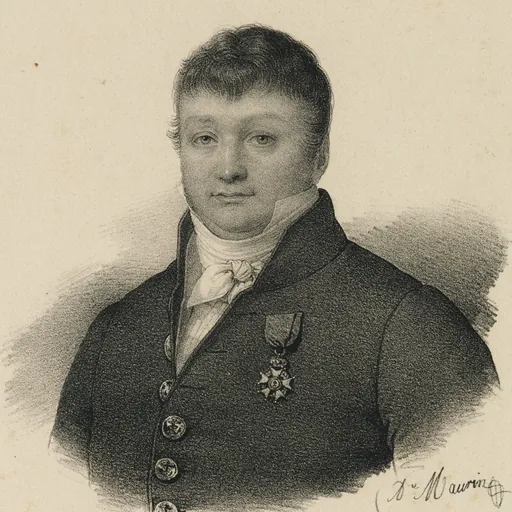
About Robert Surcouf
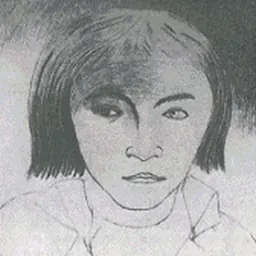
Lived 1773 – 1827 (aged 53). Robert Surcouf was a French privateer, writer, ship-owner, slave trader and pirate.
Robert Surcouf (; 12 December 1773 – 8 July 1827) was a French privateer, businessman and slave trader who operated in the Indian Ocean from 1789 to 1808 during the French Revolutionary and Napoleonic Wars. Capturing over 40 prizes, he later amassed a large fortune from a variety of commercial activities, such as ship-owning, privateering, slave trading and owning land.
Surcouf started his maritime career as an officer on the ships Aurore, Courrier d'Afrique, and Navigateur. Having risen to the rank of captain, he illegally engaged in slave trading onboard the slave ship Créole. Surcouf then captained the merchantman , on which he engaged in commerce raiding despite lacking a letter of marque. He preyed on British shipping, capturing several merchantmen including the East Indiaman , before returning to the Isle de France where his prizes were confiscated. Surcouf then returned to France, where he obtained prize money from the government. Returning to the Indian Ocean, Surcouf captained the privateers Clarisse and Confiance, raiding British, American, and Portuguese shipping. He captured the East Indiaman on 7 October 1800. Returning to France, Surcouf was awarded the Legion of Honour and settled down as a businessman.
He briefly returned to the Indian Ocean in 1807 on the corvette before returning to France. There, Surcouf sponsored privateers and merchantmen, including slave ships. His privateers led campaigns against British trade in the Indian Ocean and the English Channel. The cutter , a ship of his, achieved fame in her victory over on 9 September 1812, with Alphea exploding after repulsing French attempts at boarding her. After the Bourbon Restoration in France, Surcouf organised fishing expeditions to Newfoundland and amassed a considerable fortune. He died in 1827 and was buried in Saint-Malo.
Career
Youth Robert Surcouf was born 12 December 1773 in Saint-Malo to a family of ship-owners. His father, Charles-Ange Surcouf de Boisgris, was the grandson of Robert Surcouf de Maisonneuve, who had captained the privateer Aimable during the reign of Louis XIV. On his mother's side, Robert was a distant relative of René Duguay-Trouin. When his parents sent him to Dinan college to become a priest, he fled at age thirteen to enlist on the merchantman Héron, which shuttled between Saint-Malo and Cádiz.
On 3 March 1789, he enlisted as a volunteer on the 700-ton Aurore, On Revanche, Surcouf made several expeditions off Madagascar. bound for France. Bienvenue arrived at Lorient on 2 January 1792, where Surcouf discovered the political changes France had undergone in the wake of the French Revolution. Upon his return to Isle de France, agents of the Committee of Public Safety inspected Créole for evidence of slave trading, but left empty-handed as Surcouf had already sold his enslaved cargo. Governor Malartic refused to provide a lettre de marque and ordered Émilie to go to the Seychelles to purchase tortoises as food for Isle de France. On 8 December 1795, Surcouf captured his first prize, the ship Penguin, loaded with lumber, on which he detached a prize crew under Lieutenant Péru before sending her to Isle de France. |group="N" He attacked and captured them, finding the merchantmen to be carrying rice.
On the night of 28 January, Surcouf captured the 12-gun Diana, The next day, Cartier met a 26-gun Indiaman, before hoisting French colours at the very last moment and launching a violent assault. In the ensuing 45-minute battle, including her captain, Captain Burnycat, and the first officer, Picket;
Surcouf returned to Ile de France with his prizes, As Émilie had been armed as a merchant rather than a privateer, the prize court seized her prizes and sold them for the benefit of the State, He departed from Paimboeuf, this time with a proper lettre de marque. Surcouf captured a British brig in Aceh, on Sumatra, where he found two 20-gun merchantmen anchored in the harbour, in the process of loading pepper; Clarisse dropped anchor close by and opened fire, after which Surcouf sent his older brother Nicolas to head a 20-man board party on Clarisses boats and board the largest of the ships, while he boarded her with Clarisse from the opposite side; assaulted from two sides, she surrendered after a 30-minute battle. The other ship cut her anchor and attempted to flee, but the boats of Clarisse overhauled and captured her without resistance, most of her crew being ashore. where she arrived on 27 September. On 1 October, Surcouf captured a Danish on 6 November, a British ship laden with a salt; Clarisse raked the rear-most ship, Louisa, Nicolas Surcouf took a prize crew and sailed Louisa back to Port Louis.
Clarisse continued her patrol, capturing the ships Catherine, Haderbux, Anna Maria, Nostra Signora de la Cruz, Louis, Janna, Notre Dame de Bon Succès, and Albion, The sailor and painter Ambroise Louis Garneray, future biographer of Surcouf, enlisted at this time. which was known to cruise in these waters, and sailed to the Seychelles. There, he escaped a British ship of the line and a frigate, and sailed on to cruise the Bay of Bengal.
On 19 September, Confiance captured Prize, from Calcutta, which had stored eight of her ten guns in her hold to improve her stability. Prize was sent off to Mauritius on the next day with an 85-man prize crew. Surcouf then steered for Ganjam, where he captured three smaller ships.
On 7 October 1800, off Sand Heads, near Calcutta, Confiance met the 40-gun East Indiaman , of 824 tons burthen, #tag:ref|A number of French accounts of Surcouf's victory exaggerate Kents size and guns by 60%. Rouvier states 38 guns and 1,200 tons; Cunat specifies that Kent carried twenty-six 18-pounder on her battery and twelve 9-pounder on her castles; Hennequin gives an approximate 40 guns, but confirms the figure of 1,200 tons. Surcouf managed to board his larger opponent and, after over an hour and a half of battle across the decks of the ship, seize control of Kent.
The British had suffered fourteen killed, including the captain, The privateers were then granted one hour of free pillaging on Kent before Surcouf restored order; however, the female passengers were strictly protected and sentries were placed in front of their apartments. Amongst the prisoners were General Frederick St. John and his wife,
The first officer of Confiance, Joachim Drieux, was sent on Kent with a 60-man prize crew, while her passengers were released on a merchantman that Surcouf stopped a few days later. Confiance and Kent arrived at the Rade des Pavillons in Port-Louis in November. The capture of Kent became a sensation, and the British Admiralty issued a reward for the capture of Surcouf.
There is a tale that in 1816, Surcouf challenged twelve Prussian officers to a duel and defeated all of them except for the last, which he let go "to tell in his country how a former soldier of Napoleon fights."; This tale is questioned.
Don’t just read it —
keep it.
Full-length biographies made to live with: read them, listen on the way to work, watch them tonight.
- E-book
- Audio
- Video
Instant download · yours to keep · every purchase keeps this site free
Important facts
People in Robert Surcouf's life
Named in this biography and alive at the same time


Related people
Same field, nearest in time

Contemporaries
People whose lives overlapped Robert Surcouf's



Frequently asked questions
Who was Robert Surcouf?
French privateer
When was Robert Surcouf born?
Robert Surcouf was born on 12 December 1773 in Saint-Malo.
When did Robert Surcouf die?
Robert Surcouf died on 8 July 1827 in Saint-Servan-sur-Mer.
What was Robert Surcouf's occupation?
Robert Surcouf was a privateer, writer, ship-owner, slave trader and pirate.
What nationality was Robert Surcouf?
Robert Surcouf was French.
Sources & further reading
Cite this page
APA: Biography.guide. (2026). Robert Surcouf. https://biography.guide/robert-surcouf/
MLA: "Robert Surcouf." Biography.guide, https://biography.guide/robert-surcouf/.
Chicago: "Robert Surcouf." Biography.guide. https://biography.guide/robert-surcouf/.
Data last updated: 2026-09-23 · Spot an error? Report a correction.
Portrait: Wikimedia Commons · author & licence
Page generated 2026-09-27 05:07 UTC