
About Robert Stoller
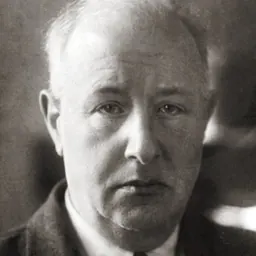
Lived 1924 – 1991 (aged 66). Robert Stoller was an American anthropologist, psychiatrist, non-fiction writer, university teacher and psychoanalyst, known for Conversion therapy and Gender studies.
Robert Jesse Stoller (December 15, 1924 – September 6, 1991) was an American professor of psychiatry at UCLA Medical School and a researcher at the UCLA Gender Identity Clinic. He has been criticized for research into finding the cause of transgender identities with intent to prevent them, and later similar research he inspired.
He was the author of nine books, the co-author of three others, and the publisher of over 115 articles.
Stoller is known for his theories concerning the development of gender identity, which he is credited as having coined in 1964. Stoller is also known for his theories concerning the dynamics of sexual excitement.
In 2010, Richard Green published "Robert Stoller's Sex and Gender: 40 Years On" in the Archives of Sexual Behavior, which analyzed the contributions of the book and his research overall in the field of transgender healthcare.
In 1958, a patient pseudonymously referred to as Agnes was referred to Stoller and Harold Garfinkel. At the time, Agnes was 17 years old and pretended to be intersex in order to receive gender confirming surgery. Years later, Stoller learned that Agnes was actually a transgender girl who had been stealing her mother's estrogen supplements since 12 years old. Upon learning this, Stoller recalled the papers he had written and retracted his earlier findings at the 1968 International Psychoanalytic Congress in Copenhagen. However, these criteria became widely influential and most patients would use the "winning psychosexual history", as therapy shifted from analysis of transgender people to a stepping stone to transition.
In his most notable contribution, Perversion (1975), Stoller attempts to illuminate the dynamics of sexual perversion and normalize it. Stoller suggests that perversion inevitably entails an expression of unconscious aggression in the form of revenge against a person who, in early years, made some form of threat to the child's core gender identity, either in the form of overt trauma or through the frustrations of the Oedipal conflict.
In Sexual Excitement (1979), Stoller finds the same perverse dynamics at work in all sexual excitement on a continuum from overt aggression to subtle fantasy. In focusing on the unconscious fantasy, and not the behavior, Stoller provides a way of analyzing the mental dynamics of sexuality, what he terms "erotics," while simultaneously de-emphasizing the pathology of any particular form of behavior. Stoller does not consider homosexuality as a monolithic behavior but rather as a range of sexual styles as diverse as heterosexuality. Many of Stoller's books, like Splitting (1973), are devoted to the documentation of the interviews on which he based his research.
Stoller died in a traffic accident near his home in 1991.
Selected publications Stoller, Robert; Sex and Gender: On the Development of Masculinity and Femininity, Science House, New York City (1968) 383 p. Stoller, Robert; Sex and Gender: the Transsexual Experiment, Hogarth Press, (1968) 328 p. Stoller, Robert; Splitting: A Case of Female Masculinity, Quadrangle, New York, (1973) 395 p. Stoller, Robert; Perversion: The Erotic Form of Hatred, Pantheon, New York, (1975), 240 p. Stoller, Robert; Sexual Excitement: Dynamics of Erotic Life, Pantheon, New York (1979), 281 p. Stoller, Robert; Presentations of Gender, Yale University Press (1985), 219 p. Stoller, Robert; Observing the Erotic Imagination, Yale University Press, New Haven, (1985), 228 p. Stoller, Robert; Pain & Passion. A Psychoanalyst Explores the World of S & M, Plenum Press, New York, (1991), 306p. Herdt, Gilbert, & Robert. J. Stoller, Intimate Communications: Erotics and the Study of Culture, New York, Columbia University Press (1990), 467 p.
Don’t just read it —
keep it.
Full-length biographies made to live with: read them, listen on the way to work, watch them tonight.
- E-book
- Audio
- Video
Instant download · yours to keep · every purchase keeps this site free
Important facts
People in Robert Stoller's life
Named in this biography and alive at the same time


Related people
Same field, nearest in time






Contemporaries
People whose lives overlapped Robert Stoller's



Frequently asked questions
Who was Robert Stoller?
American psychiatrist (1924–1991)
When was Robert Stoller born?
Robert Stoller was born on 15 December 1924 in New York City.
When did Robert Stoller die?
Robert Stoller died on 6 September 1991 in Los Angeles.
What was Robert Stoller's occupation?
Robert Stoller was an anthropologist, psychiatrist, non-fiction writer, university teacher and psychoanalyst.
What was Robert Stoller known for?
Robert Stoller was known for Conversion therapy and Gender studies.
What nationality was Robert Stoller?
Robert Stoller was American.
Sources & further reading
Cite this page
APA: Biography.guide. (2026). Robert Stoller. https://biography.guide/robert-stoller/
MLA: "Robert Stoller." Biography.guide, https://biography.guide/robert-stoller/.
Chicago: "Robert Stoller." Biography.guide. https://biography.guide/robert-stoller/.
Data last updated: 2026-09-20 · Spot an error? Report a correction.
Page generated 2026-09-27 05:30 UTC