
About Robert Still
Lived 1910 – 1971 (aged 60). Robert Still was a British conductor and composer.
Robert Still (10 June 1910 – 13 January 1971) was a wide-ranging English composer of tonal music, who made strong use of dissonance. He produced four symphonies and four string quartets. As a songwriter he set words by Byron, Keats and Shelley.
Education Still was born in London on 10 June 1910 into a family with a strong interest in music. He was a descendant of John Still, bishop of Bath and Wells. Still was educated at Eton College (1923–29) and Trinity College, Oxford, where he graduated in History and French, and then in music. He had a younger brother who died aged 16 and a sister who emigrated to Australia.
At school and at university Still developed a lifelong interest in racquet sports, including real tennis, in which he won a university sporting blue. Both his father and grandfather were solicitors in a long-established London firm, and he had been intended for the law. He studied music at Oxford under Ernest Walker, Sir Hugh Allen and others, and then spent two years at the Royal College of Music under C. H. Kitson, Gordon Jacob and the organist Basil Allchin. He also studied under Wilfred Dunwell at Trinity College of Music (modern harmony and counterpoint) and later in life under Hans Keller.
Wartime On graduating, Still returned to Eton to teach music. He left in 1938 to become conductor and arranger of the Ballet Trois Arts, a travelling company. Having refused a commission, he spent the Second World War first manning a searchlight in the Cotswolds and then with the Royal Artillery travelling orchestra, which he conducted. He married Elizabeth Westmann in 1944 - at the time she was serving with the Women's Auxiliary Air Force at Bletchley Park as a German translator - and they had four daughters. Stanley Bayliss described it as "duly bucolic" with "pleasant tunes", but said that it failed to send a "shiver down the spine."
Much of his time in later life was spent giving free advice and lessons to students. His local friends included the composer Anthony Scott (1911-2000, Finzi's only pupil), painter and critic Adrian Stokes, the harpsichordist Michael Thomas (1922-1997) and Newbury Choral Society conductor and pianist John Russell.
Psychoanalysis As well as music, Still also considered becoming a Freudian lay psychoanalyst. This interest led him to form the London Imago Society in 1956, along with Adrian Stokes. An article by Still on the psychology of Gustav Mahler was published by The American Imago Society. Still presented a radio broadcast for the BBC on this subject in 1964. He also sat on a selection board for Berkshire Education Authority and advised prospective students over a period of 15 years.
Death Still died of a heart attack on 13 January 1971, having just been elected to the Executive Committee of the Composer's Guild. His widow Elizabeth died in 2008. In the mid-1950s, Argo Records recorded a number of his chamber works, including the Quintet for three flutes, violin & cello and the Viola Sonata No 2. His Third Symphony (1960) was submitted to the University of Oxford in 1963, after being championed by Sir Eugene Goossens, the conductor. This earned him an Oxford doctorate in music. Goossens recorded the Symphony in 1966. The single movement Symphony No 4 was composed in 1964 and also recorded, conducted by Myer Fredman.
As a songwriter, he has been described as "in the mainstream of English lyricism, swelled by Dowland, Purcell, Warlock, Vaughan Williams and Gerald Finzi", setting poems by Byron, Keats, Christina Rossetti, Shelley and Masefield. show a stylist journey from the pre-classical and folk-song models of the first two (only Number 1 was performed during the composer's lifetime, premiered in 1948), to the "without key" polytonality of the second two, which date from the 1960s and show the influence of Bartok and Schoenberg, and of Hans Keller, whose advice Still sought out at this period.
Legacy Following his death in 1971 his work was neglected. The BBC broadcast his Concerto for String Orchestra in 1979 and his Elegie for baritone, chorus and orchestra in 1990. (The Elegie, originally written for the Newbury Choral Society, is a setting of Matthew Arnold's poem 'A Summer Night'). A number of earlier recordings from the 1960s and 1970s were revived for his centenary in 2010. The "fearsomely difficult" Violin Concerto was revived on 18 May 2013 in Ealing, London.
An archive is held by the British Music Society.
Selected works Orchestral Symphony No 1 in C (1954) The Ballad of Bladebourne Inn, overture (1956) Symphony No 2 (1956) Symphony No 3 in C major (1960) Concerto for Strings (1964) Symphony No 4 (Sinfonia) (1964) Violin Concerto (1969) Piano Concerto (1970) The Delphic Oracle, orchestral fantasy
Choral Elegy (also Elegie) for baritone, chorus and orchestra (1963-4)
Opera Oedipus, libretto Adrian Stokes (1950s)
Chamber music String Quartet No 1 in A minor (1948) String Quartet No 2 in D major String Quartet No 3, "without key" (1960s) String Quartet No 4, "without key" (1960s) Cello Sonata in D minor Clarinet Quintet Oboe Quartet Oboe Sonatina Piano Quintet in F major Quintet for three flutes, violin and cello Trio in D minor for flute, cello and piano Trio in A for clarinet, violin and piano (fp 1964) Viola Sonata No 1 Viola Sonata No 2 Violin Sonata
Piano Piano Sonata No 1 in B major (fp 1969) Piano Sonata No 2 in G major Piano Sonata No 3 in C (fp 1971) Other People (ten character sketches), piano suite
Songs August (Masefield) Awaiting Execution (Chidiock Tichbourne) Beauty Bathing (Munday) I Fear Thy Kisses, Gentle Maiden (Shelley) The Kingfisher (W H Davies) Ode to a Skylark (Shelley) Shall I, wasting in despair? (George Wither) Sister Awake (Anon.) Song of Pain and Beauty (Gurney) The Poetry of Dress (Robert Herrick) The Song of the Sirens (Thomas Browne) Sonnet (Keats) Sunset on the Morea (Byron) The sea hath many thousand sands (Anon.) To Julia (Herrick) Upon Julia's Clothes (Herrick) When I am dead, my dearest (C. Rossetti)
Don’t just read it —
keep it.
Full-length biographies made to live with: read them, listen on the way to work, watch them tonight.
- E-book
- Audio
- Video
Instant download · yours to keep · every purchase keeps this site free
Important facts
People in Robert Still's life
Named in this biography and alive at the same time



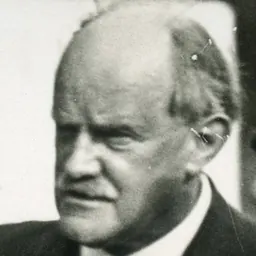
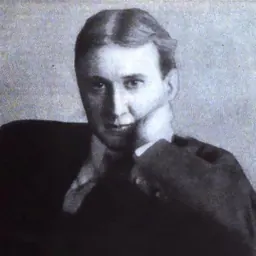
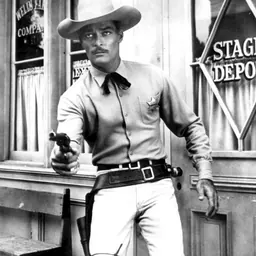

Related people
Same field, nearest in time

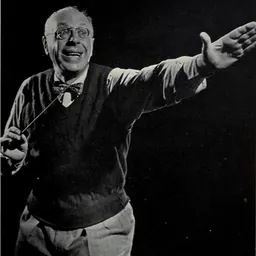

Contemporaries
People whose lives overlapped Robert Still's






Frequently asked questions
Who was Robert Still?
British composer (1910–1971)
When was Robert Still born?
Robert Still was born on 10 June 1910 in London.
When did Robert Still die?
Robert Still died on 13 January 1971.
What was Robert Still's occupation?
Robert Still was a conductor and composer.
What nationality was Robert Still?
Robert Still was British.
Sources & further reading
Cite this page
APA: Biography.guide. (2026). Robert Still. https://biography.guide/robert-still-conductor/
MLA: "Robert Still." Biography.guide, https://biography.guide/robert-still-conductor/.
Chicago: "Robert Still." Biography.guide. https://biography.guide/robert-still-conductor/.
Data last updated: 2026-09-20 · Spot an error? Report a correction.
Page generated 2026-09-27 05:28 UTC