
About Robert Smith Vance
Lived 1931 – 1989 (aged 58). Robert Smith Vance was an American judge.
Robert Smith Vance (May 10, 1931 – December 16, 1989) was a United States circuit judge of the United States Court of Appeals for the Fifth Circuit. He was later the United States Court of Appeals for the Eleventh Circuit in 1981 until his assassination in 1989.
He was one of three 20th-century United States federal court judges assassinated because of his judicial service.
Early life, education and law career
Born in Talladega, Alabama, Vance was the youngest of four children born to parents Harrell Taylor Vance Sr. and Mae ( Smith) Vance. He grew up in Birmingham, Alabama and graduated from Woodlawn High School. He then received a Bachelor of Science degree from the University of Alabama in 1950, and a Juris Doctor from University of Alabama School of Law in 1952.
While at Alabama, Vance was purportedly the head of a secret yet powerful inter-fraternity organization known as The Machine and was elected as President of the Student Government Association.
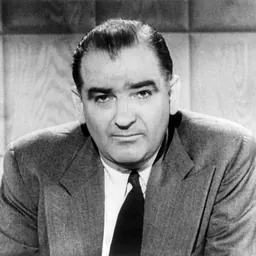
After law school, Vance entered military duty as an attorney in the United States Army Judge Advocate General Corps and was stationed at the Pentagon. One of his first assignments was to serve on the team of lawyers defending the Army in hearings against charges brought by Senator Joseph McCarthy.
After his military service, Vance received a Master of Laws from George Washington University Law School in 1955 and served as a law clerk to Alabama Supreme Court Justice James Mayfield. He then served a one-year stint as an attorney for the United States Labor Department before entering private practice in Birmingham from 1956 to 1977.
As a lawyer, Vance quickly sided with the developing civil rights movement, as shown by his participation as an intervening plaintiff in litigation that ultimately resulted in the United States Supreme Court decision in Reynolds v. Sims, which decided that state legislative districts had to be roughly equal in population. Vance also was the first notable Birmingham attorney to reject the unwritten "gentleman's agreement" by which all black members of a jury pool were eliminated from serving as jurors in civil cases.
Vance served as Chairman of the Alabama Democratic Party from 1966 to 1977. His election as Chairman capped a struggle within the Alabama Democratic Party, as a group loyal to the national party wrested control from a states' rights faction loyal to Governor George Wallace. Throughout Vance's tenure as chairman, Wallace was never able to capture the state party organization, despite continual struggles between the two factions.
The most well-known example of this fight came during the 1968 Democratic National Convention in Chicago, as competing slates of delegates vied for credentials to be seated. Vance's group of party loyalists overcame challenges from both Wallace's group and a predominantly black slate headed by Dr. John Cashin of Huntsville, Alabama.
Vance was also a lecturer at the Cumberland School of Law at Samford University from 1967 to 1969. He served for a number of years in the United States Army Reserve, retiring as a lieutenant colonel.
Federal judicial service
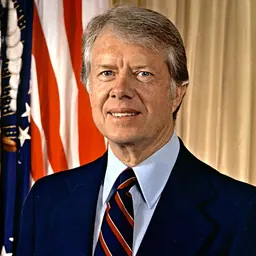
On November 4, 1977, Vance was nominated by President Jimmy Carter to a seat on the United States Court of Appeals for the Fifth Circuit being vacated by Judge Walter Pettus Gewin. Vance was confirmed by the United States Senate on December 15, 1977, and received his commission the same day. The jurisdiction of the Fifth Circuit at that time included six Southern states, including Alabama. In 1981, the territory of the Fifth Circuit was divided into two circuits, and on October 1, 1981, Vance was reassigned to the United States Court of Appeals for the Eleventh Circuit, which he served on until his death.
He was sentenced to seven federal life terms. An Alabama state-court jury later convicted Moody of Judge Vance's murder and Moody was sentenced to death by electric chair in 1997. He entered death row on February 13, 1997, and was executed by lethal injection on April 19, 2018, at the age of 83 years, becoming the oldest inmate executed in the United States in the post-Furman era, surpassing the previous record set by John B. Nixon, who was executed at the age of 77 years.
Legacy In 1990, Congress passed H.R. 3691 a bill sponsored by Ben Erdreich renaming the federal building and courthouse in Birmingham, Alabama, as the Robert S. Vance Federal Building and United States Courthouse in memory of Vance. Also in tribute to Judge Vance's service, the Atlanta chapter of the Federal Bar Association hosts an annual Robert S. Vance Forum on the Bill of Rights. Vance was inducted into the Alabama Lawyers' Hall of Fame in 2006.
Vance's older son, Robert Vance, Jr., serves as a state circuit court judge in Birmingham, having first been appointed to that position in November 2002, and elected in 2004. He was the Democratic candidate for Chief Justice of Alabama's Supreme Court in the 2012 election, losing to Republican Roy Moore. Vance's daughter-in-law, Joyce White Vance, was the United States Attorney for the Northern District of Alabama from August 27, 2009, until January 20, 2017.
Vance's widow, Helen (born February 7, 1934), died on October 18, 2010 at age 76.
Don’t just read it —
keep it.
Full-length biographies made to live with: read them, listen on the way to work, watch them tonight.
- E-book
- Audio
- Video
Instant download · yours to keep · every purchase keeps this site free
Important facts
Family & relationships
People in Robert Smith Vance's life
Named in this biography and alive at the same time





Related people
Same field, nearest in time




Contemporaries
People whose lives overlapped Robert Smith Vance's



Frequently asked questions
Who was Robert Smith Vance?
United States federal judge (1931-1989)
When was Robert Smith Vance born?
Robert Smith Vance was born on 10 May 1931 in Talladega.
When did Robert Smith Vance die?
Robert Smith Vance died on 16 December 1989 in Mountain Brook.
What was Robert Smith Vance's occupation?
Robert Smith Vance was a judge.
What nationality was Robert Smith Vance?
Robert Smith Vance was American.
Sources & further reading
· Wikipedia: Robert Smith Vance
Cite this page
APA: Biography.guide. (2026). Robert Smith Vance. https://biography.guide/robert-smith-vance/
MLA: "Robert Smith Vance." Biography.guide, https://biography.guide/robert-smith-vance/.
Chicago: "Robert Smith Vance." Biography.guide. https://biography.guide/robert-smith-vance/.
Data last updated: 2026-09-20 · Spot an error? Report a correction.
Page generated 2026-09-27 05:18 UTC