
About Robert Ridgway
Lived 1862 – 1938 (aged 76). Robert Ridgway was an American civil engineer and engineer.
Robert Ridgway (October 19, 1862 – December 19, 1938) was an American civil engineer that spent nearly 50 years working for the public sector on the construction of major subway and water supply projects serving New York City. Except for four years of primary school, he did not receive any formal education, and mainly learned through self-study and on-the-job training as part of surveying crews for railway lines and an aqueduct. Ridgway rose to the level of chief engineer of New York's Transit Commission in 1921 and was considered to be the leading builder of subways in the United States by 1933, when he retired from active work. He was elected as president of the American Society of Civil Engineers in 1925.
Early life Robert Ridgway was born in Brooklyn, New York on October 19, 1862 to Joseph Skidmore Ridgway, a lawyer, and Margaret Ridgway (née Stephens). Robert was the second youngest of seven children in the family and had five brothers and one sister.
In 1870, he began attending public school in Brooklyn, but Ridgway's formal education ended four years later when his family moved to a farm in Greenbrook, New Jersey and he had to resort to learning at home using his older brother's textbooks. He was an avid reader and also was interested in music, singing in the church choir. In 1880, his family moved near Cranford, New Jersey, where Ridgway befriended Reverend Walter Coe Roberts, the rector of Trinity Episcopal Church. Roberts was a graduate of Sheffield Scientific School, where he had received training in architecture, and he taught Ridgway about geometry and trigonometry as well as providing a reading program to advance his studies.
Career Ridgway did not want to become a lawyer like his father and some of his brothers. He began working as a chainman, rodman and instrument man in a surveying party to locate a railroad line from Billings to Fort Benton in Montana Territory and to improve a survey for a railroad line between Superior and Ashland in Wisconsin.
In 1884, Ridgway returned to the New York City area and began working for the New York Aqueduct Commission as an instrument man, and later as an assistant engineer, on the New Croton Aqueduct project in Westchester County. After the aqueduct was placed into service in 1890, he spent five years working on the construction of the Titicus Reservoir in Westchester, which was followed by five years of work on construction of the Jerome Park Reservoir in the Bronx.
In 1905, he was offered the position of a division head on the Catskill Aqueduct project in 1905 by J. Waldo Smith of the newly-formed New York Board of Water Supply. Ridgway supervised construction of the northern of the aqueduct from the Ashokan Reservoir in Ulster County to a location near Peekskill in Westchester, including the rock pressure tunnel located below the Hudson River.
Ridgway returned to working on the New York City subway system in 1912, after Craven offered him the position of Engineer of Subway Construction for the First District of the New York State Public Service Commission, where he became involved with expansions to the IRT and the Brooklyn–Manhattan Transit Corporation (BMT) systems under the Dual Contracts. He later became the Chief Engineer of the New York State Transit Commission in 1921 and the Chief Engineer of the New York City Board of Transportation in 1924, when the Transit Commission's control of the planning and construction of new subway lines was transferred to the new agency, resulting in the Independent Subway System. Ridgway resigned from his position as chief engineer in 1932 and planned to retire, but continued serving the Board of Transportation as a consulting engineer for one more year after the unexpected death of John R. Slattery, who was planned to become his successor. Upon Ridgway's retirement from active work in 1933, the Brooklyn Eagle wrote that "he is widely recognized as the foremost subway builder in the country" and the Brooklyn Times-Union noted that "he had a part in the construction of every foot of the rapid transit systems of New York".
In the latter portion of his career, Ridgway served as a consultant to projects throughout the United States. These included serving on the Chicago Traction and Subway Commission (1916), on a board to select the location and design of a bridge across San Francisco Bay (1927), on a board to study a site for a dam on the Colorado River (1928), as a consultant to the Port of New York Authority on the design of the Midtown Tunnel (1933), as an expert to review plans for a subway and rapid transit system in San Francisco (1935), and on a board of engineers to study plans for subway lines in Chicago (1938). (The subway lines studied in Chicago included the Milwaukee–Dearborn subway and the State Street subway.) where we provided advice on railway tunnels, including Moji-Shimonoseki project under the Kanmon Straits. He was presented with the Third Order of the Rising Sun by the Japanese government before he returned to America aboard the Asmara Maru.
During his career, Ridgway received honorary degrees from New York University (Master of Science, 1915; Civil Engineer, 1918), Harvard University (Master of Arts, 1925), Lehigh University (Doctor of Engineering, 1929), and Polytechnic Institute of Brooklyn (Doctor of Engineering, 1933). (The New York Section of ASCE was renamed as the Metropolitan Section in 1931.)
Personal life, death and legacy Ridgway married Lillie A. Littell of Cranford, New Jersey on May 10, 1888. he married her niece, Isabel L. Law, The local minister from Canterbury was assisted at the ceremony by Ridgway's good friend Reverend Walter Coe Roberts, who had served as the officiant of his first wedding and the groom had known since his childhood in Cranford. At the time of his death, Ridgway was 76 years old, resided at 24 Gramercy Park South, and was serving as a member of a Chicago subway commission for Harold L. Ickes. His funeral was held at the Church of the Transfiguration in Manhattan and attended by 1,200 mourners. Ridgway was buried at Kensico Cemetery in Westchester.
In 1940, his widow privately published his autobiography, which he had dictated to her following his retirement, but he had not reviewed or revised the manuscript before his death. Isabel L. Ridgway also endowed the Robert Ridgway Student Chapter Award in honor of her husband, which was approved by ASCE's Board of Direction in 1965, the year after her death.
Don’t just read it —
keep it.
Full-length biographies made to live with: read them, listen on the way to work, watch them tonight.
- E-book
- Audio
- Video
Instant download · yours to keep · every purchase keeps this site free
Important facts
People in Robert Ridgway's life
Named in this biography and alive at the same time

Related people
Same field, nearest in time



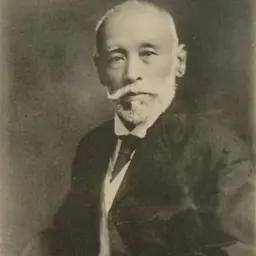

Contemporaries
People whose lives overlapped Robert Ridgway's

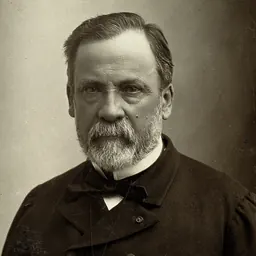



Frequently asked questions
Who was Robert Ridgway?
American civil engineer (1862-1938)
When was Robert Ridgway born?
Robert Ridgway was born on 19 October 1862 in New York City.
When did Robert Ridgway die?
Robert Ridgway died on 19 December 1938.
What was Robert Ridgway's occupation?
Robert Ridgway was a civil engineer and engineer.
What nationality was Robert Ridgway?
Robert Ridgway was American.
Sources & further reading
· DBpedia: Robert Ridgway (engineer)
Cite this page
APA: Biography.guide. (2026). Robert Ridgway. https://biography.guide/robert-ridgway-civil-engineer/
MLA: "Robert Ridgway." Biography.guide, https://biography.guide/robert-ridgway-civil-engineer/.
Chicago: "Robert Ridgway." Biography.guide. https://biography.guide/robert-ridgway-civil-engineer/.
Data last updated: 2026-09-20 · Spot an error? Report a correction.
Page generated 2026-09-27 05:08 UTC