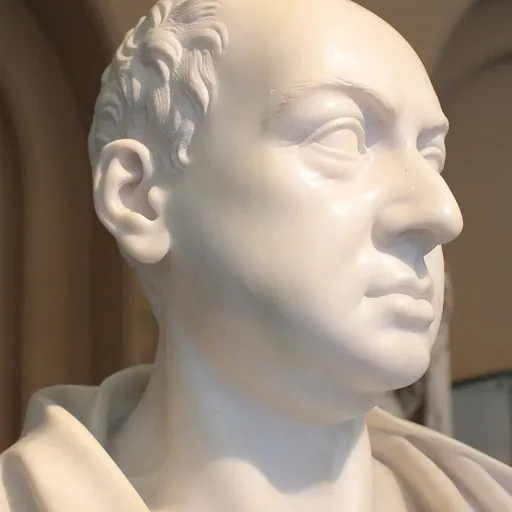
About Robert Raymond, 1st Baron Raymond
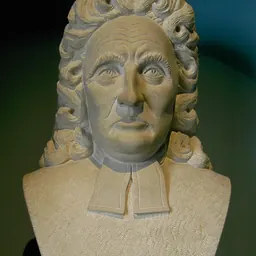
Lived 1673 – 1733 (aged 59). Robert Raymond, 1st Baron Raymond was a judge, politician and jurist.
Robert Raymond, 1st Baron Raymond, (20 December 167318 March 1733) was an English judge, politician and peer who sat in the British House of Commons between 1710 and 1724.
Life Raymond was the son of the judge Sir Thomas Raymond. He was educated at Eton and Christ's College, Cambridge. Said to have been admitted to Gray's Inn aged nine, he became a barrister in 1697 and was admitted at Lincoln's Inn in 1710. He succeeded his father in 1683 and was knighted on 20 Oct. 1710.
At the 1710 general election, Raymond was returned as Member of Parliament for Bishop's Castle and retained the seat in the 1713 general election. He was returned as MP for Yarmouth (Isle of Wight) in the 1715 general election but was unseated on petition in 1717. He re-entered parliament at a by-election at Ludlow on 26 March 1719. At the 1722 general election he was returned unopposed at Helston but he resigned the seat in 1724. In 1725 he was invested as Privy Counsellor.
Raymond, a Tory, was appointed as Lord Chief Justice of the King's Bench on 2 March 1725, a post he held until his death. In the trial of Deist Thomas Woolston in 1729 Raymond said:
Christianity in general is Parcel of the Common Law of England, and therefore to be protected by it; now whatever strikes at the Root of Christianity, tends manifestly to a Dissolution of the Civil Government...so that to say, an Attempt to subvert the establish'd Religion is not punishable by those Laws upon which it is establish'd, is an Absurdity.
In 1731 he was raised to the peerage as Lord Raymond, Baron of Abbots Langley in the County of Hertford. In the House of Lords he tried to stop the House of Commons abandoning Law French and replacing it with English. To Raymond, ending the traditional language might lead to other 'modernisations' such as Welsh for courts in Wales. However his opposition failed and in 1733 the courts were anglicised. His tomb in Abbots Langley was sculpted by Peter Scheemakers.
Family
He married Anne, the daughter of Sir Edward Northey of Woodcote Green, Epsom, Surrey, attorney-general and had one son. In 1720 he built for himself a country house and estate at Langleybury north of Watford in Hertfordshire. His monogram and his cipher, a griffin in a crown, can still be seen on the exterior of the building.
Arms
Don’t just read it —
keep it.
Full-length biographies made to live with: read them, listen on the way to work, watch them tonight.
- E-book
- Audio
- Video
Instant download · yours to keep · every purchase keeps this site free
Important facts
People in Robert Raymond, 1st Baron Raymond's life
Named in this biography and alive at the same time



Related people
Same field, nearest in time



Contemporaries
People whose lives overlapped Robert Raymond, 1st Baron Raymond's



Frequently asked questions
Who was Robert Raymond, 1st Baron Raymond?
British politician (1673-1733)
When was Robert Raymond, 1st Baron Raymond born?
Robert Raymond, 1st Baron Raymond was born on 20 December 1673.
When did Robert Raymond, 1st Baron Raymond die?
Robert Raymond, 1st Baron Raymond died on 18 March 1733.
What was Robert Raymond, 1st Baron Raymond's occupation?
Robert Raymond, 1st Baron Raymond was a judge, politician and jurist.
Sources & further reading
· Wikipedia: Robert Raymond, 1st Baron Raymond
· DBpedia: Robert Raymond, 1st Baron Raymond
Cite this page
APA: Biography.guide. (2026). Robert Raymond, 1st Baron Raymond. https://biography.guide/robert-raymond-1st-baron-raymond/
MLA: "Robert Raymond, 1st Baron Raymond." Biography.guide, https://biography.guide/robert-raymond-1st-baron-raymond/.
Chicago: "Robert Raymond, 1st Baron Raymond." Biography.guide. https://biography.guide/robert-raymond-1st-baron-raymond/.
Data last updated: 2026-09-23 · Spot an error? Report a correction.
Portrait: Wikimedia Commons · author & licence
Page generated 2026-09-27 05:06 UTC