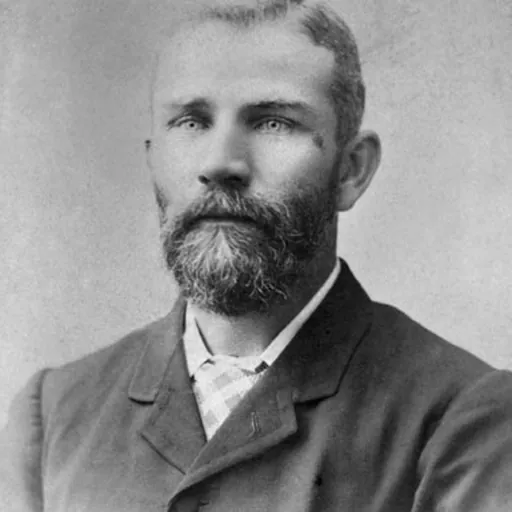
About Robert Philp
Lived 1851 – 1922 (aged 70). Robert Philp was an Australian politician and slave trader.
Sir Robert Philp, (28 December 1851 – 17 June 1922) was a Queensland businessman and politician who was Premier of Queensland from December 1899 to September 1903 and again from November 1907 to February 1908.
Early life Philp was born in Glasgow, Scotland, the second son of John Philp, a lime-kiln operator, and Mary Ann Philp (née Wylie). He emigrated to Brisbane with his parents and siblings in 1862, and as a result the company's vessels were returned to other commercial operations. While this affair had been profitable for Burns, Philp, it did not contribute significantly to later commercial success, although it would not be Philp's last interest in the South Pacific labour trade. Later that year he gave tacit support to a secessionist motion moved by Thomas Plunkett, before reversing his position and attempting to water down the motion to a more general condemnation of the federal government. His actions were said to have "serious damage to his political reputation", as his support base in North Queensland had larged voted in favour of federation.
Despite a severe drought and the dire state of the state's finances, Philp's government was re-elected at the 1902 state election. Discontent brewed among Ministerialists who were bitter at missing out on Cabinet positions, and in August 1903 Digby Denham crossed the floor with supporters to bring down the government and form a coalition led by Arthur Morgan.
Philp, with his genial nature, was ill-suited to the position of Opposition Leader, and showed little enthusiasm in attacking the new government. Morgan briefly lost control of the Legislative Assembly in 1904 and Philp was called upon by Governor Sir Herbert Chermside to form a ministry, but could not secure sufficient support from among his colleagues. The end result was a dissolution of Parliament and a solid defeat of the Opposition. Philp resumed his position as Leader and his conciliatory treatment of the government continued when fellow Scot William Kidston became Premier. Philp cultivated good relations with Kidston and helped foster the increasing gap between Kidston and the Labor movement.
Philp's party was again unsuccessful in the elections of 1907. Kidston was encountering difficulties in securing the passage of his legislation through the intransigent Legislative Council and after Lord Chelmsford as Governor refused Kidston's request to appoint sufficient new councillors so as to give Kidston a majority, he resigned in November. Lord Chelmsford commissioned Philp as Premier, but, unable to entice any of Kidston's supporters to his cause, he remained without a majority in the Legislative Assembly, which promptly blocked supply. Over Kidston's protests, Lord Chelmsford guaranteed supply through the issuing of writs and then dissolved the Assembly, but Philp failed to win the subsequent election.
In 1908 Kidston, alienated from the Labor party, relied on Philp's support to pass legislation approving construction of private railways. By October the two leaders had sufficient in common that they negotiated a merger of their two parties, ending Philp's career as opposition leader.
Later life The grave of Sir Robert Philp at Brisbane's Toowong Cemetery. alt=Philp remained in parliament, and also returned to tending his business interests. He enjoyed the status that his long parliamentary career gave him and participated in the foundation of the University of Queensland in 1912. He was a member of the University's first Senate, and its representative at a conference of universities in Glasgow in 1912. Philp lost his seat by a small margin in the Labor landslide of 1915 but remained active in politics, campaigning for the conscription referendums of the First World War and leading the resistance to the abolition of the Legislative Council. In 1920 he led a delegation to London which thwarted Premier Ted Theodore's attempts to gain loans from London financiers to fund government expenditure.
On 17 June 1922 he died in Brisbane and was buried at Toowong Cemetery.
Family Philp married Jessie Banister Campbell (daughter of prominent Brisbane businessman James Campbell) in 1878; she died in 1890. In 1898 he married Wilhelmina Fraser Munro; she died in 1940
Don’t just read it —
keep it.
Full-length biographies made to live with: read them, listen on the way to work, watch them tonight.
- E-book
- Audio
- Video
Instant download · yours to keep · every purchase keeps this site free
Important facts
People in Robert Philp's life
Named in this biography and alive at the same time
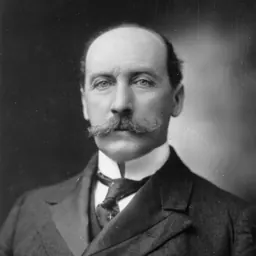


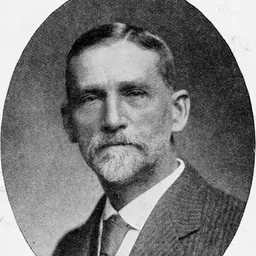
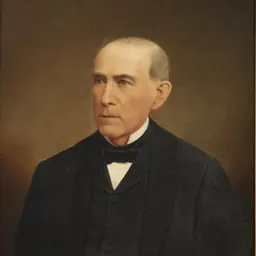

Related people
Same field, nearest in time



Contemporaries
People whose lives overlapped Robert Philp's



Frequently asked questions
Who was Robert Philp?
Australian politician (1851–1922)
When was Robert Philp born?
Robert Philp was born on 28 December 1851 in Glasgow.
When did Robert Philp die?
Robert Philp died on 17 June 1922 in Brisbane.
What was Robert Philp's occupation?
Robert Philp was a politician and slave trader.
What nationality was Robert Philp?
Robert Philp was Australian.
Sources & further reading
Cite this page
APA: Biography.guide. (2026). Robert Philp. https://biography.guide/robert-philp/
MLA: "Robert Philp." Biography.guide, https://biography.guide/robert-philp/.
Chicago: "Robert Philp." Biography.guide. https://biography.guide/robert-philp/.
Data last updated: 2026-09-22 · Spot an error? Report a correction.
Portrait: Wikimedia Commons · author & licence
Page generated 2026-09-27 05:01 UTC