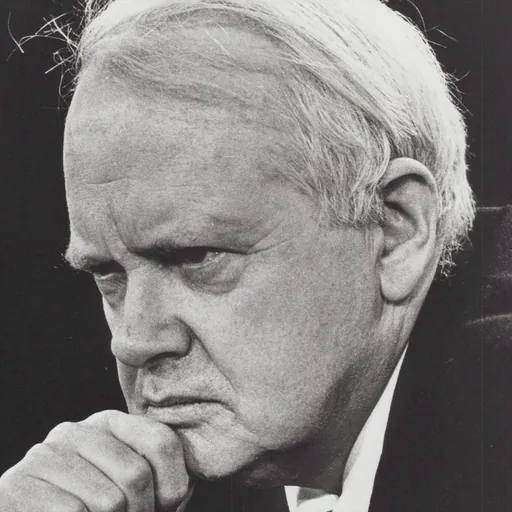
About Robert Payne
Lived 1911 – 1983 (aged 71). Robert Payne was a British writer, historian, novelist, biographer, art collector and journalist.
Pierre Stephen Robert Payne (4 December 1911 – 18 February 1983) was an English-born author, known principally for works of biography and history, although he also wrote novels, poetry, magazine articles and many other works. After working in Singapore and China, he moved to the United States in 1946 and became a professor of English literature. From 1954 onwards he lived as a writer in New York.
A prolific author, Payne is best known for his biographies of prominent historical figures, such as Leonardo da Vinci, Hitler, Stalin, Karl Marx, Lenin, Mao Zedong and Mahatma Gandhi, several of which were selected for Book of the Month Club. These works are praised for their readability and literary power, although not always for their historical rigour.
Biography Early life Payne was born on 4 December 1911, at Saltash, Cornwall. He was the son of Stephen Payne, an English naval architect, and Mireille Louise Antonia (Dorey) Payne, originally from France. He was educated at St. Paul's School in London, the Diocesan College at Rondebosch and the University of Cape Town in South Africa, the University of Liverpool and the Ludwig-Maximilians-Universität München, and the University of Paris.
Career As a young man Payne worked as a shipwright in England and then at the Singapore Naval Base, where he transferred to Army Intelligence. He worked in China between 1941 and 1946, as cultural attaché to the British Embassy In 1946, Payne met and interviewed Mao Zedong in Yenan, providing background for his 1950 work Mao Tse-tung: Ruler of Red China. During the interview, Mao correctly predicted that it would take only a year and half for the Communist forces to conquer China after the armistice with Chiang Kai-shek and his followers was broken.
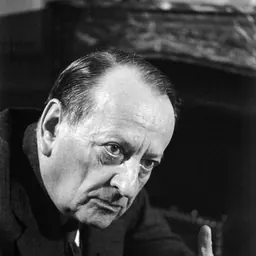
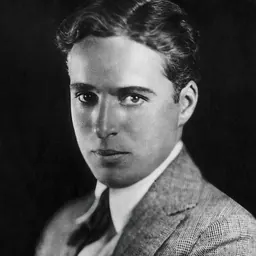
Payne moved to the United States in 1946 and from 1949-54 was Professor of English and author in residence at Alabama College, Montevallo. including novels, histories and biographies. He was best known for the biographies, which included studies of Charlie Chaplin, Greta Garbo, Hitler, Lenin, Stalin, Trotsky, Gandhi, Albert Schweitzer, Dostoyevsky, Ivan the Terrible, Chiang Kai-shek, Karl Marx, Mao Zedong, Sun Yat-sen, André Malraux, Shakespeare, Alexander the Great, the White Rajahs of Sarawak and General George C. Marshall. Payne also dined and had long conversations with Mao Zedong in 1946.
As a novelist, Payne used the pseudonyms Richard Cargoe, John Anthony Devon, Howard Horne, Valentin Tikhonov, and Robert Young. He also performed translations into English from many languages, including works by Pasternak and Kierkegaard.
Critical reaction Payne was described in 1947 as "a poet and a believer in the permanent power of beauty", and as a "young English author whose versatility and prolific output have astonished the literary world". The New York Times in 1950 called him "the most versatile writer of the year". Orville Prescott, book reviewer for the New York Times, claimed that "No man alive can write more beautiful prose than Robert Payne." The American critic Christopher Lehmann-Haupt wrote that the effect of this approach was "interesting and terrifying". The historian Alan Bullock commented that Payne's focus on Hitler's personal life resulted in a good account of Hitler's earlier years, but proved less productive for his later life when he "becomes absorbed in politics". The Biography Book recognised the "narrative and imaginative power" of Payne's account, while stating that "it incorporates speculation as fact". One example of this was the book's acceptance of claims by Bridget Dowling (Hitler's sister-in-law) and others that Hitler had spent time in Liverpool before 1914, a claim later - and, in view of Payne's personal meeting in Munich with Hitler in 1937, albeit speculatively - described as "conclusively disproved".
Payne was said to be "a firm adherent to the conspiracy theory of politics" and among biographies of Lenin, Payne's book was described as "the easiest to read ... also the easiest to forget". The Los Angeles Times commented on the Leonardo biography that "Payne makes a persuasive case ... The biography is ... a rendering of respect and admiration for the man."
Don’t just read it —
keep it.
Full-length biographies made to live with: read them, listen on the way to work, watch them tonight.
- E-book
- Audio
- Video
Instant download · yours to keep · every purchase keeps this site free
Important facts
People in Robert Payne's life
Named in this biography and alive at the same time
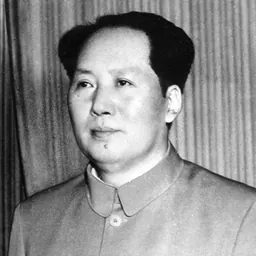
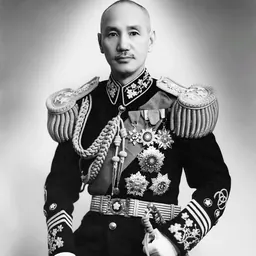



Related people
Same field, nearest in time



Contemporaries
People whose lives overlapped Robert Payne's





Frequently asked questions
Who was Robert Payne?
British lecturer, novelist, historian, poet and biographer (1911-1983)
When was Robert Payne born?
Robert Payne was born on 4 December 1911.
When did Robert Payne die?
Robert Payne died on 3 March 1983.
What was Robert Payne's occupation?
Robert Payne was a writer, historian, novelist, biographer, art collector and journalist.
What nationality was Robert Payne?
Robert Payne was British.
Sources & further reading
· DBpedia: Robert Payne (author)
Cite this page
APA: Biography.guide. (2026). Robert Payne. https://biography.guide/robert-payne-writer/
MLA: "Robert Payne." Biography.guide, https://biography.guide/robert-payne-writer/.
Chicago: "Robert Payne." Biography.guide. https://biography.guide/robert-payne-writer/.
Data last updated: 2026-09-21 · Spot an error? Report a correction.
Portrait: Wikimedia Commons · author & licence
Page generated 2026-09-27 05:00 UTC