
About Robert Paterson
Lived 1825 – 1889 (aged 63–64). Robert Paterson was a British architect.
Robert Paterson (1825–1889) was a 19th-century Scottish architect. His most famous work is the Cafe Royal in Edinburgh. Almost all his works are in Edinburgh, mainly in the Scots Baronial style, including a number of churches for the United Presbyterian Church.
Life
He was born at 13 Richmond Place in south Edinburgh the son of Robert Paterson (1790–1846), a builder, architect and surveyor in Edinburgh, and his wife Margaret (1789–1867).
In 1839/40 he was articled to George Beattie (born 1810) (father of William Hamilton Beattie builders and wood merchants at 23 Bread Street. His family was then living at 138 Causewayside. From 1850 he was living at practising from Madeira Cottage at 187 Causewayside, close to his family home.
From 1860 onwards he had offices at 6 Hanover Street in Edinburgh's First New Town, moving to 10 Hanover Street around 1870, and is later described as both architect and city assessor (valuing property under the Valuation of Lands Act).
He was Session Clerk to the United Presbyterian Church in Newington.
He died at 47 Grange Road on 5 October 1889 and is buried nearby in the Grange Cemetery.
Works
see
97-103 High Street on the Royal Mile (1862) incorporating the sculpted head of a boy by John Rhind Cafe Royal, Edinburgh (1863) Morningside United Presbyterian Church (1864) Newington United Presbyterian Church (1864) Grange Road/Causewayside (generally called Salisbury Church) Saltcoats West UP Church (1866) West wing, Edinburgh Royal lunatic asylum (1867) Canongate UP Church (1869) Southern Literary Institute (1870) Tenement in Leith (1873) Great Junction Street? Enlargement of Hamilton Prison (1876) Portobello Cemetery and entrance lodge (1876) Portobello Police Station (1877) Tenement in Portobello (1877) Canongate Christian Institute (1878) Tenements, Queen Charlotte Street, Leith (1878) Windsor Hotel, 100 Princes Street (1878) Villa, 6 Strathearn Road (1880) extension and alteration 6 to 8 Shandwick Place (1880) Tenement 147-151 Warrender Park Road (1881) Tenement Leslie Place/Carlton Street, Canonmills (1881) Villa, 5 Chalmers Crescent for Thomas Landale (1884) Villa, 59 Dick Place (1885) Shop, 130 Princes Street (1886) Warrender Baths (1886)
Family In 1848 he married Margaret Wyllie. Their eldest son Robert (born 1850) was also an architect.
He was cousin to the architect Robert Hamilton Paterson.
Don’t just read it —
keep it.
Full-length biographies made to live with: read them, listen on the way to work, watch them tonight.
- E-book
- Audio
- Video
Instant download · yours to keep · every purchase keeps this site free
Important facts
People in Robert Paterson's life
Named in this biography and alive at the same time


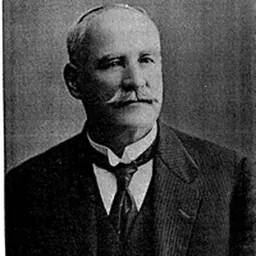
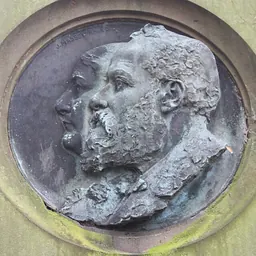


Related people
Same field, nearest in time
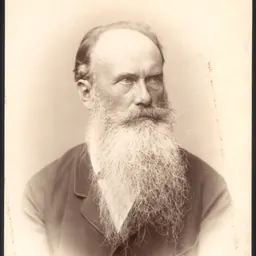


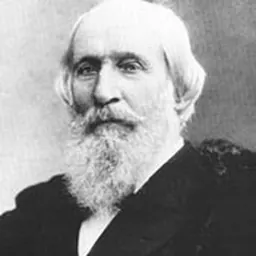

Contemporaries
People whose lives overlapped Robert Paterson's




Frequently asked questions
Who was Robert Paterson?
Scottish architect
When was Robert Paterson born?
Robert Paterson was born in 1825 in Edinburgh.
When did Robert Paterson die?
Robert Paterson died in 1889 in Edinburgh.
What was Robert Paterson's occupation?
Robert Paterson was an architect.
What nationality was Robert Paterson?
Robert Paterson was British.
Sources & further reading
· DBpedia: Robert Paterson (Scottish architect)
Cite this page
APA: Biography.guide. (2026). Robert Paterson. https://biography.guide/robert-paterson-architect/
MLA: "Robert Paterson." Biography.guide, https://biography.guide/robert-paterson-architect/.
Chicago: "Robert Paterson." Biography.guide. https://biography.guide/robert-paterson-architect/.
Data last updated: 2026-09-22 · Spot an error? Report a correction.
Page generated 2026-09-27 05:00 UTC