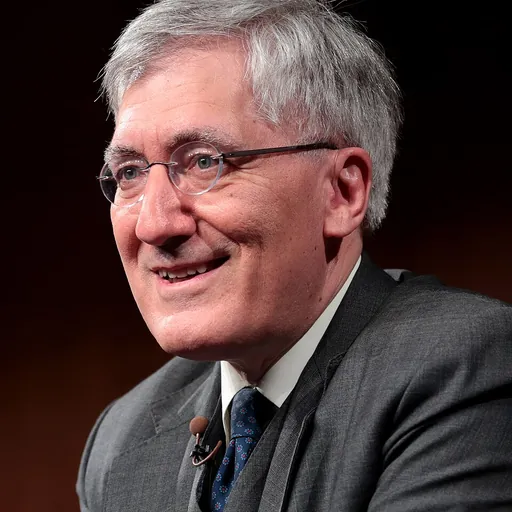
About Robert P. George
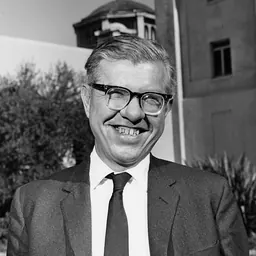
Born 1955. Robert P. George is an American philosopher, university teacher, lawyer, political philosopher and jurist.
Robert Peter George (born July 10, 1955) is an American legal scholar, political philosopher, and public intellectual who is the sixth McCormick Professor of Jurisprudence and director of the James Madison Program in American Ideals and Institutions at Princeton University. He lectures on constitutional interpretation, civil liberties, philosophy of law, and political philosophy.
George co-founded the Witherspoon Institute, where he is the Herbert W. Vaughan senior fellow. He is also a senior fellow of the American Enterprise Institute, and is the Ronald Reagan Honorary Distinguished Professor of Public Policy and Nootbaar Honorary Distinguished Professor of Law at Pepperdine University. He has been a visiting professor at Harvard Law School.
Early life and education Robert Peter George was born on July 10, 1955, in Morgantown, West Virginia. His father was of Syrian descent and his mother of Italian descent. The grandson of immigrants, he grew up in Morgantown, West Virginia.
After graduating from Swarthmore with a Bachelor of Arts in the humanities in 1977, George enrolled at Harvard University, where he simultaneously studied law and theology. He received a Master of Theological Studies from Harvard Divinity School and a Juris Doctor from Harvard Law School in 1981. George won Harvard's Frank Knox Memorial Scholarship, enabling him to pursue doctoral studies in jurisprudence in England at the University of Oxford, beginning in September 1981.
As a doctoral student at New College, Oxford, George studied the philosophy of law under the supervision of John Finnis and Joseph Raz and served as a lecturer in jurisprudence at the college. He was a graduate classmate of Jeremy Waldron and Leslie Green.
George was awarded several honorary degrees from Oxford, a Bachelor of Civil Law and Doctor of Civil Law in 2016, and a Doctor of Letters in 2019.
Academic career
George joined the faculty of Princeton University as an instructor in 1985, and in the following year, he became a tenure-track assistant professor. He spent 1988–89 on sabbatical leave as a visiting fellow in law at Oxford University, working on his book Making Men Moral: Civil Liberties and Public Morality. George was promoted to associate professor with tenure at Princeton in 1994 and to professor in 1999, being named to Princeton's McCormick Chair of Jurisprudence, an endowed professorship previously held by Woodrow Wilson, Edward S. Corwin, William F. Willoughby, Alpheus T. Mason, and Walter F. Murphy. George founded Princeton's James Madison Program in American Ideals and Institutions in 2000 and serves as its director. While George describes the program as not ideological, articles in the media have described it as a program that fosters conservative ideals.
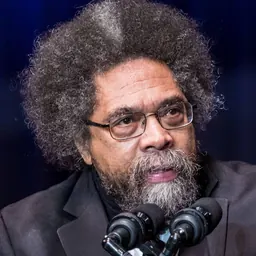
Cornel West
George has been a frequent conversation partner with Cornel West, a leading left-wing public intellectual, and the two are considered close friends. stemming from an incident when an invited speaker and his faculty conversation partner at Middlebury College were shouted down and physically attacked. The statement was picked up by national media. They are co-authors of the book Truth Matters: A Dialogue on Fruitful Disagreement in an Age of Division, published in 2025 by Post Hill Press.
Political activity
George twice served as Governor of the West Virginia Democratic Youth Conference, and attended the 1976 Democratic National Convention as an alternate delegate. He moved to the right in the 1980s, largely due to his views on abortion, which aimed to create a grass-roots movement around his ideas.
George was one of the drafters of the 2009 Manhattan Declaration, a manifesto signed by Orthodox, Catholic and Evangelical leaders that the New York Times said "promised resistance to the point of civil disobedience against any legislation that might implicate their churches or charities in abortion, embryo-destructive research or same-sex marriage". He has worked closely with his former student Rabbi Meir Soloveichik and with Rabbi Lord Jonathan Sacks of Great Britain to combat anti-Semitism. Much of George's work on religious liberty has centered on the idea that religion is a "distinct human good", which he asserts allows people to "live authentically by ordering one's life in line with one's best judgments of conscience".
George was threatened with death by abortion rights extremist Theodore Shulman, who also targeted Priests for Life director Rev. Frank Pavone, saying that they would be killed if the accused killer of Dr. George Tiller (a Wichita abortion-provider) was acquitted. For his crimes, Shulman was sentenced by Federal Judge Paul A. Crotty to 41 months' imprisonment and 3 years' supervised release.
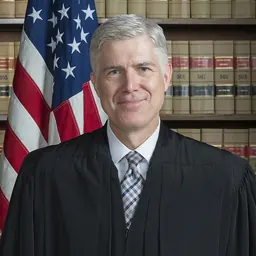
George endorsed U.S. Senator Ted Cruz in the 2016 Republican presidential primaries. In his own words, he "fiercely opposed" the candidacy of Donald Trump, saying that he was "a person of poor character". In July 2017, after Trump had become president, George praised his nomination of Neil Gorsuch to the Supreme Court. However, he characterized his attempts to restrict immigration to the United States from certain countries as "unnecessary and therefore unjust". He went on to say, "One thing you have to say for President Trump is that he has been fortunate in his enemies. Although he gives them plenty to legitimately criticize him about, they always go overboard and thus discredit themselves with the very people who elected Mr. Trump and may well re-elect him."
Other professional and public service activities
George served from 1993 to 1998 as a presidential appointee to the United States Commission on Civil Rights, and from 2002 to 2009 as a member of the President's Council on Bioethics. George was appointed to the U.S. Commission on International Religious Freedom by the Speaker of the U.S. House of Representatives in 2012, and in the following year was elected Chairman of the commission. He served until hitting the statutory term limit in 2016.
He is a former Judicial Fellow at the Supreme Court of the United States, receiving during his tenure there the Justice Tom C. Clark Award. the Becket Fund for Religious Liberty, the National Center on Sexual Exploitation, the Center for Individual Rights, the Lynde and Harry Bradley Foundation, and the Academic Freedom Alliance, which he co-founded in 2021. He is also a past member of the board of the American Enterprise Institute and the Templeton Foundation Religion Trust.
George resigned from the board of The Heritage Foundation in November 2025 after the organization's president, Kevin Roberts, refused to retract his own defense of Tucker Carlson, who had interviewed white nationalist Nick Fuentes.
He is Of Counsel to the law firm Robinson & McElwee and is a member of the Council on Foreign Relations.
Reception In 2009, George was described as America's "most influential conservative Christian thinker" by David Kirkpatrick of the New York Times. Kirkpatrick went on to state:
Supreme Court Justice and former Harvard Law School Dean Elena Kagan praised George as "one of the nation's most respected legal theorists", saying that the respect he had gained was due to "his sheer brilliance, the analytic power of his arguments, the range of his knowledge", and "a deeply principled conviction, a profound and enduring integrity".
In announcing his election as chairman of the U.S. Commission on International Religious Freedom in 2013, outgoing Chairwoman Katrina Lantos Swett, a Democrat appointed by Senate Majority Leader Harry Reid, praised George as "a true human rights champion whose compassion for victims of oppression and wisdom about international religious freedom shine through all we have accomplished". George was described by The New Yorker in 2014 as "a widely respected conservative legal philosopher" who has "played [intellectual] godfather to right-leaning students on [the Princeton] campus".
George's critics, including some Catholic scholars, have argued that he has neglected critical aspects of the Christian message, including "the corruption of human reason through original sin, the need for forgiveness and charity and the chance for redemption", focusing instead on "mechanics" of morality, and – through his political associations and activism – turned the church "into a tool of Republican Party". In 2020, the Initiative became a joint project of the University of Dallas and the American Enterprise Institute.
Notable students George's notable students include Sherif Girgis, Ryan T. Anderson, Meir Soloveichik and Yoram Hazony.
Musical activity George is a finger-style guitarist and bluegrass banjo player. His guitar playing is in the style of Chet Atkins and Jerry Reed. His banjo playing has been influenced by Earl Scruggs, Don Reno, and Bela Fleck. As a teenager, he performed with folk groups and bluegrass bands in coffee houses, clubs, and state fairs,
Books Natural Law Theory: Contemporary Essays, 1992. Making Men Moral, 1995. Natural Law and Moral Inquiry: Ethics, Metaphysics, and Politics in the Work of Germain Grisez, 1998. In Defense of Natural Law, 1999. The Autonomy of Law: Essays on Legal Positivism, 1999. Natural Law and Public Reason, 2000. Great Cases in Constitutional Law, 2000. The Clash of Orthodoxies, 2001. Natural Law, Liberalism, and Morality, 2001. Constitutional Politics: Essays on Constitution Making, Maintenance, and Change, 2001 The Meaning of Marriage: Family, State, Market, And Morals, 2006 Body-Self Dualism in Contemporary Ethics and Politics, 2007 Embryo: A Defense of Human Life, 2008 Moral Pública: Debates Actuales, 2009 What Is Marriage? Man and Woman: A Defense, 2012 Conscience and Its Enemies: Confronting the Dogmas of Liberal Secularism, 2013 Mind, Heart, and Soul: Intellectuals and the Path to Rome (with R.J. Snell), 2018 Truth Matters: A Dialogue on Fruitful Disagreement in an Age of Division (with Cornel West), 2025 Seeking Truth and Speaking Truth: Law and Morality in Our Cultural Moment, 2025
Don’t just read it —
keep it.
Full-length biographies made to live with: read them, listen on the way to work, watch them tonight.
- E-book
- Audio
- Video
Instant download · yours to keep · every purchase keeps this site free
Important facts
People in Robert P. George's life
Named in this biography and alive at the same time




Related people
Same field, nearest in time


Contemporaries
People whose lives overlapped Robert P. George's
Frequently asked questions
Who is Robert P. George?
American legal scholar
When was Robert P. George born?
Robert P. George was born on 10 July 1955 in Morgantown.
What is Robert P. George's occupation?
Robert P. George is a philosopher, university teacher, lawyer, political philosopher and jurist.
What nationality is Robert P. George?
Robert P. George is American.
Sources & further reading
Cite this page
APA: Biography.guide. (2026). Robert P. George. https://biography.guide/robert-p-george/
MLA: "Robert P. George." Biography.guide, https://biography.guide/robert-p-george/.
Chicago: "Robert P. George." Biography.guide. https://biography.guide/robert-p-george/.
Data last updated: 2026-09-23 · Spot an error? Report a correction.
Portrait: Wikimedia Commons · author & licence
Page generated 2026-09-27 05:08 UTC