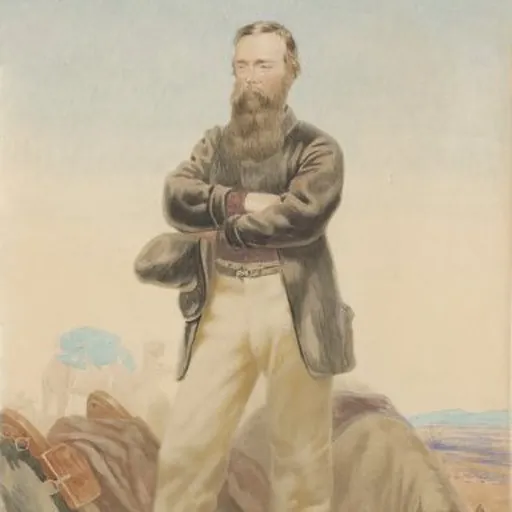
About Robert O'Hara Burke
Lived 1821 – 1861 (aged 40). Robert O'Hara Burke was a British and Irish explorer, police officer and soldier, known for Burke and Wills expedition.
Robert O'Hara Burke (6 May 1821c. 28 June 1861) was an Irish soldier and police officer who achieved fame as an Australian explorer. He was the leader of the ill-fated Burke and Wills expedition, which was the first expedition to cross Australia from south to north, finding a route across the continent from the settled areas of Victoria to the Gulf of Carpentaria. The expedition party was well equipped, but Burke was not experienced in bushcraft. A Commission of Inquiry held by the Government of Victoria to investigate the failure of the expedition was a censure of Burke's judgement.
Early years Burke was born in St Clerans, near the village of Craughwell, County Galway, Ireland in May 1821. and Anne Louisa Burke née O'Hara (married 1817, d.1844).
Robert O'Hara was one of seven children: John Hardiman Burke (d. August 1863) Robert O'Hara Burke (6 May 1821 – 28 June 1861) James Thomas Burke (c. 1828 – 7 July 1854) Fanny Marie Burke (married John Blakeney) Elizabeth Burke (married Lt. Col Menzies) Hester Albinia Burke (unmarried, d. 10 November 1866) Anne Celestine Burke (married Major Horace de Vere, d.1914)
James Thomas Burke was a Lieutenant in the Royal Engineers, and on 7 July 1854 at the battle of Giurgevo became the first British officer killed in the Crimean War.
He resumed his posting at Beechworth and from there attended the "Buckland Valley" riots near Bright against the Chinese gold miners in 1857. In November 1858 he was transferred to Castlemaine as Police Superintendent on £550 p.a. plus a groom and quarters at Broadoaks on Gingell Street.
After the South Australian explorer, John McDouall Stuart had reached the centre of Australia, the South Australian parliament offered a reward of £2,000 for the promotion of an expedition to cross the continent from the south to north, generally following Stuart's route. He also partnered with another explorer who wanted to discover things about Australia.
Burke and Wills Expedition
In June 1860, Burke was appointed to lead the Victorian Exploring Expedition with William John Wills, his third-in-command, as surveyor and astronomical observer.
The expedition left Melbourne on Monday, 20 August 1860 with a total of 19 men, 27 camels and 23 horses. They reached Menindee on 23 September 1860 where several people resigned, including the second-in-command, George James Landells and the medical officer, Dr. Hermann Beckler.
Cooper Creek, 400 miles further on, was reached on 11 November 1860 by the advance group, the remainder being intended to catch up. After a break, Burke decided to make a dash to the Gulf of Carpentaria, leaving on 16 December 1860. William Brahe was left in charge of the remaining party. The small team of Burke, William Wills, John King and Charley Gray reached the mangroves on the estuary of the Flinders River, near where the town of Normanton now stands, on 9 February 1861. Flooding rains and swamps meant they never saw the open ocean.
Already weakened by starvation and exposure, their progress on the return journey was slow and hampered by the tropical monsoon downpours of the wet season. Gray died four days before they reached the rendezvous at Cooper Creek. The other three rested for a day when they buried him. They eventually reached the rendezvous point on 21 April 1861, 9 hours after the rest of the party had given up waiting and left, leaving a note and some food, as they had not been relieved by the party supposed to be returning from Menindee.
They attempted to reach Mount Hopeless, the furthest outpost of pastoral settlement in South Australia, which was closer than Menindee, but failed and returned to Cooper Creek. While waiting for rescue Wills died of exhaustion and starvation. Soon after, Burke also died, at a place now called Burke's Waterhole on Cooper Creek in South Australia. The exact date of Burke's death is uncertain but has generally been accepted to be 28 June 1861.
King survived with the help of Aboriginal Australians until he was rescued in September by Alfred William Howitt. Howitt buried Burke and Wills before returning to Melbourne. In 1862 Howitt returned to Cooper Creek and disinterred Burke and Wills' bodies, taking them first to Adelaide and then by steamer to Melbourne where they were laid in state for two weeks. On 21 January 1863, Burke and Wills received a state funeral and were buried in Melbourne General Cemetery. On that day, Stuart and his companions were received at a large ceremony in Adelaide, having successfully completed the south–north crossing and arriving back in Adelaide on 17 December 1862.
Places named after Burke
Burketown, Queensland Burke River in western Queensland. O'Haras Gap, Selwyn Ranges, Queensland
Places named by Burke Cloncurry River was named by Burke after Lady Cloncurry. She was his cousin, Elizabeth Kirwan, who had married Lord Cloncurry. Lady Cloncurry was the daughter of Burke's paternal Aunt Penelope and her husband John Kirwan.
Don’t just read it —
keep it.
Full-length biographies made to live with: read them, listen on the way to work, watch them tonight.
- E-book
- Audio
- Video
Instant download · yours to keep · every purchase keeps this site free
Important facts
People in Robert O'Hara Burke's life
Named in this biography and alive at the same time

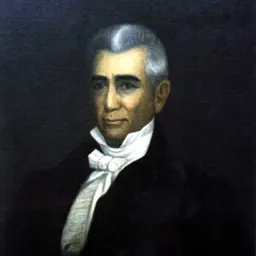
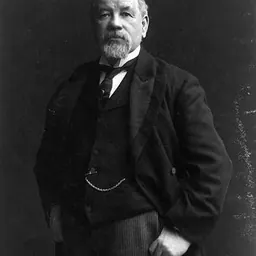


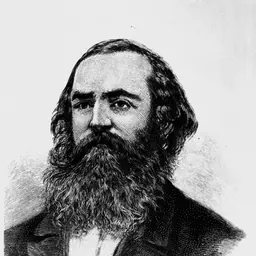
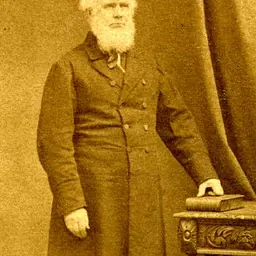
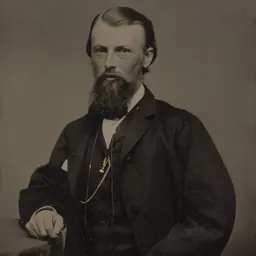
Related people
Same field, nearest in time


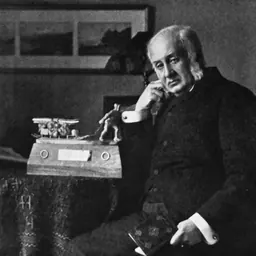
Contemporaries
People whose lives overlapped Robert O'Hara Burke's



Frequently asked questions
Who was Robert O'Hara Burke?
Australian explorer (1821–1861)
When was Robert O'Hara Burke born?
Robert O'Hara Burke was born on 6 May 1821 in County Galway.
When did Robert O'Hara Burke die?
Robert O'Hara Burke died on 28 June 1861 in Cooper Creek.
What was Robert O'Hara Burke's occupation?
Robert O'Hara Burke was an explorer, police officer and soldier.
What was Robert O'Hara Burke known for?
Robert O'Hara Burke was known for Burke and Wills expedition.
What nationality was Robert O'Hara Burke?
Robert O'Hara Burke was British and Irish.
Sources & further reading
· Wikipedia: Robert O'Hara Burke
· DBpedia: Robert O'Hara Burke
Cite this page
APA: Biography.guide. (2026). Robert O'Hara Burke. https://biography.guide/robert-o-hara-burke/
MLA: "Robert O'Hara Burke." Biography.guide, https://biography.guide/robert-o-hara-burke/.
Chicago: "Robert O'Hara Burke." Biography.guide. https://biography.guide/robert-o-hara-burke/.
Data last updated: 2026-09-22 · Spot an error? Report a correction.
Page generated 2026-09-27 05:09 UTC