
About Robert O. Collins
Lived 1933 – 2008 (aged 75). Robert O. Collins was a historian.
Robert Oakley Collins (April 1, 1933 – April 11, 2008) was an American historian of East Africa and Sudan. He published numerous articles and thirty-five books, including Shadows in the Grass: Britain in the Southern Sudan (Yale, 1983), which was awarded the John Ben Snow Foundation prize for the best book in British History and the Social Sciences written by a North American. He worked as an adviser for Southern Sudan's High Executive Council (HEC) Regional Government in the early 1970s, Chevron Overseas Petroleum in 1981 to 1991, and the US Government. Collins authored many background papers on Sudan and the Middle East aimed at policymakers and, in 1981, he testified before the United States House Committee on Foreign Affairs. In 1980 he was awarded the Order of Sciences, Arts and Art, Gold Class, by Gaafar Nimeiry, the President of Sudan, for his long service to scholarship on the Upper Nile.
Robert O. Collins was Professor of History at the University of California, Santa Barbara, from 1965 to 1994. Among a wider public, he is probably best known for a book co-authored with J. Millard Burr, Alms for Jihad: Charity and Terrorism in the Islamic World (CUP, 2006). In 2007, to avoid a libel suit from the Saudi billionaire Khalid bin Mahfouz, Cambridge University Press agreed to remove Alms for Jihad from circulation in British libraries and to destroy existing copies.
Biography Early life and education Robert O. Collins was born in Waukegan, Illinois, in 1933. His father, William George Collins, was a ceramics engineer and worked for Johns Manville. His mother, Louise Van Horsen Jack, was a nurse. Robert's elder brother, Jack Gore Collins (1930–2010), was Assistant Attorney for the United States Department of Justice in Portland, Oregon. His younger brother, George William Collins II (1937–2013), was an astronomer who taught at Ohio State University and, later, Case Western Reserve University.
Robert entered Dartmouth College in 1950, where he developed an interest in African history while browsing in the library there. In 1954, he completed his senior history thesis, Emin Pasha in Equatoria, 1876–1889, and won a Marshall Scholarship for study at Oxford University. In 1955, while a Masters student at Balliol College, Oxford, he obtained a research grant from the Ford Foundation, which enabled him to undertake work on his thesis on the Equatoria Province. He first traveled to Sudan in 1956, to carry out research in the National Records Office of Sudan. He obtained an MA in History at Oxford University during that year, and entered Yale in 1957. Collins was awarded a PhD in 1959. His dissertation, The Mahdist invasions of the Southern Sudan, 1883–1898 (1959) was based on his MA research and published "virtually unrevised" and, in 1997, he donated his substantial library and primary research materials to Durham University's Sudan Archive.
Southern Sudan historical retrieval project
Collins made an important contribution to the National Archives of South Sudan by providing an early inventory of district files and filing systems. Following the Addis Ababa Agreement (1972), Enoch Mading de Garang, the Regional Minister of Information, Culture, Youth and Sports in Southern Sudan's High Executive Council (HEC) government, began work on an archive of Southern Sudanese political movements. In 1976, Robert Collins traveled with his wife, Janyce, to southern Sudan, after being invited there by E.M. Garang to compile a report on ways to collect and preserve materials related to Southern Sudan's recent history as part of the Southern Sudan Historical Retrieval Project. Collins consulted scholars and officials, visited the proposed sites for the University of Juba and parliament buildings in Juba, and made an inspection of files in Juba, Yei, Maridi, Rumbek, Gogrial, Aweil, Tonj, Yirol, Wau, and Malakal. Upon his return to Juba, Collins recommended that E.M. Garang expand the archives to include Southern Sudan's administrative records. In 2007, to avoid a libel suit from the Saudi billionaire Khalid bin Mahfouz, Cambridge University Press agreed to remove Alms for Jihad from circulation in British libraries and to destroy existing copies. and paid costs and damages. The actions of CUP attracted wide attention, contributing to the book's wide readership.
Many scholars have criticized the book for relying on tenuous evidence and an overly-broad and deeply political definition of "terrorism", which portrayed the entire Islamic charitable sector as a conduit or "golden chain" for terrorist financing.
Reception Robert O. Collins work has been influential in the study of Sudanese and Middle East history. raconteur, often place Collins in the tradition of slightly older historians and authors like A.J. Arkell (1898–1980), Peter Holt (1918–2006) and Alan Moorehead (1910–1983), partly to imply that his approach to history is now a bit old-fashioned.
Private life Robert ("Bob") Collins owned a yellow Beetle. They traveled frequently together in Africa, the Middle East, and Europe.
Don’t just read it —
keep it.
Full-length biographies made to live with: read them, listen on the way to work, watch them tonight.
- E-book
- Audio
- Video
Instant download · yours to keep · every purchase keeps this site free
Important facts
People in Robert O. Collins's life
Named in this biography and alive at the same time


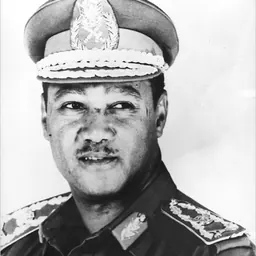

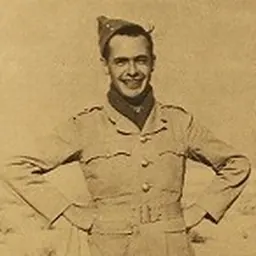

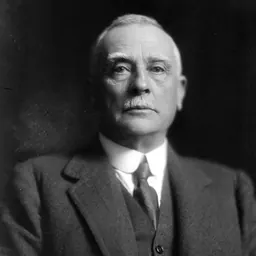
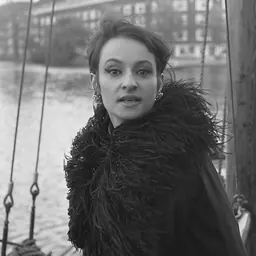
Related people
Same field, nearest in time



Contemporaries
People whose lives overlapped Robert O. Collins's



Frequently asked questions
Who was Robert O. Collins?
American college teacher, author
When was Robert O. Collins born?
Robert O. Collins was born on 1 April 1933 in Waukegan.
When did Robert O. Collins die?
Robert O. Collins died on 11 April 2008 in Santa Barbara.
What was Robert O. Collins's occupation?
Robert O. Collins was a historian.
Sources & further reading
· Wikipedia: Robert O. Collins
Cite this page
APA: Biography.guide. (2026). Robert O. Collins. https://biography.guide/robert-o-collins/
MLA: "Robert O. Collins." Biography.guide, https://biography.guide/robert-o-collins/.
Chicago: "Robert O. Collins." Biography.guide. https://biography.guide/robert-o-collins/.
Data last updated: 2026-09-22 · Spot an error? Report a correction.
Page generated 2026-09-27 05:27 UTC