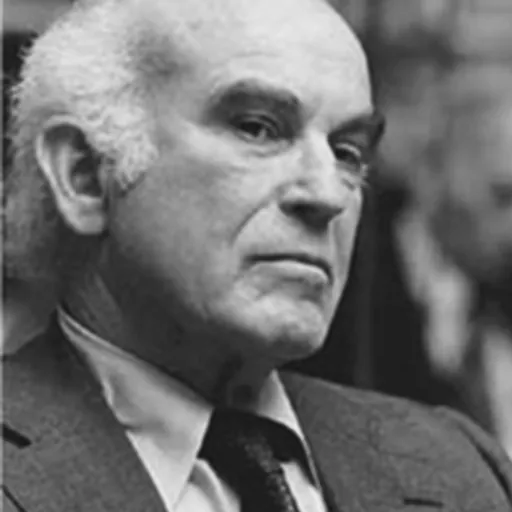
About Robert Nisbet
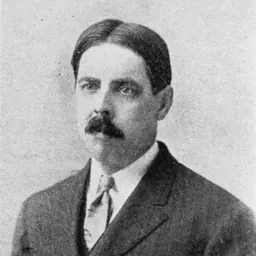
Lived 1913 – 1996 (aged 82). Robert Nisbet was an American sociologist, pedagogue, university teacher and philosopher.
Robert Alexander Nisbet (; September 30, 1913 – September 9, 1996) was an American sociologist, a professor at the University of California, Berkeley, vice-chancellor at the University of California, Riverside, and an Albert Schweitzer Professor at Columbia University. Life Nisbet was born in Los Angeles in 1913. He was raised with his three brothers and one sister in the small California community of Maricopa, where his father managed a lumber yard. His studies at University of California, Berkeley culminated in a Ph.D. in sociology in 1939. His thesis was supervised by Frederick J. Teggart. At Berkeley, "Nisbet found a powerful defense of intermediate institutions in the conservative thought of 19th-century Europe. Nisbet saw in thinkers like Edmund Burke and Alexis de Tocqueville—then all but unknown in American scholarship—an argument on behalf of what he called 'conservative pluralism.'"
On retiring from Columbia in 1978, Nisbet continued his scholarly work for eight years at the American Enterprise Institute in Washington, D.C. In 1988, President Ronald Reagan asked him to deliver the Jefferson Lecture in Humanities, sponsored by the National Endowment for the Humanities. He died, at 82, in Washington, DC.
Ideas Nisbet's first important work, The Quest for Community (New York: Oxford University Press, 1969), claimed that modern social science's individualism denied an important human drive toward community as it left people without the aid of their fellows to combat the centralizing power of the nation-state. New York Times columnist Ross Douthat called it "arguably the 20th century's most important work of conservative sociology".
Nisbet began his career as a leftist but later confessed a conversion to a philosophical conservatism. While he consistently described himself as a conservative, he also "famously defended abortion rights and publicly attacked the foreign policy of President Ronald Reagan".
He contributed to Chronicles. He was especially concerned with tracing the history and impact of the Idea of Progress. He challenged conventional sociological theories about progress and modernity, insisting on the negative consequences of the loss of traditional forms of community, a process that he believed was greatly accelerated by World War I. According to British sociologist Daniel Chernilo, for Nisbet, "The sociological interest in the formation of modern society lies in whether and how it can re-invigorate forms of communal life and, if not, in understanding what will be the consequences of such failure." Nisbet, thus, "inverts what had been until then the mainstream proposition that society was more important, both historically and normatively, than community". Chernilo also critically observed that Nisbet's "argument on the Great War [World War I] that marks the transition from community to society offers a one-sided view of the historical process as moving unequivocally towards a decaying condition".
Don’t just read it —
keep it.
Full-length biographies made to live with: read them, listen on the way to work, watch them tonight.
- E-book
- Audio
- Video
Instant download · yours to keep · every purchase keeps this site free
Important facts
People in Robert Nisbet's life
Named in this biography and alive at the same time



Related people
Same field, nearest in time


Contemporaries
People whose lives overlapped Robert Nisbet's



Frequently asked questions
Who was Robert Nisbet?
American sociologist (1913–1996)
When was Robert Nisbet born?
Robert Nisbet was born on 30 September 1913 in Los Angeles.
When did Robert Nisbet die?
Robert Nisbet died on 9 September 1996 in Washington, D.C..
What was Robert Nisbet's occupation?
Robert Nisbet was a sociologist, pedagogue, university teacher and philosopher.
What nationality was Robert Nisbet?
Robert Nisbet was American.
Sources & further reading
Cite this page
APA: Biography.guide. (2026). Robert Nisbet. https://biography.guide/robert-nisbet/
MLA: "Robert Nisbet." Biography.guide, https://biography.guide/robert-nisbet/.
Chicago: "Robert Nisbet." Biography.guide. https://biography.guide/robert-nisbet/.
Data last updated: 2026-09-22 · Spot an error? Report a correction.
Portrait: Wikimedia Commons · author & licence
Page generated 2026-09-27 05:04 UTC