
About Robert Murray Gilchrist
Lived 1867 – 1917 (aged 49–50). Robert Murray Gilchrist was a British writer and author.
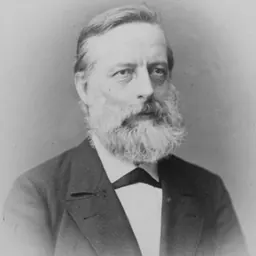
Photograph of the author that appeared in a book published during 1903. Robert Murray Gilchrist (6 January 1867 – 1917) was an English novelist and author of regional interest books about the Peak District of north central England. He is best known today for his decadent and Gothic short fiction.
During his lifetime he published some 100 short stories, 22 novels, six story collections, and four non-fiction books.
Life Gilchrist was born in Sheffield, England, the second son of Robert Murray Gilchrist and Isabella. He was educated at Sheffield Royal Grammar School and later privately. He never married. He worked briefly for noted editor William Ernest Henley (1849–1903) at National Observer (formerly The Scots Observer). He lived for much of his life in the North Derbyshire village of Holmesfield, living with his mother and a male companion at Cartledge Hall. From 1893 to 1897, he lived in a remote part of the Peak District and some sources say he lived a few months in Paris, France. He began his writing career during 1890 with the publication of his first novel, Passion The Plaything. He contributed short stories to many periodicals, including The Temple Bar, Home Chimes and The Yellow Book. A productive writer, he published 22 novels, six short story collections, four regional interest books and one play (posthumously). During World War I, he was noted for his charitable assistance to Belgian refugees, many of whom attended his funeral during 1917.
Literary work As an English novelist and regional writer, Robert Murray Gilchrist never achieved the recognition his colleagues and many critics thought he deserved. His friend, Eden Phillpotts wrote that "no record or estimate of the conte in English letters can be complete without study of his contributions thereto." He dedicated his story collection, The Striking Hours, to Gilchrist, terming him "the master of the short story." Gilchrist's first story collection failed to draw much attention, and while he occasionally published short stories all of his life, including one, "The Crimson Weaver" in the celebrated magazine, The Yellow Book, the bulk of his output was his twenty-two novels, in addition to his six short story collections, a play and four regional guide books. He was friends with many noted writers including Phillpotts, William Sharp (Fiona MacLeod) and Hugh Walpole. He worked for noted editor and writer William Ernest Henley, and he corresponded with Larner Sugden, Kineton Parkes and occasionally H. G. Wells.
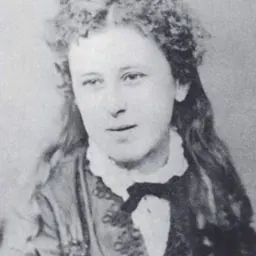
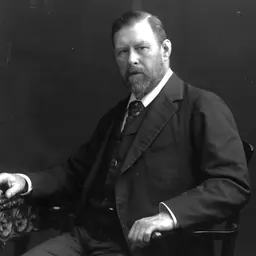
Like his better-known contemporary, Vernon Lee, Gilchrist's modern literary revival started with fewer than two dozen strange tales. Virtually forgotten until horror anthologist Hugh Lamb reprinted his stories during the 1970s, his work includes fin-de-siècle Gothic fiction, similar in many ways to the fiction of Robert Louis Stevenson, Oscar Wilde, Bram Stoker, Vernon Lee, Arthur Machen, Eric Stenbock and Richard Marsh.
Gilchrist's first short story collection, The Stone Dragon and Other Tragic Romances (1894) was a collection of weird and Decadent stories. It failed to sell well, and while he occasionally published short stories all his life, the bulk of his output was a score of novels, two plays and two travel guide books. Unsold first printing sheets of The Stone Dragon were later disposed of in 1902 in a plain grey binding with a 1902 catalogue bound in to the rear.
Gilchrist's modern revival began during the mid-1970s when Lamb published five of his Gothic tales in his series of nineteenth century horror anthologies, arguing that Gilchrist was "an unrecognised master of the macabre story" and that The Stone Dragon and Other Tragic Romances was "a book of the most remarkable and subtle fiction ever published". Jack Sullivan in The Penguin Encyclopedia of Horror and the Supernatural described Gilchrist as "a neglected master of horror who deserves revival". Brian Stableford selected three of his tales for The Dedalus Book of Decadence: Moral Ruins (1992). During 1998, the Charon Press reprinted The Stone Dragon, followed by the larger Ash Tree Press collection, The Basilisk and Other Tales of Dread during 2003. During the early part of this century, two articles about Gilchrist appeared in All Hallows, the Canadian-based journal of the Ghost Story Society. His regional interest book, The Dukeries, was reprinted during 2001 and 2009. I Am Stone: The Gothic Weird Tales of R Murray Gilchrist, which includes three tales not previously printed in modern editions, was published in 2021 as part of the British Library's Tales of the Weird series.
Don’t just read it —
keep it.
Full-length biographies made to live with: read them, listen on the way to work, watch them tonight.
- E-book
- Audio
- Video
Instant download · yours to keep · every purchase keeps this site free
Important facts
People in Robert Murray Gilchrist's life
Named in this biography and alive at the same time


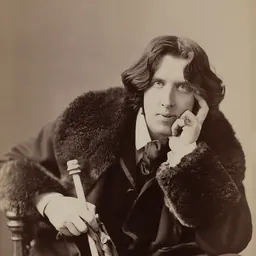
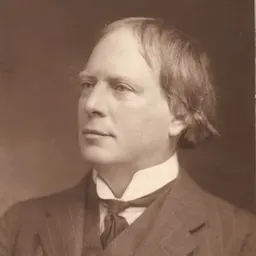
Related people
Same field, nearest in time

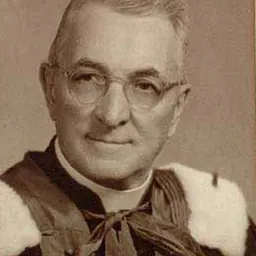

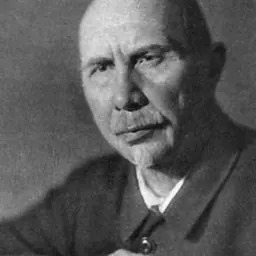
Contemporaries
People whose lives overlapped Robert Murray Gilchrist's


Frequently asked questions
Who was Robert Murray Gilchrist?
British writer
When was Robert Murray Gilchrist born?
Robert Murray Gilchrist was born on 6 January 1867 in Sheffield.
When did Robert Murray Gilchrist die?
Robert Murray Gilchrist died in 1917.
What was Robert Murray Gilchrist's occupation?
Robert Murray Gilchrist was a writer and author.
What nationality was Robert Murray Gilchrist?
Robert Murray Gilchrist was British.
Sources & further reading
· Wikipedia: Robert Murray Gilchrist
· DBpedia: Robert Murray Gilchrist
Cite this page
APA: Biography.guide. (2026). Robert Murray Gilchrist. https://biography.guide/robert-murray-gilchrist/
MLA: "Robert Murray Gilchrist." Biography.guide, https://biography.guide/robert-murray-gilchrist/.
Chicago: "Robert Murray Gilchrist." Biography.guide. https://biography.guide/robert-murray-gilchrist/.
Data last updated: 2026-09-20 · Spot an error? Report a correction.
Page generated 2026-09-27 05:26 UTC