
About Robert Murray
Lived 1635 – 1725 (aged 89–90). Robert Murray was a financier and writer.
Robert Murray (1635 – 1725?) was an English financier, writer on commerce, and Whig conspirator. He is now remembered for his part in the first London Penny Post.
Early life Born in the Strand, London, he was son of Robert Murray, a tailor. In 1649 he was entered as an apprentice in the books of the Clothworkers' Company, and took up his freedom in 1660. He is subsequently spoken of as "milliner" and "uphosterer" but may have retired from trade when he was writing.
The Penny Post of 1680
It has been argued that the Penny Post's launch at the period of the exclusion crisis was no coincidence. It was announced on 22 March 1679 in the Mercurius Civicus, a Whig paper. It has been claimed that the opposition leader Lord Shaftesbury was a backer of the scheme, as he was of the paper.
Murray with William Dockwra opened for business with a penny post service on 27 March 1680. They offered to take letters "to any part of the City, or Suburbs", for a penny. Hugh Chamberlen and perhaps Henry Neville Payne were partners. The scheme was initially denounced by Titus Oates, because Payne who claimed a share in the concept was a Tory. But it was in fact taken up swiftly as a channel for distribution of anti-government writings. Coffee houses were used to pick up and drop posts.
Whig agent and official In July 1682 Murray was in contact with the Covenanter Alexander Gordon of Earlston. Gordon had come to London as a Covenanter representative; and Murray passed on plans for a putative uprising. He was in Paris in August 1682, meeting with Huguenot supporters of Shaftesbury. His French journey became known to Leoline Jenkins.
In the mid-1690s Murray was proposing a "land bank", an idea up in the air at the time and also promoted by Chamberlen and John Briscoe. His ideas for paying off the national debt over a decade, aided by a malt tax, attracted attention.
Murray became clerk to the general commissioners for the revenue of Ireland, and clerk to the commissioners of the grand excise of England. In August 1697 he had been active in the malt tax proposals in parliament, and was then in custody in a sponging house near St. Clement's Church. In 1703 he offered to the Lord High Treasurer a scheme for tin, and asked for the royal bounty.
Murray is credited with developing an idea of Israel Tonge of copybooks for teaching children to read.
Don’t just read it —
keep it.
Full-length biographies made to live with: read them, listen on the way to work, watch them tonight.
- E-book
- Audio
- Video
Instant download · yours to keep · every purchase keeps this site free
Important facts
People in Robert Murray's life
Named in this biography and alive at the same time

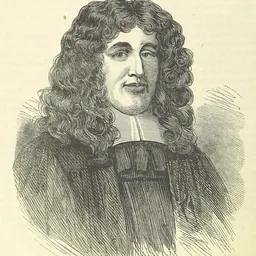




Related people
Same field, nearest in time

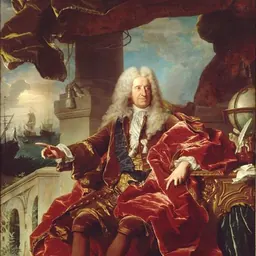


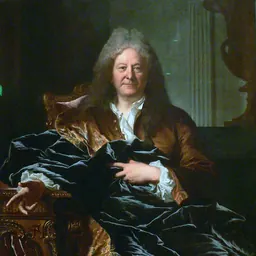
Contemporaries
People whose lives overlapped Robert Murray's




Frequently asked questions
Who was Robert Murray?
English financier, writer on commerce and Whig conspirator
When was Robert Murray born?
Robert Murray was born in 1635.
When did Robert Murray die?
Robert Murray died in 1725.
What was Robert Murray's occupation?
Robert Murray was a financier and writer.
Sources & further reading
· DBpedia: Robert Murray (financier)
Cite this page
APA: Biography.guide. (2026). Robert Murray. https://biography.guide/robert-murray-financier/
MLA: "Robert Murray." Biography.guide, https://biography.guide/robert-murray-financier/.
Chicago: "Robert Murray." Biography.guide. https://biography.guide/robert-murray-financier/.
Data last updated: 2026-09-20 · Spot an error? Report a correction.
Page generated 2026-09-27 05:18 UTC