
Robert McFarlane
American Marine Corps officer and National Security Advisor
About Robert McFarlane
Lived 1937 – 2022 (aged 84). Robert McFarlane was an American military officer and politician.
Robert Carl "Bud" McFarlane (July 12, 1937 – May 12, 2022) was an American Marine Corps officer who served as National Security Advisor to President Ronald Reagan from 1983 to 1985. Within the Reagan administration, McFarlane was a leading architect of the Strategic Defense Initiative, a project intended to defend the US from Soviet ballistic missile attacks. He resigned as National Security Adviser in late 1985 because of disagreements with other administration figures but remained involved in negotiations with Iran and with Hezbollah.
McFarlane was a central figure in the Iran–Contra affair, an operation in which the Reagan administration funneled weapons to Iran and diverted the profits to illegally fund right-wing rebels in Nicaragua. When the scheme came to light, administration officials implemented a plan to insulate Reagan and senior officials by focusing blame on McFarlane. He ultimately pleaded guilty to four misdemeanor counts and admitted that he had hidden information about the Reagan administration's support of the Contras from Congress. Suffering from guilt over his role in the scheme and feeling betrayed by Reagan, who, McFarlane later wrote, "approved every single action I ever took" but "lacked the moral conviction and intellectual courage to stand up in our defense and in defense of his policy," McFarlane attempted suicide in 1987. McFarlane died in Lansing, Michigan, on May 12, 2022, from a lung condition.
Early life and education McFarlane was the son of Texas Democratic Congressman William McFarlane. After graduating high school, McFarlane entered the United States Naval Academy at Annapolis in 1955, where he graduated in 1959. He was the third member of his family to attend the Academy, after his uncle Robert McFarlane (1925) and his brother Bill (1949). At the academy he graduated in the top 15 percent of the class and lettered twice in gymnastics. He received an honorary doctorate from the Institute of World Politics in Washington, D.C., in 2014. He sang in the Chapel Choir, and was a Brigade Administrative Officer and 14th Company Commander. He married his high school sweetheart, Jonda Riley.
After attending the Graduate Institute of International Studies, McFarlane returned to Vietnam for a second tour in 1967–1968 as a Regimental Fire Support Coordinator for the 3rd Marine Division deployed along the Vietnamese Demilitarized Zone during the Tet Offensive. He organized all fire support (B-52s, naval gunfire from the USS New Jersey (BB-62), and artillery) for forces deployed at Con Thien, Cam Lộ, Đông Hà, The Rockpile, Khe Sanh, and points between. McFarlane received a Bronze Star and a Navy Commendation Medal, both with Valor device.
Following his second tour in Vietnam and a tour at Headquarters Marine Corps, in 1971 he was named a White House Fellow. He was the first Marine Corps officer selected for the program.
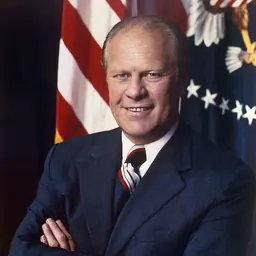
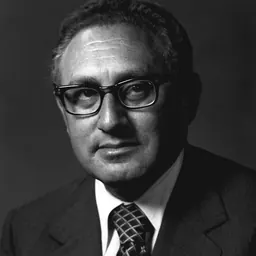
McFarlane was assigned to the White House Office of Legislative Affairs and at the conclusion of that assignment was selected as the Military Assistant to Henry Kissinger at the National Security Council. In this post, McFarlane dealt with intelligence exchanges with the People's Republic of China from 1973 to 1976, giving detailed intelligence briefings to the PRC at the time of the Sino-Soviet split. He also accompanied Kissinger on his visits to the PRC. In addition, McFarlane dealt with other aspects of foreign policy, including the Middle East, relations with the Soviet Union, and arms control. McFarlane was appointed by President Gerald Ford as his Special Assistant for National Security Affairs while a Lieutenant Colonel and was awarded the Navy Distinguished Service Medal in 1976.
Upon leaving the White House, McFarlane was assigned to the National Defense University, where he co-authored a book on crisis management while concurrently receiving a diploma from the National War College.
He ended his Marine Corps career on Okinawa as Operations Officer for the 12th Marine Regiment. McFarlane retired in 1979 as a lieutenant colonel.
Civilian posts In 1979, McFarlane was appointed by U.S. Senator John Tower to the staff of the Senate Armed Services Committee, where he was responsible for staffing Senate consideration of the SALT II Treaty from 1979 to 1981. He also authored much of Ronald Reagan's foreign policy platform during the 1980 presidential campaign.
In 1981, President Reagan appointed and the Senate confirmed McFarlane as Counselor at the Department of State. In this post he assisted Secretary of State Alexander Haig.
In 1982, Reagan appointed McFarlane as Deputy National Security Advisor responsible for the integration of the policy recommendations of the Departments of State, Treasury, and Defense. In 1983, he was appointed by the president as his Special Representative in the Middle East responsible for Israeli-Arab negotiations.
McFarlane was criticized for having involved the United States armed forces in the Lebanon Civil War with gunship bombardment of Lebanese opposition forces which may have led to the 1983 Beirut barracks bombing where 241 American servicemen were killed.
Following that assignment, he returned to the White House and was appointed President Reagan's National Security Advisor. In that post, he was responsible for the development of U.S foreign and defense policy. He was a supporter of the Strategic Defense Initiative (SDI or "Star Wars").
Iran-Contra affair and resignation
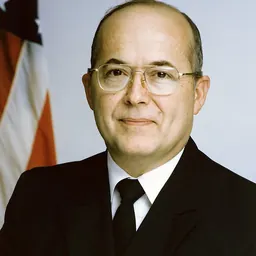
The Iran-Contra affair involved secretly selling arms to Iran and funneling the money to support the Contras in Nicaragua. As National Security Adviser, McFarlane urged Reagan to negotiate the arms deal with Iranian intermediaries, but McFarlane said that by late December 1985 he was urging Reagan to end the arms shipments. McFarlane resigned on December 4, 1985, citing that he wanted to spend more time with his family; he was replaced by Admiral John Poindexter.
The Iran-Contra affair came to light in November 1986 and a political scandal ensued. Disheartened, feeling abused by his former colleagues, and in depression over the embarrassment for the president that his actions had contributed to, McFarlane attempted suicide with an overdose of 25 to 30 valium tablets and was admitted into the hospital just two hours before his scheduled testimony before the Blue Ribbon panel appointed by President Reagan to investigate Iran-Contra known as the Tower Commission on February 9, 1987, saying he had failed his country.
In 1988, he pleaded guilty to four misdemeanor counts of withholding information from Congress as part of the Iran-Contra cover-up. He was sentenced to two years' probation and a $20,000 fine but was pardoned by President George H. W. Bush on Christmas Eve 1992.
Other activities
McFarlane co-founded and served as CEO of McFarlane Associates Inc., an international consulting company.
He was also a Co-founder and Director of IP3 International (short for "International Peace Power & Prosperity" ), a consortium of firms wanting to build nuclear reactors in Saudi Arabia that is led by retired U.S. military commanders and former White House officials. Michael Flynn has described himself as an adviser to IP3, which the company denies. In May 2019, McFarlane wrote an op-ed in The Washington Times advocating for developing nuclear power generation in the Middle East titled "The New Imperialism". This proposal, dubbed "Middle East Marshall Plan" by its backers, the chairman of Donald Trump's 2017 Presidential Inaugural Committee, a senior adviser to Trump's presidential campaign, and a long-time close friend of and fundraiser for Donald Trump. In 2021, McFarlane co-wrote with David Gattie a piece for The National Interest, titled, "China and the Importance of Civil Nuclear Energy," which extended his ideas on nuclear energy to the geopolitical outlook for China.
McFarlane was a member of the Washington Institute for Near East Policy (WINEP) Board of Advisors, was president of the Institute for the Analysis of Global Security, was on the Board of Advisors, and was a founding member of the Set America Free Coalition. He was also an Advisory Board member for the Partnership for a Secure America, a not-for-profit organization dedicated to recreating the bipartisan center in American national security and foreign policy.
McFarlane served on a number of boards including: Aegis Defence Services – Non-executive director Partnership for a Secure America – Advisory Board Fuel Freedom Foundation – Advisory Board Myriant Incorporated – Advisory Board Member of the Committee on the Present Danger Alphabet Energy – advisory board
He was an advisor to John McCain's 2008 presidential campaign. From 2009 on, McFarlane worked in the southern region of Sudan and Darfur on intertribal relations and development projects. On September 30, 2009, the Washington Post published a story suggesting that McFarlane's contract for this work, which was supported by the government of Qatar, was the result of a request by Sudanese officials. McFarlane denied any improper contact with Sudanese officials or efforts to avoid disclosure of his work. The Washington Post article reported that some persons involved in peacemaking efforts in the southern Sudan region questioned the source and helpfulness of McFarlane's activities. That article prompted FBI investigators to review McFarlane's activities in the Sudan. After an exhaustive probe that lasted three years and included search of his trash, email, and personal belongings, investigators concluded their search and did not file any criminal charges.
In July 2011, McFarlane, in cooperation with former CIA director Jim Woolsey, co-founded the United States Energy Security Council, sponsored by the Institute for the Analysis of Global Security.
Death McFarlane died on May 12, 2022, at a hospital in Lansing, Michigan, from complications of a lung condition at the age of 84. He lived in Washington, D.C., but was visiting family in Michigan at the time of his death.
Awards and decorations
Don’t just read it —
keep it.
Full-length biographies made to live with: read them, listen on the way to work, watch them tonight.
- E-book
- Audio
- Video
Instant download · yours to keep · every purchase keeps this site free
Important facts
People in Robert McFarlane's life
Named in this biography and alive at the same time





Related people
Same field, nearest in time


Contemporaries
People whose lives overlapped Robert McFarlane's



Frequently asked questions
Who was Robert McFarlane?
American Marine Corps officer and National Security Advisor (1937–2022)
When was Robert McFarlane born?
Robert McFarlane was born on 12 July 1937 in Washington, D.C..
When did Robert McFarlane die?
Robert McFarlane died on 12 May 2022 in Lansing.
What was Robert McFarlane's occupation?
Robert McFarlane was a military officer and politician.
What nationality was Robert McFarlane?
Robert McFarlane was American.
Sources & further reading
· DBpedia: Robert McFarlane (American government official)
Cite this page
APA: Biography.guide. (2026). Robert McFarlane. https://biography.guide/robert-mcfarlane/
MLA: "Robert McFarlane." Biography.guide, https://biography.guide/robert-mcfarlane/.
Chicago: "Robert McFarlane." Biography.guide. https://biography.guide/robert-mcfarlane/.
Data last updated: 2026-09-20 · Spot an error? Report a correction.
Page generated 2026-09-27 05:27 UTC