
About Robert Malley
Born 1963. Robert Malley is an American political scientist, diplomat and lawyer.
Robert Malley (born 1963) is an American lawyer, political scientist and specialist in conflict resolution, who was the lead negotiator on the 2015 Iran nuclear deal known as the Joint Comprehensive Plan of Action (JCPOA).
Malley was Director for Democracy, Human Rights and Humanitarian Affairs at the National Security Council from 1994 to 1996 and Program Director for Middle East and North Africa at the International Crisis Group and Assistant to National Security Advisor Sandy Berger from 1996 to 1998. As Special Assistant to President Clinton from 1998 to 2001, he was a member of the U.S. peace team and helped organize the 2000 Camp David Summit. He served in the National Security Council under President Barack Obama from 2014 to 2017. In 2015, the Obama administration appointed Malley as its "point man" on the Middle East, leading the Middle East desk of the National Security Council. In November 2015, Malley was named as President Obama's new special ISIS advisor. After leaving the Obama administration, Malley was President and CEO of the International Crisis Group, a Brussels non-profit committed to preventing wars.
In January 2021, President Joe Biden named Malley as special U.S. envoy for Iran. He was tasked with bringing the United States and Iran into compliance with the JCPOA after it had been abandoned by former president Donald Trump.
In 2023, Malley's security clearance was revoked and he was placed on a leave of absence pending an investigation into his handling of classified information. The investigation was later referred to the Federal Bureau of Investigation (FBI).
Early life Malley was born in 1963 to Barbara (née Silverstein) Malley, a New Yorker who worked for the United Nations delegation of the Algerian National Liberation Front (FLN), and her husband, Simon Malley (1923–2006), an Egyptian Jewish journalist who worked as a foreign correspondent for the Egyptian newspaper Al Gomhuria. He reported on international affairs, particularly nationalist, anti-imperial movements in Africa, putting the FLN on the world map.
In 1969, the Malley family moved to France, where Simon Malley founded the magazine Africasia (later known as Afrique Asia). Robert attended École Jeannine Manuel, a bilingual school in Paris, and graduated in 1980 in the same class as future U.S. Secretary of State Antony Blinken. The Malleys remained in France until 1980, when then French president Valéry Giscard d'Estaing had Simon Malley expelled due to his hostility towards French policies in Africa.
Robert Malley attended Yale University, and was a 1984 Rhodes Scholar at Magdalen College, Oxford, where he earned a D.Phil. in political philosophy. There he wrote his doctoral thesis about Third-worldism and its decline. He earned a J.D. at Harvard Law School, where he met his future wife, Caroline Brown. Another fellow law school student was Barack Obama. In 1991–1992, Malley clerked for Supreme Court Justice Byron White, while Brown clerked for Supreme Court Justice Sandra Day O'Connor. As of 2010, the couple has two sons, Miles and Blaise, and one daughter, Frances.
Clinton administration Malley served in the Clinton administration as Director for Democracy, Human Rights and Humanitarian Affairs at the National Security Council from 1994 to 1996. In that post he helped coordinate refugee policy, efforts to promote democracy and human rights abroad and U.S. policy toward Cuba. On May 9, 2008, the campaign severed ties with Malley when the British Times reported that Malley had been in discussions with the militant Palestinian group Hamas, listed by the U.S. State Department as a terrorist organization.
In February 2014, it was announced that Malley was joining the Obama administration to consult on Persian Gulf policy as senior director of the National Security Council. On April 6, 2015, Malley replaced Philip H. Gordon as Special Assistant to the President and White House Coordinator for the Middle East, North Africa and the Gulf Region.
Lead Iran deal negotiator
Malley and U.S. Secretary of State John Kerry with Iranian Foreign Minister Javad Zarif in June 2015 Malley was the lead U.S. negotiator on the Joint Comprehensive Plan of Action, signed on July 14, 2015, which aimed to limit Iran's nuclear activities and ensure international inspections of its nuclear facilities in exchange for lifting economic sanctions. In describing the negotiating challenges, Malley later wrote in The Atlantic, "The real choice in 2015 was between achieving a deal that constrained the size of Iran's nuclear program for many years and ensured intrusive inspections forever, or not getting one, meaning no restrictions at all coupled with much less verification.
Return to International Crisis Group After Obama left office, Malley returned to the International Crisis Group, serving as the new President and CEO. He served till 2021 and was succeeded by Comfort Ero
Service and Suspension as Special Envoy to Iran
On January 28, 2021, President Biden named Malley U.S. special envoy to Iran, where he was tasked with trying to ease diplomatic tensions with Iran and rein in its nuclear program by compliance to the original pact.
In late April or early May 2023, Malley's security clearance was suspended. An investigation was launched into his possible mishandling of classified material. At the time, the State Department made misleading statements that Malley was only stepping back from some of his duties for personal reasons. The investigation was later referred to the FBI.
Despite the suspension of his security clearance, Malley continued doing State Department work, including providing media interviews. On June 29, 2023, Malley was placed on unpaid leave as special envoy to Iran after CNN reported on his security clearance suspension.
In August 2023, an Iranian state-run media outlet published a purported State Department memo from April 21, 2023, which stated that Malley's security clearance was suspended over "serious security concerns" related to his "personal conduct", "handling of protected information" and "use of information technology". The memo's veracity was backed by a person familiar with the Malley investigation, according to Politico. Former State Department officials have also confirmed that the memo matches standard State Department style.
The State Department did not immediately notify members of Congress of Malley's suspension, and also failed in its obligation under Department of State Authorities Act to notify the Office of the Inspector General. When Malley failed to appear for a Senate briefing, the State Department claimed to Congress that he was on "extended personal leave". He described the PLO as antiquated, worn out, barely functioning, and, because it did not include the broad Islamist views represented by Hamas, of questionable authority. Malley favored negotiating with Hamas for the purpose of a ceasefire, citing Hamas officials in Gaza who said they were prepared for an agreement with Israel. in support of efforts to implement an immediate end to Palestinian rocket launches and sniper fire, and a freeze on Israeli military attacks on Gaza, Malley claimed the blockade of the Gaza Strip had not stopped Hamas's rocket attacks on Israeli towns and had led to a lack of medicine, fuel, electricity and other essential commodities. In his view, a cease-fire would avoid "enormous loss of life, a generation of radicalized and embittered Gazans, and another bankrupt peace process." "Later, however, other scholars and former officials voiced similar views to those of Malley", according to a February 20, 2008, article in The Jewish Daily Forward. On the conservative webzine The American Thinker, Ed Lasky asserted that Malley "represents the next generation of anti-Israel activism." Their view was shared by M.J. Rosenberg, a former editor at the American Israel Public Affairs Committee and a critic of Israeli policies, who condemned the attacks on Malley, writing that Malley is "pro-Israel" and that the only reason he was being criticized was because he supports Israeli–Palestinian negotiations.
In October 2022, following a massive demonstration by Iranians in Berlin and elsewhere including Washington, D.C. in support of protests in Iran, Malley tweeted that "Marchers in Washington and cities around the world are showing their support for the Iranian people, who continue to peacefully demonstrate for their government to respect their dignity and human rights." He came under fire by Iranians and non-Iranians for undermining the protests in Iran to a mere demand for respect and some asked him to step down from his position. In response, he accepted that his words "were poorly worded". In his interview with Iran International, he stressed that ""It is not up to me; it is not up to the US government what the brave women and men who have been demonstrating in Iran want. It is up to them.".
Selected publications Books:
Malley, Robert. The Call from Algeria: Third Worldism, Revolution, and the Turn to Islam. Berkeley: University of California Press (1996). Agha, Hussein and Malley, Robert. Tomorrow Is Yesterday: Life, Death, and the Pursuit of Peace in Israel/Palestine. Farrar, Straus and Giroux (Sept 2025).
Book chapters:
Malley, Robert; Hufford, D. Brian. "THE WAR IN LEBANON: The Waxing and Waning of International Norms". From International Incidents: The Law That Counts in World Politics, W.M. Reisman & A.R. Willard (eds.), Princeton University Press.https://www.jstor.org/stable/j.ctt7zvwdr.11
Journal articles:
Malley, Robert. "The Third Worldist Moment". Current History, Vol. 98, No. 631 (1999), pp. 359-369. https://www.jstor.org/stable/45318377 Malley, Robert; Agha, Hussein. "The Last Negotiation: How to End the Middle East Peace Process". Foreign Affairs, Vol. 81, No. 3 (2002), pp. 10-18. https://www.jstor.org/stable/20033159 Malley, Robert; Harling, Peter. "Beyond Moderates and Militants: How Obama Can Chart a New Course in the Middle East". Foreign Affairs, Vol. 89, No. 5 (2010), pp. 18-29. https://www.jstor.org/stable/20788642 Malley, Robert; Finer, Jon. "The Long Shadow of 9/11: How Counterterrorism Warps U.S. Foreign Policy". Foreign Affairs, Vol. 97, No. 4 (2018), pp. 58-69. https://www.jstor.org/stable/44822213
Newspaper and magazine articles: Robert Malley & Hussein Agha, "Camp David: The Tragedy of Errors", New York Review of Books, August 9, 2001 Robert Malley, "Playing into Sharon's Hands", The New York Times, January 25, 2002 Robert Malley, "Rebuilding a Damaged Palestine", The New York Times, May 7, 2002 Robert Malley & Hussein Agha, "Camp David and After: An Exchange (A Reply to Ehud Barak)", New York Review of Books, June 13, 2002 Robert Malley & Hussein Agha, "A durable Middle East peace: Oslo didn't achieve it, nor has the Bush "road map". So what would satisfy both sides?",American Prospect, November 1, 2003 Robert Malley & Hussein Agha, "Hamas has arrived - but there are limits to its advance", The Guardian, January 24, 2006 Robert Malley, "Making the Best of Hamas' Victory", Common Ground News Service, March 2, 2006 Robert Malley & Peter Harling, "The enemy we hardly know", The Boston Globe, March 19, 2006 Robert Malley & Gareth Evans, "How to Curb the Tension in Gaza", The Financial Times, July 5, 2006 Robert Malley, "Mideast: Avoiding failure with Hamas", The International Herald-Tribune, April 10, 2006 Robert Malley & Peter Harling, "Containing a Shiite symbol of hope", The Christian Science Monitor, October 24, 2006 Robert Malley & Henry Siegman, "The Hamas Factor" , The International Herald-Tribune, December 27, 2006 Robert Malley, , The Los Angeles Times, April 11, 2007 Robert Malley & Hussein Agha, "The Road from Mecca", New York Review of Books, May 10, 2007 Robert Malley & Hussein Agha, "Middle East Triangle", The Washington Post, January 17, 2008 Robert Malley, "The Gaza time bomb", The International Herald Tribune, January 21, 2008 Robert Malley & Hussein Agha, "The Two-State Solution Doesn't Solve Anything", The New York Times, August 10, 2009 Robert Malley & Jon Finer, "How Our Strategy Against Terrorism Gave Us Trump", The New York Times, March 4, 2017
Don’t just read it —
keep it.
Full-length biographies made to live with: read them, listen on the way to work, watch them tonight.
- E-book
- Audio
- Video
Instant download · yours to keep · every purchase keeps this site free
Important facts
People in Robert Malley's life
Named in this biography and alive at the same time



Related people
Same field, nearest in time
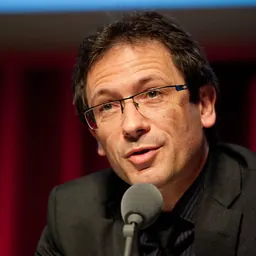



Contemporaries
People whose lives overlapped Robert Malley's



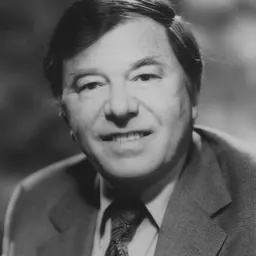

Frequently asked questions
Who is Robert Malley?
American diplomat
When was Robert Malley born?
Robert Malley was born in 1963 in New York City.
What is Robert Malley's occupation?
Robert Malley is a political scientist, diplomat and lawyer.
What nationality is Robert Malley?
Robert Malley is American.
Sources & further reading
Cite this page
APA: Biography.guide. (2026). Robert Malley. https://biography.guide/robert-malley/
MLA: "Robert Malley." Biography.guide, https://biography.guide/robert-malley/.
Chicago: "Robert Malley." Biography.guide. https://biography.guide/robert-malley/.
Data last updated: 2026-09-20 · Spot an error? Report a correction.
Page generated 2026-09-27 05:30 UTC