
About Robert M. Dirks
Lived 1978 – 2015 (aged 36). Robert M. Dirks was an American chemist.
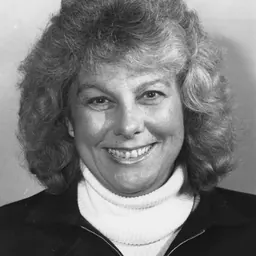
Robert Dirks (May 29, 1978 – February 3, 2015) was an American chemist known for his theoretical and experimental work in DNA nanotechnology. Born in Thailand to a Thai Chinese mother and American father, he moved to Spokane, Washington at a young age. Dirks was the first graduate student in Niles Pierce's research group at the California Institute of Technology, where his dissertation work was on algorithms and computational tools to analyze nucleic acid thermodynamics and predict their structure. He also performed experimental work developing a biochemical chain reaction to self-assemble nucleic acid devices. Dirks later worked at D. E. Shaw Research on algorithms for protein folding that could be used to design new pharmaceuticals.
In February 2015, Dirks died in the Valhalla train crash, the deadliest accident in the history of Metro-North Railroad. An award for early-career achievement in molecular programming research was established in his honor.
Early life
Dirks was born in Bangkok, Thailand, in 1978. His mother Suree, a Thai Chinese woman who worked in a bank at the time, his father, Michael Dirks, was a mathematics teacher at the International School Bangkok recruited from the United States. After about a year, the family, including older Four years later the family settled in Michael's hometown of Spokane, Washington, where he took a job teaching math at North Central High School and Spokane Falls Community College. Shortly after graduation Robert and three of his classmates were one of three high school winners of the ExploraVision national scientific contest, earning them and their families a trip to Washington, D.C. The topic of their project was the future of nanotechnology.
Although he had been accepted to the Massachusetts Institute of Technology, he chose instead to attend Wabash College in Crawfordsville, Indiana. from Wabash in 2000
Dirks' work in computational chemistry involved creating algorithms and computational tools for the analysis of nucleic acid thermodynamics and nucleic acid structure prediction. Dirks wrote the initial code for the NUPACK suite of nucleic acid design and analysis tools, which generates base pairing probabilities through calculation of the statistical partition function. Unlike other structure prediction tools, NUPACK is capable of handling an arbitrary number of interacting strands rather than being limited to one or two. Dirks also developed an algorithm capable of efficiently handling certain types of pseudoknots, a class of structure that is more computationally intensive to analyze, although NUPACK only implements this ability for single RNA strands.
His experimental work pioneered the hybridization chain reaction method, the first demonstration of the self-assembly of nucleic acid structures conditional on a molecular input. As an enzyme-free, isothermal method, it later found application as the basis of an immunoassay method, for in situ hybridization imaging of gene expression, and as the basis for catalytic, isothermal self-assembly of DNA nanostructures.
Dirks then worked at D. E. Shaw Research in Manhattan to develop methods for computational protein structure prediction for the design of new drugs, beginning in 2006.
Reactions to his death came from many quarters, many paying tribute to his scientific prowess. His father recalled that "he always got everything the first time. He always excelled." Greg Sampson, Dirks' math teacher at Lewis and Clark, remembered when his student had finished an advanced class in trigonometry in just two weeks, something no other student of his has ever done, saying "he was just an amazing, amazing student." Niles Pierce recalled how Dirks was willing to take a chance on working with a younger professor. His former postdoc was, he said, "an unusual student, even for Caltech... He did remarkable things." The first prize was awarded in 2016. As of June 2016, fundraising to establish a $100,000 endowment was ongoing.
Notable works
Don’t just read it —
keep it.
Full-length biographies made to live with: read them, listen on the way to work, watch them tonight.
- E-book
- Audio
- Video
Instant download · yours to keep · every purchase keeps this site free
Important facts
People in Robert M. Dirks's life
Named in this biography and alive at the same time

Related people
Same field, nearest in time






Contemporaries
People whose lives overlapped Robert M. Dirks's





Frequently asked questions
Who was Robert M. Dirks?
American chemist
When was Robert M. Dirks born?
Robert M. Dirks was born on 29 May 1978 in Bangkok.
When did Robert M. Dirks die?
Robert M. Dirks died on 3 February 2015 in Valhalla.
What was Robert M. Dirks's occupation?
Robert M. Dirks was a chemist.
What nationality was Robert M. Dirks?
Robert M. Dirks was American.
Sources & further reading
Cite this page
APA: Biography.guide. (2026). Robert M. Dirks. https://biography.guide/robert-m-dirks/
MLA: "Robert M. Dirks." Biography.guide, https://biography.guide/robert-m-dirks/.
Chicago: "Robert M. Dirks." Biography.guide. https://biography.guide/robert-m-dirks/.
Data last updated: 2026-09-20 · Spot an error? Report a correction.
Page generated 2026-09-27 05:10 UTC