
About Robert Kerr
Lived 1823 – 1904 (aged 81). Robert Kerr was a British architect.
Robert Kerr (Aberdeen 17 January 1823 – 21 October 1904) was a British architect, architectural writer and co-founder of the Architectural Association.
Biography
Kerr was born in Aberdeen, where he trained as an architect. In 1844, he moved to London and in 1845 spent a year in New York City, from where he returned to London with a rebellious spirit.
Together with the only 18 year old Charles Gray, in 1847 Kerr was a founder of the Architectural Association (AA), becoming its first President, 1847–48. The aim of the AA was to offer an alternative for the education of architects through a systematic course of training provided by the students themselves, rather than having to settle with the existing highly unreliable custom where young men were articled to established architects.
Kerr had been elected a Fellow of the Royal Institute of British Architects (RIBA) in 1857, where he served as an examiner and as a council member. Between 1860–1902, Kerr was District Surveyor for the parish of St James's, Westminster, and 1861–90 Professor of the Arts of Construction at King's College London.
In 1848 Kerr married Charlotte Mary Anne Fox. They had nine children. Three of their four sons went on to be architects. Their daughter, Harriet Kerr, became a suffragette as a response to her father's prejudice against women.
Buildings Favouring a mixture of architectural styles, which he called "latitudinarian", Kerr's main buildings were English country houses, and included Dunsdale (Westerham, Kent, for Joseph Kitchin, 1863; destroyed), Ascot Heath House (Ascot, Berkshire, 1868; destroyed) and Ford House (then in Lingfield, Surrey, 1862; now Greathed Manor). Great Down (for T M Kitchin, perhaps related to Joseph Kitchin of Dunsdale) on the Hog's Back in Surrey (now demolished) has also been attributed to him on stylistic grounds.
The most ambitious, and indeed one of the largest Victorian country houses, was Bearwood House near Wokingham, Berkshire, built 1865–74 for the owner of The Times newspaper, John Walter. Nikolaus Pevsner describes it as "the climax [of country mansions], and in its brazen way one of the major Victorian monuments of England" and "as far as scale is concerned, and the disregard for what we pygmies would call domestic comfort, Bear Wood is indeed nearer to Blenheim than to our poky villas" Kerr was also the editor of the third edition of James Fergusson's History of the modern styles of architecture (London 1891) which he expanded.
Books The Newleafe discourses on the fine art architecture, London 1846 The gentleman's house; or, How to plan English residences from the parsonage to the palace, London 1864 (3rd expanded edition 1871) On Ancient Lights: And the Evidence of Surveyors Thereon : With Tables for the Measurement of Obstructions, London 1865 A small country house, London 1873 The consulting architect, London 1886
Articles (selection) The battle of the styles, in: The Builder 18:1860, 292–294 On the problem of providing dwellings for the poor in towns, in: RIBA transactions 17:1866/67, 37–80 A development of the theory of the architecturesque, in: RIBA transactions 19:1868/69, 89–103 The late Mr Beresford-Hope and the Gothic revival, in: RIBA proceedings 4:1888(11)219-220 Ruskin and emotional architecture, in: RIBA journal 7:1900, 181–188
List of Works
Ascot Heath House, Ascot, Berkshire (1868, now demolished) Bearwood House, Sindlesham, Berkshire (1865–74, built for John Walter National Provident Institution Headquarters, City of London, Greater London (1862, now demolished) Dunsdale House, Westerham, Kent (1863, now demolished) St. Andrew's Church, Framingham Pigot, Norfolk Great Down, Farnham, Surrey (now demolished) Ford House, Lingfield, Surrey (1862)
Don’t just read it —
keep it.
Full-length biographies made to live with: read them, listen on the way to work, watch them tonight.
- E-book
- Audio
- Video
Instant download · yours to keep · every purchase keeps this site free
Important facts
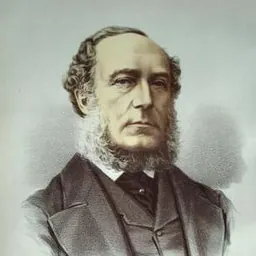
People in Robert Kerr's life
Named in this biography and alive at the same time




Related people
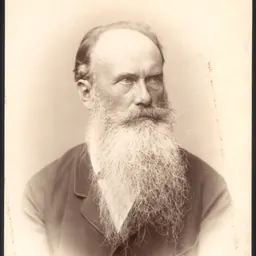
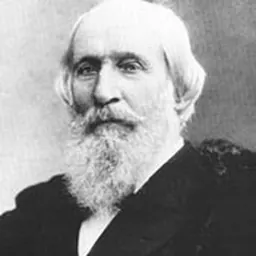
Same field, nearest in time

Contemporaries
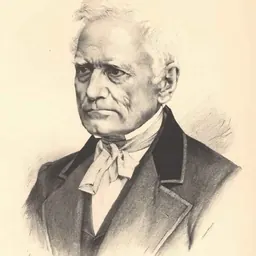
People whose lives overlapped Robert Kerr's



Frequently asked questions
Who was Robert Kerr?
British architect (1823-1904)
When was Robert Kerr born?
Robert Kerr was born on 17 January 1823 in Aberdeen.
When did Robert Kerr die?
Robert Kerr died on 21 October 1904 in London.
What was Robert Kerr's occupation?
Robert Kerr was an architect.
What nationality was Robert Kerr?
Robert Kerr was British.
Sources & further reading
· DBpedia: Robert Kerr (architect)
Cite this page
APA: Biography.guide. (2026). Robert Kerr. https://biography.guide/robert-kerr-architect/
MLA: "Robert Kerr." Biography.guide, https://biography.guide/robert-kerr-architect/.
Chicago: "Robert Kerr." Biography.guide. https://biography.guide/robert-kerr-architect/.
Data last updated: 2026-09-20 · Spot an error? Report a correction.
Page generated 2026-09-27 05:11 UTC