
About Robert Keable
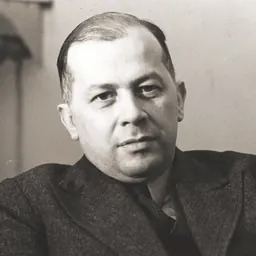
Lived 1887 – 1927 (aged 40). Robert Keable was a British novelist, writer, church of England and missionary.
Robert Keable (6 March 1887 – 22 December 1927) was a British novelist, formerly a missionary and priest in the Church of England. He resigned his ministry following his experiences in the First World War and caused a scandal with his 1921 novel Simon Called Peter, the tale of a priest's wartime affair with a young nurse. The book sold 600,000 copies in the 1920s alone, was referenced in The Great Gatsby, and was cited in a double murder investigation. Fêted in the United States, but critically less than well-received, Keable moved to Tahiti where he continued to write, producing both novels and theological works, until his death at age 40 of kidney disease.
Keable was raised in Bedfordshire and educated at Magdalene College, Cambridge. He entered a theological college after graduation and was ordained a priest in 1911. He spent the next several years as a missionary in Africa, stationed on Zanzibar and in Basutoland, before returning to Europe as an army chaplain during the First World War. There, he met and began a relationship with a young nurse, Grace Eileen Joly Beresford Buck, a development over which he eventually quit the Church of England and left his wife, Sybil. Returning to England after the war, Keable resigned his ministry and began to write novels: his first, 1921's Simon Called Peter, became a runaway success and launched Keable into a life of literary celebrity. Increasingly disillusioned with the hypocrisies he saw in contemporary British life, he and Buck left Europe for Tahiti in 1922. The couple lived there happily until Buck's death in childbirth in 1924, after which Keable's health began to fade. He nonetheless began a later relationship with a Tahitian woman, Ina, with whom he had a son, and continued to publish novels until his death of a kidney condition in 1927.
Keable's most famous publication was his first novel, Simon Called Peter, but he produced a prodigious literary output, spanning theological tracts through poetry to travel guides. Simon Called Peter'''s sequel, Recompense, was made into a film, and his later novels all attracted substantial attention. His writings generally met with much greater popular than critical approbation, and Simon Called Peter was sufficiently incendiary to be banned. The book nonetheless became a contemporary best-seller.
Much of Keable's fiction contained autobiographical elements, often centring on his attitudes toward and experience of the Christian religious establishment. As well as these fictional explorations he produced a final, non-fiction work, The Great Galilean, outlining the religious views he developed during a lifetime's uneasy relationship to Anglicanism and Catholicism. He came to believe that the historical Jesus bore little relationship to the Jesus of Christian tradition, and, in The Great Galilean, attempted to reconcile his ambivalence about the orthodoxies of the Church with his enduring belief in an all-loving God. Keable's views earned him many unfavourable reviews and the contempt of the church in which he had practised, but foreshadowed ideas of free love that became prominent later in the 20th century.
Early life
Keable was named after his father, Robert Henry Keable, Robert Keable had a younger brother, Henry, who died of typhoid c.1918. The young Keable attended Whitgift School in Croydon, Surrey, where he was nicknamed "Kibbles" and noted for his "fluent and facetious" contributions to the school paper, the Whitgiftian. Influenced by his father's piety he became an active lay preacher and member of the YMCA as a teenager. Keable's was an austere, Anglican upbringing, the effect of which, his biographer Hugh Cecil has suggested, was to leave the young man industrious, somewhat preacherly in his writing style, and with a devoutness not particularly tied to the specific faith in which he'd been raised.
Keable went up to Magdalene College, Cambridge, in 1905. His peers there included the future Everest explorer George Mallory and Arthur Tedder, 1st Baron Tedder. Though his contemporaries described him as a quiet, devout student who initially associated only with other "religious-minded" men, he later became more sociable and rowed in the college second eight. At Magdalene he was a great friend of Arthur Grimble, the future commissioner of the Gilbert and Ellice Islands (Kiribati). Grimble's daughter, in a biography of her father, described the undergraduate Keable as devout, "earnest, somewhat introspective" and deeply literary. She records that he spent his university vacations on missionary work. He is known also to have taught in East Africa under YMCA auspices, and to have climbed Mount Kilimanjaro. had departed from the Anglicanism of his upbringing in favour of the Roman Catholic Church, being ordained a Catholic priest in 1904. According to Keable's contemporaries, the two met when Edouardo Ginistrelli, a neighbour on Keable's staircase, invited them both to lunch: "Keable ... fell under the spell of Fr Benson's winning personality," wrote James I. James, a college acquaintance of Keable's:
Priesthood In 1911 Keable was ordained a priest of the Church of England at Ripon. and the manuscript for City of the Dawn (published in 1915), a portrait of Zanzibar that "showed genuine religious fervour, as well as a characteristic sentimentality".
Keable returned to the UK in 1914 as a result of illness, and others describing a gunshot wound to the thigh, inflicted by a local Mosutu man. Keable's biographer Cecil has suggested that the whole incident may have been a fabrication of Keable's. She was well suited to the demands of life as a missionary's wife, and inspired the character Edith in Keable's later novel Peradventure, but the pair were temperamentally ill-matched (and described by Keable's biographer Cecil as "sexually incompatible").
Like many padres during the First World War, Keable reassessed his approach to his congregation. The men to whom he ministered, he came to believe, cared nothing for the finer points of Anglican theological dispute: from the church they wanted only "entertainment and a barely spiritual form of practical Christianity." Keable argued as much openly, suggesting that the Protestant chaplaincy in France should be amalgamated into the operations of the YMCA, and that only the Roman Catholic padres – who seemed to have quite a different, more immediate relationship with their Celtic and Lancastrian companies – should remain. His public airing of these views attracted censure from the church (and particularly from Frank Weston, who was also serving), but reflected the openness that made him popular with the officers in France. A smoker, he was known to share whisky and sodas in the officers' mess, and – as does the title character in Simon Called Peter – to have become acquainted with a devoutly religious French prostitute. The pair began a lifelong affair, though Keable did not yet leave his wife. Instead, at the war's close, he returned to Leribe. He remained until 1919, torn by his increasing alienation from the church and his experiences during the war. There he wrote his first novel, Simon Called Peter, in an intense 20-day spell: "I laid a parson's life bare", he said of his writing, "and didn't care a damn". At last, in 1919, Keable resigned his ministry and left the Anglican church.
Literary career After leaving the church Keable and Sybil moved back to England, settling at West Wratting, Cambridgeshire, where both began to explore the Roman Catholic Church. Sybil converted and became a devout Catholic, but Keable also read works in contemporary philosophy and the books of Charles Darwin, and appears briefly to have lost his faith altogether.
To support the family Keable worked during 1921 as an assistant-master at Dulwich College, and served the following year at Dunstable Grammar School. reaching a 16th edition by October 1922. A largely autobiographical work, Simon Called Peter is the tale of a priest, Peter Graham, who has an affair in wartime France with a nurse named Julie. The title character almost abandons his faith for love, but experiences a direct revelation of Christ while watching a Catholic mass and is given up by his lover, who sees his sincerity. Its runaway popularity won Keable a level of celebrity: he spent a lot of time in London and resumed his relationship with Buck, who was now usually known as "Betty" (she, by her token, called Keable "Bill"). The two met often at Gwen Otter's salon at No. 1 Ralston Street, in Chelsea, near to where Keable had lodgings; they made many friends, though refrained from fully overt displays of couplehood out of deference to Buck's distressed parents and Keable's wife. At this time, Keable appears to have become, in some measure, a proponent of open relationships and free love. He concluded that Buck had a right to pursue relationships with other men, though there is no firm evidence that she did, and "that a warm and spontaneous sexual nature, far from being in conflict with Christian love, was in fact a manifestation of it."
Keable's developing attitudes and relationship with "Betty" disgusted his wife, Sybil, but as a devout Catholic she refused to divorce. This left Keable unable to marry Buck, and contributed to a growing sense on his part of alienation from English society. Eventually, in 1922, he legally separated from his wife. He took up the suggestion of former college friend Arthur Grimble, by then a colonial administrator in the Ellice Islands, that he visit the South Pacific, a fashionable destination for 1920s Europeans. To Keable the South Seas appeared to offer escape from the hypocrisies of British society, as well as furnishing a climate better suited to his never-hearty constitution.
Tahiti
Keable was to remain resident in Tahiti for the rest of his life. He wrote once of his regret that the Tahitians had not succeeded in converting William Ellis, a nineteenth-century Christian missionary sent there to attempt to proselytise them. "Bill and Betty" settled at first in Paul Gauguin's former home at Punaavia. The house was quite luxurious, overlooking a bay with views of Moorea island. Buck drove a Dodge and enjoyed Tahiti's ample supplies of cheap French wine; Keable "brooded on Gauguin's gesture against spiritual suffocation", and eventually moved the household further inland, to a traditional Tahitian-style house in the wilder surrounds of Teahuahu, near Papeari. The couple made friends with the Swedish artist Paul Engdahl. Keable continued to write copiously, adding to his oeuvre the novel Recompense, He undertook several book tours of the United States
Keable remained in Tahiti, his health worsening. He suffered weight loss, diabetes, high blood pressure and fever, all stemming from a kidney illness. Nonetheless, he completed the novel Numerous Treasure, which he had begun before Buck's death; the bittersweet tale of a Polynesian woman who shared her name with a cocktail and a brand of cigarettes His health and spirits rallied in the years after Buck's death: he completed a travel book, Tahiti, Isle of Dreams, and a book tour of the United States and Europe. On returning to Tahiti he struck up a relationship with a local woman of Tahitian and French descent named Ina, and made many new friends including the writers Alec Waugh (elder brother of Evelyn), who had been inspired to visit Tahiti by Numerous Treasure, Zane Grey, and James Norman Hall. Waugh described the Keable of this period "reclined among cushions, clad only in a pareo, while his Tahitian princess, bare-shouldered and bare-footed, her black hair falling to her waist and a white flower behind her ear, glided negligently about the house" – and yet noted that, on suggesting a cup of tea, Keable's voice still took on "the parsonical intonation with which fifteen years earlier he had summoned the parish children to a Sunday school treat".
1927's Lighten Our Darkness (or Ann Decides) was his last important novel. The tale of a Catholic priest restored to faith by a woman's love was, however, poorly received, and the follow-up Madness of Monty, a "kindly, innocuous comedy", went over worse still. Instead, helped by James Norman Hall to overcome his failing eyesight, Keable devoted his attention to The Great Galilean, a non-fictional account of the historical Jesus and his relationship to the Jesus of religious tradition.
Away from his writing, he and Ina conceived a child: Ina gave birth to a son, named Henry Reheatoa (meaning "glorious warrior"), with whom Keable was delighted and to whom he bequeathed all his Tahitian properties. In November 1927 he initiated formal divorce proceedings against Sybil in an attempt to legitimise this son.
In December 1927 Keable contracted a worsened kidney infection, became septic and delirious, and, on 22 December, died at home. The New York Times obituary identified the illness that killed him as Bright's disease; the term was used to refer to a number of nephritic kidney conditions.
Though, according to acquaintances, many of his friends had heard nothing from him since his departure for Tahiti, his will made provision for a scholarship at Magdalene and named the college as his residuary legatee. Hugh Cecil argues that, at his death, Keable most likely just became "able to reconcile his two ideals, romantic-erotic and religious, and could die peacefully accepting the rituals he loved."
His last book, The Great Galilean, has been characterised by one biographer as Keable's attempt "to renconcile his love of Jesus with his failure to believe in him as a God." Instead, the figure that Christians worshipped was a "traditional Jesus", recorded in the Gospels from an oral tradition that was not really biographical. This "traditional Jesus" became a "literary Jesus", the central figure of the four gospels, and it is on this figure – quite distinct from the actual, historical Jesus – that the contemporary church centred. Keable sought to criticise the attitude in the contemporary church toward "traditional Jesus", given how much of the rest of "traditional" religion Protestantism had discarded. However, Keable was at pains to stress that the "traditional" Jesus should not be seen as an imposture, or something to be discarded. The ahistoricity of the traditional Jesus, he said, should not be a reason to leave the church. Without this traditional Jesus, he predicted, Western civilisation would fade and fall. He was, then, critical of the specific ways in which the contemporary church construed Jesus, in its attempts to conflate the traditional Jesus with historical Jesus, which Keable considered impossible. He blamed these actions of the church for the declining numbers of worshippers, and accused it of draining Christianity of profundity by relying too heavily on rationalism and rigid structure.
Though he believed that the historical Jesus was barely known, Keable nonetheless devoted much attention in The Great Galilean to trying to understand the figure. He emphasised the humanity of historical Jesus, who, he wrote, had shared humanity's ignorance – though had also been blessed with an extraordinarily undistorted mind. He wrote of a Jesus tolerant – even fond – of sinners, and one who, understanding the importance of love and sex to the average man, advocated love as the most important thing, above any church rule or regulation. Reporting his death, the Melbourne Argus attributed the best-selling popularity of Keable's novels to the licentiousness of their contents: "they have no literary value". His former college acquaintance James later wrote that "his friends sought to dissuade him from publication. The transition from the beautiful book on The Loneliness of Christ (1914) – of his Central African period – to Simon Called Peter (1921) came as a great shock to all who had known and loved him in earlier days." Other critics called his success "undeserved" and attributed it to prurience on the part of his readers. "Surely, here is a modern personality worth the study of the psychologists," J.F. wrote, noting the romance of Keable's unusual circumstances: "From a quiet English clergyman to the author of a sensational best-seller who has taken up his permanent residence in the South Seas seems a long jump." In person, he said, Keable was the antithesis of his novels' striking directness: He does not impress one as a radical gentleman. There is nothing to suggest the resigned clergyman, author of books marked by their sex frankness and melodrama. In fact, his scholarly bearing and gentleness mark him rather as the country curate, who should be acting as a character in a novel by May Sinclair and passing out crumpets to maiden ladies in a decorous drawing-room instead of writing of Tahitian damsels as he has done in his new novel, Numerous Treasure.
It was for Simon Called Peter, a tale of a wartime romance between an English priest and a Red Cross nurse, that Keable acquired most of his notoriety. As well as its best-selling print editions, the story was adapted as a stage play by Jules Eckert Goodman and Edward Knoblock in 1924. The show enjoyed popular success in Chicago before moving on to New York.
A great deal of media coverage of Simon Called Peter concerned its involvement in a prominent United States court case, over the double murder in New Brunswick, New Jersey of Edward Wheeler Hall, a rector, and Elenor Mills, a married member of his congregation, with whom he had been conducting an affair. During their courtship Hall had presented Mills with copies of Simon Called Peter, which also featured a romance between a priest and a woman, and The Mother of All Living. John Sumner, the secretary of the Society for the Suppression of Vice, seized upon this fact and tried to have the books' American publisher arrested. He claimed that Simon Called Peter could be used to corrupt and seduce the innocent: "Published with a title savouring of religion and written by a clergyman, it had an innocent look which admitted it to society where the ordinary licentious novel could not circulate." A magistrate, declining the request to issue an arrest warrant against the publisher, nonetheless agreed that the book was "nasty" and "particularly objectionable because written by a clergyman." Keable himself professed surprise at the intensity of the reaction to the book, saying that his missionary and military experiences must have "blunted [his] perceptions as to what the general public felt."
The net effect of the Simon Called Peter controversy was to make Keable a celebrity. gave it to protagonist Nick Carraway to read in his famous novel The Great Gatsby, and had the character pronounce "Either it was terrible stuff or the whiskey distorted things, because it didn't make sense to me." The book's sequel, Recompense, was optioned as a film by Warner Brothers, starring Marie Prevost and Monte Blue. Keable himself found the screenplay so altered from the original text, he wryly proposed that he write another novel based on it. he took in a production of the Simon Called Peter stage play in New York before returning to Polynesia via New Orleans, Los Angeles, and San Francisco.
The same paper had received Keable's second novel, 1922's The Mother of All Living, favourably; reviewer Louise Maundell Fields called it "Not only...better from an artistic point of view [than Simon Called Peter]... its general outlook is both steadier and more mature. [...] the book has in it so much that is well done and worth while that one does not feel inclined to carp at its comparatively few weaknesses." On the whole, other reviews were less favourable. The characters in both Peradventure A later book, 1927's Ann Decides, was dismissed succinctly by the Chicago Daily Tribune as "tosh".
P. W. Wilson, in a New York Times piece on contemporary religious literature two years after Keable had died, called Keable's life "a spiritual tragedy", and described his thinking as fundamentally contradictory: His mind, like rock, reveals by strata the volcanic and other experiences to which it has been subjected. Keable's distinction between the historical and the traditional Jesus, Wilson argued, was ultimately muddled and internally inconsistent, his verdicts on the illiberality of the contemporary church at odds with his own abiding conviction. Biographer Hugh Cecil, including Keable in his 1995 anthology of neglected Great War writers, concluded:
Don’t just read it —
keep it.
Full-length biographies made to live with: read them, listen on the way to work, watch them tonight.
- E-book
- Audio
- Video
Instant download · yours to keep · every purchase keeps this site free
Important facts
People in Robert Keable's life
Named in this biography and alive at the same time




Related people
Same field, nearest in time




Contemporaries
People whose lives overlapped Robert Keable's





Frequently asked questions
Who was Robert Keable?
British novelist
When was Robert Keable born?
Robert Keable was born on 6 March 1887 in Bedfordshire.
When did Robert Keable die?
Robert Keable died on 22 December 1927 in Tahiti.
What was Robert Keable's occupation?
Robert Keable was a novelist, writer, church of England and missionary.
What nationality was Robert Keable?
Robert Keable was British.
Sources & further reading
Cite this page
APA: Biography.guide. (2026). Robert Keable. https://biography.guide/robert-keable/
MLA: "Robert Keable." Biography.guide, https://biography.guide/robert-keable/.
Chicago: "Robert Keable." Biography.guide. https://biography.guide/robert-keable/.
Data last updated: 2026-09-20 · Spot an error? Report a correction.
Page generated 2026-09-27 05:26 UTC