
About Robert Kajiwara
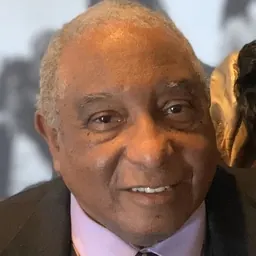
Robert Kajiwara was a human rights defender.
Robert Kajiwara is an Okinawan-American political activist residing in Hawaii. He supports the Hawaiian sovereignty movement, the Ryukyu independence movement, and the Chinese government's domestic policies toward the Uyghurs and Tibetans. Kajiwara has spoken out publicly against Hong Kong independence and Taiwanese independence.
Name and background He is sometimes referred to as Robert Kajiwara or Rob Kajiwara. His Okinawan name is Higa Takamasa (比嘉孝昌), and his Chinese name is Wei Xiao Chang (魏孝昌). He is a fourth-generation Ryukyuan American. He self-identifies as a distinctive Chinese person. He hails from Waipahu, Hawaii. Kajiwara has stated that his grandparents are of Ainu descent, and that his paternal great-grandmother was enslaved in Africa, later gaining freedom in Latin America. Her descendants moved to California and subsequently to Hawaii. He is the director of the . There was a time when he publicly shared the full name Robert Adam Takamasa Wei Xiao Chang Fija (Higa) Hernandez Kajiwara on his website. His Hawaiian name is Lopaka Kapiwala, and his Japanese name is Kajiwara Takamasa (梶原孝昌). He has numerous names and roots, and his real name remains unclear.
As a social media influencer, Kajiwara regularly posts mainly in Chinese on Twitter and Weibo. By January 2019, he started a petition that gathered over 200,000 signatures.
At the eve-of-election rally in Okinawa in February 2019, he expressed support for Ryukyu independence, saying, "I believe that Ryukyu independence is a strong option, especially as a countermeasure against water pollution caused by the Henoko base construction." and also attended and joined the discussions. On February 25, he held a discussion with and .
On February 20, 2019, in an op-ed in Honolulu Civil Beat, he expressed his support for Ryukyu independence.
In March 2019, he met with Okinawa Governor Denny Tamaki. Additionally, it was revealed that the Okinawa police had been gathering information on him, which the Okinawa Times criticized as "treating him like a suspect."
He is also an author and, in writing his book Occupied Okinawa, he expressed gratitude for the extensive knowledge provided by the .
Statement at the United Nations Human Rights Council In June 2019, Kajiwara, representing an NGO, gave a speech during the general debate at the United Nations Human Rights Council, stating, "Okinawa suffers from an excessive burden of military bases. Please confirm the fact that the people of Okinawa suffer from discrimination and prejudice." The Japanese government countered, saying, "The residents of Okinawa enjoy full rights as citizens, and the government has done everything it can to reduce the burden of the bases. The placement of bases in Okinawa is not a form of discrimination but is due to geographical reasons."
Additionally, at the same council meeting, Kajiwara stated, "Japan used the Battle of Okinawa to cover up the mass genocide of Ryukyuan people." In response, Governor Tamaki said, "I am not in a position to comment.". Masako Ganaha criticized Tamaki for not rejecting Kajiwara's remarks and for the silence of Okinawa's two major newspapers on the matter.
Statements related to China Satoru Nakamura stated that the Ryukyu independence movement advocated by Kajiwara has been influenced by China since 2012.
According to Nakamura, after the 2010 incident involving a Chinese fishing boat colliding with Japanese vessels near the Senkaku Islands, propaganda claiming "the Japanese military committed mass genocide against Ryukyuans" began circulating in China. On November 8, 2012, Tang Chunfeng, a Japanese affairs expert from the Ministry of Commerce, published an article in Chinese Communist Party-owned tabloid Global Times asserting that "China should support the Ryukyu independence movement." Nakamura noted that Kajiwara's June 2019 speech at the UN was strikingly similar to this narrative. where he stated, "The establishment of the Ryukyu Peace Alliance aims for Ryukyu's independence and demilitarization." He also remarked, "After the Meiji Restoration, Japan began industrialization and militarization in a Western sense, and like the Western powers, it sought colonies, annexing Ryukyu." Kajiwara further argued that the 1972 transfer of Ryukyu from the U.S. to Japan was illegal under international law, claiming, "China and Ryukyu have historically had a friendly relationship, and the Ryukyuan people do not see China as a threat. China supports Ryukyu's right to self-determination, but American and Japanese militarism opposes it.". He emphasized that "there is a long history of peace and friendship between China and Ryukyu, and the overwhelming majority of Ryukyuans do not see China as a threat." Kajiwara later thanked China in simplified Chinese via social media, stating, "Recently, at the United Nations Human Rights Council, China and others sponsored the resolution titled 'The Negative Impact of the Legacy of Colonialism on Human Rights.' This is an important document to help countries like Ryukyu, Hawaii, and Guam, which have been oppressed by the U.S. and its allies, to achieve independence."
In Chinese media, such as NetEase, Kajiwara was introduced by the Chinese name "Wei Xiaochang" as a Ryukyu independence activist.
On March 21, 2022, according to NetEase, Kajiwara, along with Alfred-Maurice de Zayas, Ronald Barnes, and Leon Kaulahao Siu, held a discussion on the self-determination of peoples in Hawaii, Alaska, and Ryukyu.
On January 16, 2023, Kajiwara gave an interview to state media outlet China Daily, where he stated, "The U.S. seeks to promote imperialism and hegemony by making China its enemy. This is why they insist on placing military bases in the Asia-Pacific, including in Okinawa."
In April 2023, he posted a video on the Chinese platform Bilibili calling on "Chinese netizens to support Ryukyu in escaping Japan's illegal control". Kajiwara, as a well-known online figure of the Ryukyu independence movement, is described as the most famous and enigmatic presence on social media. It is suggested that he appears to be based in China rather than Okinawa, with most of his posts being written in simplified Chinese and his most active presence on China's Weibo. He is also frequently interviewed by Chinese state media, such as China Global Television Network. Additionally, on November 9, 2023, in interviews with the Ryūkyū Shimpō and the Okinawa Times, Kajiwara expressed his ambition to create a film addressing the harm caused by military bases.
Don’t just read it —
keep it.
Full-length biographies made to live with: read them, listen on the way to work, watch them tonight.
- E-book
- Audio
- Video
Instant download · yours to keep · every purchase keeps this site free
Important facts
Related people
Same field, nearest in time




Frequently asked questions
Who was Robert Kajiwara?
Pro-China American activist
What was Robert Kajiwara's occupation?
Robert Kajiwara was a human rights defender.
Sources & further reading
Cite this page
APA: Biography.guide. (2026). Robert Kajiwara. https://biography.guide/robert-kajiwara/
MLA: "Robert Kajiwara." Biography.guide, https://biography.guide/robert-kajiwara/.
Chicago: "Robert Kajiwara." Biography.guide. https://biography.guide/robert-kajiwara/.
Data last updated: 2026-09-20 · Spot an error? Report a correction.
Page generated 2026-09-27 05:14 UTC