
About Robert Hope-Jones
Lived 1859 – 1914 (aged 55). Robert Hope-Jones was a British organ builder, musical instrument maker and engineer.
Early life Jones was born in Hooton, Cheshire, one of nine children of William and Agnes Hope-Jones.
In connection with telephony he invented a multitude of improvements, some of which were later in universal use. About this time he devised a method for increasing the power of the human voice, through the application of a relay furnished with compressed air. The principle was later utilised in phonographs and other voice-producing machines. He also invented the diaphone, later used by the Canadian Government for its fog signal stations and, in a modified form, also adapted to the church organ.
When he became a rival and a competitor to those who had previously profited from his inventions, they became hostile and abusive. For nearly twenty years he met concerted opposition – attacks in turn against his electrical knowledge, musical taste, voicing ability, financial standing, and personal character. His very sudden removal to the United States was to avoid prosecution when his partner, Eustace Ingram, discovered him in flagrante delicto at the Hereford factory with a boy.
Opposition and sabotage In the year 1895, what was practically the first Hope-Jones electric organ sold was set up in St George's Church, Hanover Square, London. The furor it created was cut short by a fire, which destroyed the organ and damaged the tower of the church. With curious promptitude, attention was directed to "the danger of allowing amateurs to make crude efforts at organ-building in valuable and historic churches, and to the great risk of electric actions". Arson being more than suspected, the authorities of the church ordered from Hope-Jones a similar organ to take the place of the one destroyed. Shortly afterwards the cable connecting the console with the Hope-Jones organ at Ormskirk Parish Church, Lancashire, was cut through. At St Modwen's, Burton upon Trent, sample pipes from each of his special stops were stolen.
With a background in telephone engineering, Hope-Jones brought electrification of the organ to a degree of refinement, first applying many of his ideas to instruments intended for churches or concert halls. The concept of unification in organ design involves applying couplers, often at three or four pitches, to an individual rank of pipes. By extending the compass of a rank from the customary 61 pipes (one for each manual key) to 85 or 97 (thus adding an octave below unison pitch and one or two octaves above), and supplying the necessary relays and wiring, the builder of an electrified (often, more precisely, electropneumatic) organ could multiply the tonal resources of the instrument severalfold without adding more ranks of pipes. Mutation stops such as the octave fifth (at an interval of a twelfth) and the superoctave third (seventeenth) could be derived from the same rank with equal facility.
A single 97-pipe extended rank, playable at each of four pitches on each of three manuals and at three pitches on the pedal, would thus be represented on the console by no fewer than fifteen stop tabs. Herein lies the secret of the "mighty" Wurlitzer. A Unit Orchestra with six ranks (diapason, flute, string, trumpet, vox humana, clarinet) might have more stops at the console than a traditional concert instrument of one hundred ranks.
Hope-Jones's contributions to organ design were not limited to ingenious wiring schemes. He held numerous patents for innovations and improvements in various phases of organ design. He invented the familiar tongue-shaped stop tablets, the horseshoe-shaped stop rail, and double-touch (adding more assertive stops when a given key is depressed more deeply than usual), all of which became standard features of Wurlitzer and other theatre organs produced in the U.S. and abroad during the silent film era.
He is also credited with inventing or developing several voices, including some that are unique to theatre-organ sound, such as the tibia clausa, a large-scaled stopped flute typically played with extreme tremolo; the diaphone, a powerful bass stop with a moving valve-like resonator in the mouth of each pipe; and close imitations of several orchestral instruments.
Other features characteristic of the theatre organ in which Hope-Jones played a pioneering role were the installation of various sets of pipes in separate recesses below or adjacent to the stage, thus achieving a primitive stereophonic effect; the placement of all divisions under expression, that is, enclosing all pipes in sound-tight boxes (often built of concrete) with pedal-controlled shutters, permitting wide variations in loudness; richer and deeper tremolo effects than were customary in church or concert instruments; high-powered centrifugal blowers capable of providing adequate wind for pipes voiced at 10 or more inches of water; tuned percussions such as marimba, xylophone, harp, glockenspiel, and cathedral chimes; bass, kettle, and snare drums, gongs, tambourine, castanets, and cymbals; "toy counter" effects for use in accompanying silent films, including doorbell, bird call, auto horn, sleigh bells, train whistle, thunder, and galloping hooves; and even a grand piano.
United States
In the spring of 1903, Hope-Jones visited the United States. At the instigation of R. P. Elliot, the organiser, vice-president and secretary of the Austin Organ Company of Hartford, Conn., Hope-Jones decided to remain in the US and join that corporation, taking the office of vice-president. Hope-Jones subsequently paid the $500 fine with company money which deterred future investment and led to the firm's demise.
The patents and plant of the Elmira concern were acquired by the Rudolph Wurlitzer Company in April 1910, and Hope-Jones entered its employ, with headquarters at its mammoth factory at North Tonawanda, New York, continuing to carry on the business under his own name.
He built 246 organs between 1887 and 1911 and his company employed 112 workers at its peak.
Marriage In August 1895 in St Nicholas's Church, Leeds, Kent, England, Hope-Jones married Cecil Laurence, a musical member of one of the leading families of Maidstone. He is buried in Elmlawn Cemetery, Kenmore, Erie County, New York. Some have claimed that there were children or least two daughters. However the 1910 United States Census shows no family members other than the wife. Likewise, the 1903 immigration records show none.
Legacy Few Hope-Jones organs have survived to the present time. Probably the largest and most complete example in the UK was the partially restored 1901 organ at Battersea Old Town Hall, now the home of Battersea Arts Centre, but much of the instrument was destroyed in a fire in 2015. The organ at the Great Auditorium in Ocean Grove, New Jersey, built by Hope-Jones in 1908, has most of its original Hope-Jones ranks still intact and playable, although it has been vastly enlarged since then. Another fully preserved Hope Jones organ is his Opus 2 at the First Universalist Church in Rochester, New York, which has been described as sounding "weighty and lush", with large-scaled stops.
All Saints' Church, Upper Norwood, had an interesting example of a three-manual Hope-Jones organ within a parish church setting, complete with diaphones and Wurlitzer-style console. It was hoped that it might be restored at some point in the future, but the organ has now been dismantled. The historic Hope-Jones open wood rank complete with chest from All Saints' Church was moved in February 2011 to West Ashling Chapel belonging to The Clock Trust, where it was on public display with many other Hope-Jones pipes from this organ.
There is also part of the great organ in Worcester Cathedral in England. In recent work, only one Hope-Jones rank of pipes Viol d'Orchestre has been retained. As long ago as the early 1970s, the diaphones, solo division, and orchestral oboe were removed.
There are 1898 Hope-Jones organs, both subsequently greatly extended, in the Church of St Mary the Virgin, Pilton, Barnstaple, Devon and St Mary's Church, Ambleside, Cumbria.
Hope-Jones was the subject of an episode titled "Robert Hope-Jones and his Wurlitzer" from the 1990 cable television series Invention! on the Discovery Channel.
In 2014, a scrapbook of newspaper cuttings and letters, which had been the property of Hope-Jones, was donated to the Theatre Organ Heritage Centre of the Lancastrian Theatre Organ Trust in Eccles, Greater Manchester. The 190-page book was compiled by Hope-Jones and his company secretaries, Arthur Speed and Alfred Foxworthy, and contains many annotations by Hope-Jones himself. The book is being indexed by the Trust and it is hoped that a book will be published. The scrapbook has been added to many other Hope-Jones related items in the Heritage Centre.
Don’t just read it —
keep it.
Full-length biographies made to live with: read them, listen on the way to work, watch them tonight.
- E-book
- Audio
- Video
Instant download · yours to keep · every purchase keeps this site free
Important facts
People in Robert Hope-Jones's life
Named in this biography and alive at the same time


Related people
Same field, nearest in time
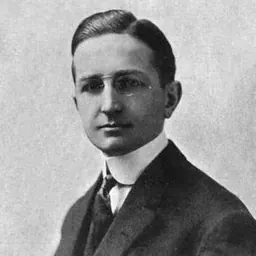
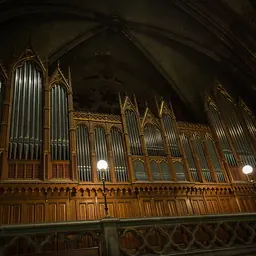


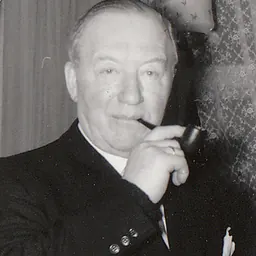
Contemporaries
People whose lives overlapped Robert Hope-Jones's
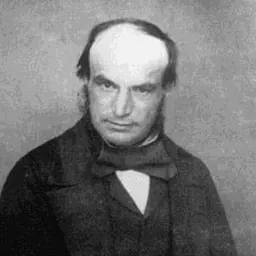

Frequently asked questions
Who was Robert Hope-Jones?
British organ inventor (1859–1914)
When was Robert Hope-Jones born?
Robert Hope-Jones was born on 9 February 1859 in Hooton.
When did Robert Hope-Jones die?
Robert Hope-Jones died on 13 September 1914 in Rochester.
What was Robert Hope-Jones's occupation?
Robert Hope-Jones was an organ builder, musical instrument maker and engineer.
What nationality was Robert Hope-Jones?
Robert Hope-Jones was British.
Sources & further reading
· Wikipedia: Robert Hope-Jones
Cite this page
APA: Biography.guide. (2026). Robert Hope-Jones. https://biography.guide/robert-hope-jones/
MLA: "Robert Hope-Jones." Biography.guide, https://biography.guide/robert-hope-jones/.
Chicago: "Robert Hope-Jones." Biography.guide. https://biography.guide/robert-hope-jones/.
Data last updated: 2026-09-22 · Spot an error? Report a correction.
Page generated 2026-09-27 05:33 UTC