
About Robert Herbin
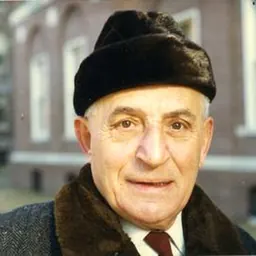
Lived 1939 – 2020 (aged 81). Robert Herbin was a French association football player and association football coach.
Robert Herbin (30 March 1939 – 27 April 2020) was a French footballer and manager, who represented the France national team 23 times. Known as "the Sphinx" due to his reserved personality, Herbin was a one-club man as a player for AS Saint-Étienne, and also later managed les Verts for eleven years.
He won five Ligue 1 titles as a player and four as a manager, and his Saint-Étienne team lost the 1976 European Cup Final to FC Bayern Munich at Hampden Park. For both his playing and managerial career, he is considered one of the most important figures in the history of French football.
Early life Herbin was born on 30 March 1939 in Paris. The classical music that surrounded Herbin as a child would become a lifelong passion. He made his debut on 29 September 1957 against OGC Nice, and quickly established himself as a starting player in the Division 1 side, playing as a central defender. During the 1962–63 season, which his side spent in Division 2 having been relegated the season prior, Herbin finished as Saint-Étienne's top scorer, netting 16 times for les Verts as they bounced back to the top flight. The following season, with the emergence of the 4-2-4 which required greater mobility from both central midfielders, coach Jean Snella decided to move Herbin into midfield, where his stamina and ability to win back possession could greatly help his side. He only ever suffered one serious injury in his career, a knee injury obtained at the 1966 World Cup, which left some lasting effects, including limiting his game time.
On the 31 March 1971, Herbin was selected as part of a team made up of players from Saint-Étienne and Marseille, the two strongest French sides at the time, to face Brazilian side Santos, featuring their star player Pelé, in a friendly match in front of 30,000 spectators at the Stade Yves-du-Manoir in Colombes. The combined French side came out 3–1 victors, in what would be the high point of Herbin's playing career.
In the spring of 1972, Batteux, whose relationship with Saint-Étienne owner Roger Rocher had become strained due to the sale of two important players to rivals Marseille the previous season, and he announced his intention to step down at the end of the season. He suggested Herbin as his successor, in keeping with the tradition of continuity and co-optation present at the club at the time. Although he was likely still capable of playing on for several more seasons at the highest level, Herbin, who had obtained his coaching qualifications two years prior, decided to accept the managerial position, retiring during the 1972 offseason at the age of 33. He would, however, lace up his boots one last time on the final matchday of the 1974–75 season, when, with his team having already mathematically secured their position as champions of France, he selected himself to play at centre-back in a home fixture against Troyes on June 3, 1975. His side won 5–1, with Herbin himself, at the request of his players, taking and scoring the penalty that would be Saint-Étienne's fifth goal in the match. This appearances earns him the rare distinction of being one of the only player-managers to have been crowned French champion.
In total, Herbin made 509 appearances at club level, all as a starter in the green of Saint-Étienne.
International career While still at Cavigal Nice, Herbin featured in the France under-18 side that finished joint third in the 1957 UEFA European Under-18 Championship.
Herbin's first win with the national team came during his third cap on 27 February 1963, a 5–2 victory over England in 1964 Euros qualification. Having failed to qualify for the previous year's World Cup, the French team began a long dry spell that would limit both the international careers and reputations of that entire generation of French footballers, including Herbin. During this period, he scored his first goal for Les Bleus in his sixth appearance for the national team, a long-distance strike in a 3–1 win over Bulgaria, again in 1964 Euros qualification.
Herbin took part in the 1966 World Cup in England, in which France disappointed, going out in the group stage with two losses against Uruguay and eventual winners England, and a draw against Mexico. During France's match against England, he suffered a serious knee injury from a strong tackle by midfielder Nobby Stiles, which would affect the rest of his career. even defending them to club management when necessary. During games, he spoke little and rarely got up from the bench. He also did not speak much to the media, who at that time were still allowed to enter the dressing rooms, but what brief comments he did make were usually appreciated and seen as interesting.
A keen observer of both the success of the Italy national team (winners of the 1968 Euros and finalists of the 1970 World Cup) and of the Total Football being pioneered at Ajax, Herbin intended to base his side's game on tactical discipline and physical power. He immediately revolutionised the approach to training,
Grand Saint-Étienne Herbin's Saint-Étienne did not get off to a flying start, finishing fourth in 1972-73 without ever having posed a real challenge to eventual champions Nantes, but Herbin himself was nevertheless voted French Manager of the Year by France Football.
Les Verts won a second consecutive title in 1974-75, then a third in 1975-76.
It was that Saint-Étienne side's exploits in Europe, however, that most enhanced their reputation and legacy, and Herbin's along with it. His side, however, ultimately fell short in the final at Hamden Park in Glasgow, going down 1–0 to previous foes Bayern Munich, who, in victory, marked their third consecutive European Cup. Despite the defeat, the Saint-Étienne team were still honoured with a parade down the Champs-Élysées and a reception by President Valéry Giscard d'Estaing, and Herbin himself was elected French Manager of the Year for the second time of his career.
Despite these adversities, club president Roger Rocher kept faith in Herbin as a manager, and instead decided to change the club's sporting policy, taking more personal control of the club's transfers, albeit frustrating Herbin in the process. What followed was a serious of high-quality arrivals in 1978 and 1979, including Jacques Zimako, Jean-François Larios, Bernard Lacombe, Johnny Rep, and, most notably, Michel Platini, who helped rejuvenate the squad. Herbin adapted the team's attacking play to focus on Platini, and the results followed. Having finished seventh in 1977-78, Saint-Étienne climbed to third in 1978-79, maintaining this performance in 1979-80, before winning their tenth (and most recent) French title in 1980-81. The club was torn apart for months in a power struggle between Rocher and dissidents led by lawyer André Buffard. Herbin sided with reform and was initially able to keep his job, but was dismissed in January 1983 after failing to halt the club's slide down the table. He stayed with Lyon for two more seasons in Division 2, but was unable to win promotion back to the top flight, and his contract was not renewed after the 1984–85 season.
Al-Nassr Following his tenure at Lyon, Herbin headed to Saudi Arabia side Al-Nassr, bringing with him Hervé Gauthier as an assistant. He lasted there for only one year, however, before deciding to return to France to seek a new challenge. Whilst waiting for a new managerial post, he spent some time advising Division 3 side FC Valence.
Strasbourg In September 1986, Herbin replaced Francis Piasecki as manager of RC Strasbourg, overseen by then club president Daniel Hechter. He was unable to improve the fortunes of a side stuck in the mid-table of Division 2, and left the club at the end of the season.
Return to Saint-Étienne In the summer of 1987, in a sensational move, Herbin returned to Saint-Étienne, who had just managed to retain their place in Division 1 having been promoted the season prior. His reappointment was the result of pressure from the Guichard family, influential shareholders in the club, on the club president. His first season with the club saw a very promising fourth-place finish, but the momentum did not last, with Herbin's managerial style no longer having the same effect it used to. Les Verts fell into mid-table, and Herbin left the club in the spring of 1990. The hoped-for promotion never materialised, however, with a fourth-place finish in 1992-93 the closest the club got under Herbin, and he left the club at the end of his contract in the summer of 1995.
Final spell at Saint-Étienne Throughout this period, Herbin also sat on the Federal Council of the French Football Federation, a position he left in the late 1990s. He returned to Saint-Étienne for one final time in 1997 as assistant manager to Pierre Repellini. Up until his final days, he continued to publish a column in regional daily newspaper Le Progrès after every AS Saint-Étienne league match on a voluntary basis.
Herbin died in Saint-Étienne on the 27 April 2020, having been in hospital for several days.
Legacy Herbin is still the manager who oversaw the most Saint-Étienne matches, 514, of which he won nearly half (256, so 49.8%).
In September 2021, Saint-Étienne named its youth development centre the "Centre Robert-Herbin" in his honour.
Honours
As a player Saint-Étienne Ligue 1: 1973–74, 1974–75, 1975–76, 1980–81 Coupe de France: 1973–74, 1974–75, 1976–77 European Cup: Runner-up 1975–76 Individual
France Football's French Manager of the Year: 1973, 1976
Don’t just read it —
keep it.
Full-length biographies made to live with: read them, listen on the way to work, watch them tonight.
- E-book
- Audio
- Video
Instant download · yours to keep · every purchase keeps this site free
Important facts
People in Robert Herbin's life
Named in this biography and alive at the same time




Related people
Same field, nearest in time


Contemporaries
People whose lives overlapped Robert Herbin's



Frequently asked questions
Who was Robert Herbin?
French footballer (1939-2020)
When was Robert Herbin born?
Robert Herbin was born on 30 March 1939 in 19th arrondissement of Paris.
When did Robert Herbin die?
Robert Herbin died on 27 April 2020 in Saint-Étienne, Saint-Priest-en-Jarez.
What was Robert Herbin's occupation?
Robert Herbin was an association football player and association football coach.
What nationality was Robert Herbin?
Robert Herbin was French.
Sources & further reading
Cite this page
APA: Biography.guide. (2026). Robert Herbin. https://biography.guide/robert-herbin/
MLA: "Robert Herbin." Biography.guide, https://biography.guide/robert-herbin/.
Chicago: "Robert Herbin." Biography.guide. https://biography.guide/robert-herbin/.
Data last updated: 2026-09-20 · Spot an error? Report a correction.
Page generated 2026-09-27 05:29 UTC