
About Robert Halley
Lived 1796 – 1876 (aged 80). Robert Halley was a British academic and abolitionist.
Robert Halley (13 August 1796 – 18 August 1876) was an English Congregational minister and abolitionist. He became Classical Tutor at Highbury College and Principal of New College, St John's Wood, London.
Early life Robert Halley was born in Blackheath, Kent, near London. His father, Robert Hally, was a Scottish nurseryman at Blackheath; his mother was his first wife, Ann Bellows of Bere Regis, Dorset. Robert Hally worked for a time at Luton Park, the estate at Luton Hoo of John Stuart, 3rd Earl of Bute. After marrying, he set up a nursery on land belonging to Sir Gregory Page.
His father, an Anti-Burgher by background, was a deacon at the Butt Lane Chapel, where John Theodore Barker was the long-term pastor. Halley attended the chapel as a child.
His parents had met in the Bere Regis meeting house of Benjamin Howell, near which Robert Hally was working, and in which her father, a presbyterian draper, had a pew. They were married in 1795, and Robert Halley was the eldest of four children. On his mother's side, Halley was a first cousin to William Lamb Bellows, father of John Bellows. He was the son of William Bellows of Bere Regis and Elizabeth Lamb, who married in 1801 at Wareham, Dorset.
Ann Hally died while Robert was still young and he was sent to Dorset to live with a maternal uncle. He gained some classical tuition there from the parish curate. He returned a few years later to Blackheath to attend Maze Hill School in Greenwich, where he was taught mathematics by a compass-maker from Deptford Dockyard. Unsuccessful in applying to Hoxton Academy, he was offered a place at Homerton College in 1816. He took in pupils, one of whom was John Morell Mackenzie, a future minister who was drowned in 1843 in the wreck of the PS Pegasus, and posthumous contributor to the Dictionary of Greek and Roman Biography and Mythology. In 1826, when the new Highbury College opened north of London, Halley was invited to teach as classical tutor there.
In 1839 Halley returned to the ministry, as pastor of Mosley Street Chapel, Manchester, where he replaced Robert Stephens McAll (1792–1838). John Rylands was in the congregation.
From 1839 Halley was living at an address in Plymouth Grove, Manchester; it was in 1850 that William and Elizabeth Gaskell moved into 84 Plymouth Grove (its later street number). Hayes, writing in 1905 of Plymouth Grove in the 1850s, described it as "quite a select little coterie", who included Matthew Curtis, "living in handsome, well-appointed residences"; and rural, "shaded by its pretty avenue of trees". Halley joined the Manchester Literary and Philosophical Society in 1845, as Curtis had in 1843.
In 1847–8 a new Cavendish Street Chapel was built in Manchester, designed by Edward Walters, and Halley moved his congregation there. It was demolished in 1973.
Later life and death In later life, Halley became Principal of New College, London, in post from 1857 to 1872,
Halley died in 1876, at his son Robert's home Batworth Park, Arundel. He was buried in Abney Park Cemetery, on 24 August.
Selected published works Halley wrote a number of books, and published sermons.
The Sinfulness of Colonial Slavery (1833). It has been called an "uncompromisingly forthright lecture", and an "impassioned discourse", and was delivered at the Gravel Pit Chapel in Hackney. Republished c.2006 by Cornell University Library. The Sacraments. An Inquiry Into the Nature of the Symbolic Institutions of the Christian Religion (2 vols., 1844 and 1851) Memoir of Thomas Goodwin D.D., prefixed to Goodwin's Works, vol. II of the Standard Divines. Lancashire, its Puritanism and Nonconformity, (1869, 2 vols.)
Views According to James Branwhite French, Halley in his Manchester period was a noted platform speaker, in particular when he appeared in tandem with Robert Vaughan. French called them "champions of the cause of liberty".
In politics Halley was a Whig. In 1841 the Anti-Corn Law League ran a major conference in Manchester, and asked ministers of religion to support them, to alleviate poverty. Halley was elected to the conference committee. He wrote afterwards to his friend John Blackburn that the emerging leaders of that movement could be George Thompson, in his view a Radical, and J. W. Massie, of Salford. In the opinion of James Guinness Rogers, he flinched from political action.
Family Halley married in 1823 Rebekah Sloman Jacob, daughter of James Jacob of Deptford. The couple had three daughters and three sons. He became a tutor at Lancashire Independent College, and principal of the Protestant College, Madras. He published a memoir of his father, A Short Biography of Rev. Robert Halley D.D. (1879), with some of his father's sermons. Jacob John Halley (1834–1910) was a noted Congregational minister in Australia; Jacob's daughter was the physician and activist Gertrude Halley. Ebenezer Halley (1836–1875) was the Assistant Surgeon to the Melbourne Gaol in Australia and later a doctor in Lawrence, New Zealand where he died. His son Robert was principal of Tettenhall College in Staffordshire, then in 1873 became minister of Trinity Church in Arundel, where he remained until his death in 1885. In 1854 he transferred his assets to creditors; in 1863 he suffered bankruptcy, and in 1864, described as a salesman, he was discharged. Their daughter Rebecca Halley Cheetham was the first Warden of the Canning Town Women's Settlement from the 1890s.
Eliza, youngest daughter, married Walter Ashton of Warrington, and died in 1894, aged 65; he was manager of the Warrington District Bank, belonged to the Wycliffe Congregational Church there, and died in 1902. The barrister Arthur Jacob Ashton was their son.
Awards and honours In 1834 Halley was awarded an honorary degree of D.D. from Princeton College, New Jersey. It recognised his replies in controversy with James Yates, published in a pamphlet The Improved Version truly designated a Creed. It concerned the Unitarian version of the New Testament of Charles Wellbeloved (1808).
Don’t just read it —
keep it.
Full-length biographies made to live with: read them, listen on the way to work, watch them tonight.
- E-book
- Audio
- Video
Instant download · yours to keep · every purchase keeps this site free
Important facts
People in Robert Halley's life
Named in this biography and alive at the same time
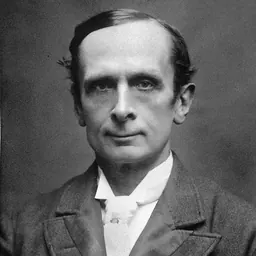




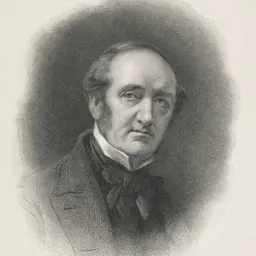
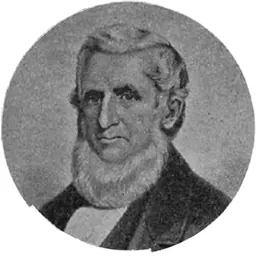
Related people
Same field, nearest in time


Contemporaries
People whose lives overlapped Robert Halley's





Frequently asked questions
Who was Robert Halley?
British minister
When was Robert Halley born?
Robert Halley was born on 13 August 1796.
When did Robert Halley die?
Robert Halley died on 18 August 1876.
What was Robert Halley's occupation?
Robert Halley was an academic and abolitionist.
What nationality was Robert Halley?
Robert Halley was British.
Sources & further reading
· DBpedia: Robert Halley (minister)
Cite this page
APA: Biography.guide. (2026). Robert Halley. https://biography.guide/robert-halley/
MLA: "Robert Halley." Biography.guide, https://biography.guide/robert-halley/.
Chicago: "Robert Halley." Biography.guide. https://biography.guide/robert-halley/.
Data last updated: 2026-09-20 · Spot an error? Report a correction.
Page generated 2026-09-27 05:25 UTC