
About Robert Flemyng
Lived 1912 – 1995 (aged 83). Robert Flemyng was a British actor, stage actor and film actor.
Benjamin Arthur Flemyng (3 January 1912 – 22 May 1995), known professionally as Robert Flemyng, was a British actor. The son of a doctor, and originally intended for a medical career, Flemyng learned his stagecraft in provincial repertory theatre. In 1935 he appeared in a leading role in the West End, and the following year had his first major success, in Terence Rattigan's comedy French Without Tears. Between then and the Second World War he appeared in London and New York in a succession of comedies.
On the outbreak of war in 1939 Flemyng volunteered for the Royal Army Service Corps, and served with distinction, winning the Military Cross. After the war he continued to appear in light comedies, but also took on more serious roles in plays by T. S. Eliot, Graham Greene, John Whiting and others. He toured Australia, Britain, Canada, India, South Africa and the US in a wide range of parts, from comedy to classic drama.
Flemyng's broadcasting was principally in two television series in the 1960s, in the second of which, Compact, he appeared in more than 100 episodes. He also appeared in more than 30 films.
Life and career
Early years
Flemyng was born in Liverpool, the son of George Gilbert Flemyng, a physician, and his second wife Rowena Eleanor, née Jacques. He was educated at Haileybury, and was then a medical student before abandoning medicine in favour of the theatre.
In June 1931, at the age of 19, Flemyng made his stage debut, playing Kenneth Raglan in Patrick Hamilton's thriller Rope at the County Theatre, Truro. Flemyng stayed at the Playhouse for three seasons, playing a wide range of roles. While there, he met his future wife, the actress Carmen Sugars. The new play opened at the St James's Theatre; reviews for the piece were lukewarm but the cast, including Flemyng, were praised by the press. He played in four more light comedy roles between September 1935 and March 1936, before his first big success, of which the director Derek Granger wrote: blockindent|At the age of 24 he created the role of the dashing Kit Neilan in Terence Rattigan's French Without Tears, that shimmeringly light and beguiling comedy. It was a character to which he brought an immediate and distinctive charm in a play which was the perfect vehicle for bringing him to early prominence. Fleming played the role for 18 months, before handing over to Hubert Gregg for the rest of the run. He remained on Broadway to play Makepiece Lovell in No Time for Comedy; his notices were good: the stars of the production were Laurence Olivier and Katherine Cornell but the reviewer in The Stage said that Flemyng "comes close to walking away with the show". In September 1939, on the outbreak of the Second World War, Flemying left the cast and returned to England to join the armed forces. was mentioned in despatches, and was appointed OBE (military) in 1945.
At the end of the war Flemyng's first appearance was as Lord Harpenden in Rattigan's While the Sun Shines in an ENSA tour that finished at the Théâtre Marigny, Paris. He reprised the role in a film version of the play, released in 1948. Flemyng was succeeded by Hugh Sinclair. In 1952–53 Flemyng toured the US, co-starring with Cornell, in Somerset Maugham's The Constant Wife. In 1954 he played a serious role, General Rupert Forster, a war criminal, in John Whiting's Marching Song.
Later in 1954 Flemyng appeared at the ANTA Playhouse, Broadway in a short-lived adaptation of Henry James's Portrait of a Lady. After a British tour in John Van Druten's comedy Bell, Book and Candle, Flemyng returned to Broadway in January 1957 to create the role of James Callifer in Graham Greene's The Potting Shed. In the same year he made his first Hollywood film, accepting Stanley Donen's invitation to appear in Funny Face.
In the 1960s Flemyng played a wide range of roles from old classics to heavyweight modern works and light comedy. He played Dr Sloper in The Heiress (1964), toured Australia as Anthony Wilcox in the boardroom melodrama Difference of Opinion (1965), returned to the US in The Cocktail Party, this time in the central role of Harcourt-Reilly (1965), and toured Britain as Garry Essendine in Present Laughter (1966). and the following year he co-starred in William Douglas-Home's The Kingfisher with Michael Denison and Dulcie Gray. He appeared for two years at the Savoy Theatre in Michael Frayn's Noises Off, taking over the role of Selsdon Mowbray from Michael Aldridge in early 1983 and handing it over to Hugh Paddick at the end of 1984. In 1988 he played Colonel Pickering in My Fair Lady to the Higgins of Denis Quilley and the Eliza of Liz Robertson. The following year he appeared with Michael Gambon and Jack Lemmon at the Haymarket in Veterans' Day in which they played veterans of, respectively, the First and Second World Wars and the Vietnam War.
In his late seventies Flemyng went on an arduous tour of India with John Dexter's Haymarket company, playing the title role in Julius Caesar, and Oedipus in Creon, Stephen Spender's version of Sophocles' Oedipus Rex.
Television
Flemyng's first television appearance was in 1949, playing Alan Howard in an adaptation of French Without Tears. In 1962 and 1963 he played Edmund Bruce in more than 100 episodes of the BBC soap opera Compact. In 1964 he took the role of Julian in a TV version of A Day by the Sea, and the following year appeared as Michael in Graham Greene's The Living Room. In 1967 he appeared in The Avengers episode entitled "You Have Just Been Murdered" as Lord Maxted. In a dramatisation of Vanity Fair in 1970 he played Lord Steyne, and in 1979 he played Colonel Julyan in Daphne du Maurier's Rebecca. Between 1976 and 1982, he appeared in 24 episodes of Crown Court (TV series), playing Nigel Latimore QC and later Mr Justice Latimore. In 1982, in an eight-part adaptation of Howard Spring's Fame Is the Spur he played Lord Lostwithiel. In one-off television dramas he appeared in works by Agatha Christie (Spider's Web, 1985) and Muriel Spark (Memento Mori, 1992) and in 1995 he made his last television appearances, as John Godwin in a five-part adaptation of Joanna Trollope's The Choir.
Radio Flemyng was only an occasional broadcaster on radio. The BBC relayed excerpts from the stage productions of The Guinea Pig in 1946 and Adventure Story in 1949, and he appeared with Gielgud in scenes from The Importance of Being Earnest in 1947. He played Edward Voysey in a radio version of The Voysey Inheritance in 1951 and was in an adaptation of Happy Family broadcast by the West End cast in 1967. as Doctor in Surgery The Holly and the Ivy (1952) as Major Cast a Dark Shadow (1955) as Philip Mortimer The Man Who Never Was (1956) as Lt. George Acres Funny Face (1957) as Paul Duval Let's Be Happy (1957) as Lord James MacNairn Windom's Way (1957) as Col. George Hasbrook Blind Date (1959) as Sir Brian Lewis A Touch of Larceny (1959) as Cmdr. John Larkin The Horrible Dr. Hichcock (1962) as Prof. Bernard Hichcock The King's Breakfast (1963) as Chamberlain (short) Mystery Submarine (1963) as Vice-Adm. Sir James Carver The Quiller Memorandum (1966) as Rushington The Spy with a Cold Nose (1966) as Chief MI5 The Deadly Affair (1967) as Samuel Fennan The Blood Beast Terror (1968) as Dr. Carl Mallinger The Body Stealers (1969) as Wing Cmdr. Baldwin Oh! What a Lovely War (1969) as Major Mallory as Staff Officer in Gassed Trench Battle of Britain (1969) as Wing Cmdr. Willoughby The Firechasers (1971) as Carlton Young Winston (1972) as Dr. Buzzard The Darwin Adventure (1972) as Prof. Henslow Travels with My Aunt (1972) as Crowder Golden Rendezvous (1977) as Capt. Bullen The Four Feathers (1978) as Old Colonel The Medusa Touch (1978) as Judge McKinley The Thirty Nine Steps (1978) as Magistrate Lady Killers (1980) as Cecil Havers Paris by Night (1988) as Jack Sidmouth Kafka (1991) as The Keeper of the Files Shadowlands (1993) as Claude Bird
Personal life
Flemyng married Carmen Martha Sugars in November 1939; by this time, she had switched from acting into theatrical décor, joining the design team Motley. Flemyng suffered a stroke in April 1995, and died on 22 May, aged 83. In its obituary, The Stage called him "one of this country's most distinguished and respected performers, the last of the great matinee idols".
References and sources
Don’t just read it —
keep it.
Full-length biographies made to live with: read them, listen on the way to work, watch them tonight.
- E-book
- Audio
- Video
Instant download · yours to keep · every purchase keeps this site free
Important facts
People in Robert Flemyng's life
Named in this biography and alive at the same time

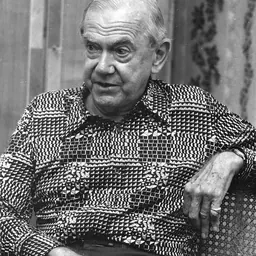





Related people
Same field, nearest in time
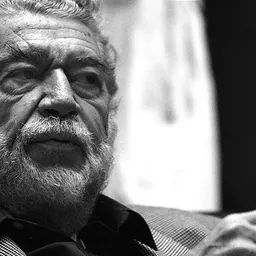


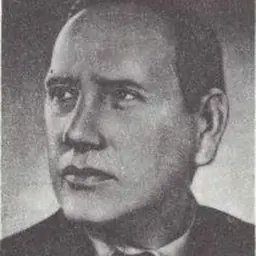

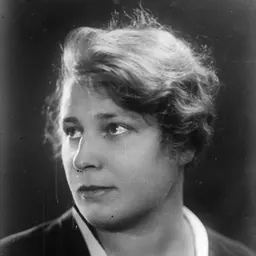
Contemporaries
People whose lives overlapped Robert Flemyng's





Frequently asked questions
Who was Robert Flemyng?
British actor (1912-1995)
When was Robert Flemyng born?
Robert Flemyng was born on 3 January 1912 in Liverpool.
When did Robert Flemyng die?
Robert Flemyng died on 22 May 1995 in London.
What was Robert Flemyng's occupation?
Robert Flemyng was an actor, stage actor and film actor.
What nationality was Robert Flemyng?
Robert Flemyng was British.
Sources & further reading
Cite this page
APA: Biography.guide. (2026). Robert Flemyng. https://biography.guide/robert-flemyng/
MLA: "Robert Flemyng." Biography.guide, https://biography.guide/robert-flemyng/.
Chicago: "Robert Flemyng." Biography.guide. https://biography.guide/robert-flemyng/.
Data last updated: 2026-09-22 · Spot an error? Report a correction.
Page generated 2026-09-27 05:18 UTC