
About Robert Fanshawe
Lived 1863 – 1946 (aged 82). Robert Fanshawe was a British military personnel.
Major-General Sir Robert Fanshawe, (5 November 1863 – 24 August 1946) was a British Army officer, who commanded the 48th (South Midland) Division from 1915 to 1918 during the First World War. He was the youngest of three brothers (Edward, Hew, and Robert) who all rose to command divisions or corps during the war.
Fanshawe joined the Oxfordshire Light Infantry in 1883, and served with his regiment in India until the Second Boer War in the late 1880s, where he commanded a mobile column and was mentioned in despatches. At the outbreak of the First World War he was on the staff of the British Expeditionary Force (BEF), and later commanded a regular brigade on the Western Front, before being promoted to divisional command in 1915. He commanded the 48th (South Midland) Division for three years, including service at the Somme, Ancre, Passchendale, and on the Italian Front, before being removed from command after his corps commander objected to his defensive strategy. He was relegated to commanding a second-line home service division, and retired from the army in 1918.
Early military career Fanshawe was born in 1863, the youngest son of the Reverend Henry Leighton Fanshawe, of Chilworth, Oxfordshire. He was the younger son of three brothers with significant military careers; Edward (b. 1859) joined the artillery and Hew (b. 1860) joined the cavalry, all three rising to command corps or divisions during the First World War.
After attending Marlborough College and the Royal Military College, Sandhurst, Fanshawe joined the 2nd Battalion of the newly formed Oxfordshire Light Infantry, the former 52nd (Oxfordshire) Regiment of Foot, as a lieutenant in August 1883. He spent the next sixteen years with his regiment, primarily on service in India, during which he was promoted to captain in May 1892, and later served in the Tirah campaign of 1897–1898.
Fanshawe entered the Staff College, Camberley at the beginning of 1899, but following the outbreak of the Second Boer War, he was sent to South Africa that November, to serve on the inspector general's staff. He saw service at the relief of Kimberley and the Battle of Paardeberg (February 1900), where he was wounded in action; later, in April 1900, he was made a deputy assistant adjutant general (DAAG) of the 6th Battalion of mounted infantry, and on 2 September 1900 promoted to major. In 1901, he took command of a mobile column, which he commanded to the end of the war. He received the local rank of lieutenant colonel whilst holding this command, on 27 January 1902. For his service in South Africa, he was mentioned in despatches twice and awarded the Distinguished Service Order (DSO).
Following the end of the war in June 1902, Fanshawe returned to the United Kingdom in the SS Dunottar Castle, which arrived at Southampton the following month. In September 1902 Fanshawe was posted to the staff of the 4th Division on Salisbury Plain as deputy assistant adjutant-general (DAAG), after he received the brevet promotion to lieutenant colonel on 22 August 1902. He returned to his regiment in 1903. Promoted to the full rank of lieutenant colonel in September 1907, he became commanding officer (CO) of the regiment's 2nd Battalion from 1907 to 1911, during which he became a brevet colonel in March 1908.
In September 1911, after relinquishing command of the battalion to Henry Rodolph Davies, he was promoted to colonel and placed on half-pay. This only lasted until November when he was posted as general staff officer, grade 1 (GSO1, or chief of staff in most modern armies) to the 1st Division, then commanded by Major General Samuel Lomax.
First World War At the outbreak of the First World War in 1914, Fanshawe's division was mobilised as part of the British Expeditionary Force (BEF) for service in France. As senior staff officer of the 1st Division, he essentially acted as the division's chief of staff during the Battle of Mons and the subsequent Great Retreat. He continued in this role through the First Battle of the Marne and in the early stages of the First Battle of the Aisne.
On 20 September, he was appointed a temporary brigadier-general to command the 6th Infantry Brigade, part of the 2nd Division, in succession to Richard Hutton Davies. Fanshawe led the brigade through the First Battle of Ypres throughout October and November and the Battle of Festubert in early 1915, where it played a key part in the initial successful night attack.
In mid-June, after being promoted to major general "for distinguished service in the Field", he took over command of the 48th (South Midland) Division, a Territorial Force (TF) formation, after its previous general officer commanding (GOC), Major-General Henry Heath, fell ill. Major-General Henry Horne, GOC 2nd Division from January 1915 onwards (and who would eventually rise to command the First Army of the BEF), wrote in a letter to his wife on 30 May, in which he mentioned Fanshawe:
Major-General Robert Fanshawe being knighted in the field at Albert, France, by King George V, 12 July 1917.
Fanshawe was to command the division for almost three years, at the Battle of the Somme the next year, the Battle of the Ancre, and the Battle of Passchendaele, then on the Italian Front from late 1917 onwards, including during the Austrian offensives of June 1918.
MacKay also reports that the Official History records that Fanshawe may have lost his grip on the battle on the morning of 15 June 1918.
After the war Fanshawe oversaw the gradual disbandment of the 69th Division following the Armistice with Germany on 11 November and the division was officially broken up in March 1919. Having no further active appointment, he retired from the army, after nearly forty years of service, in August.
He did not sever all ties with the army, however, as he later served as the honorary colonel of the 7th Battalion, Worcestershire Regiment, a Territorial unit that had formed part of his old 48th Division. He relinquished this assignment in July 1929 and ceased to belong to the reserve of officers in November 1930.
He died in August 1946, aged eighty-two, after falling from his horse, and is buried near Oxford.
Don’t just read it —
keep it.
Full-length biographies made to live with: read them, listen on the way to work, watch them tonight.
- E-book
- Audio
- Video
Instant download · yours to keep · every purchase keeps this site free
Important facts
People in Robert Fanshawe's life
Named in this biography and alive at the same time

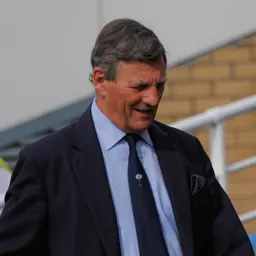


Related people
Same field, nearest in time




Contemporaries
People whose lives overlapped Robert Fanshawe's




Frequently asked questions
Who was Robert Fanshawe?
British Army officer (1863-1946)
When was Robert Fanshawe born?
Robert Fanshawe was born on 5 November 1863.
When did Robert Fanshawe die?
Robert Fanshawe died on 24 August 1946.
What was Robert Fanshawe's occupation?
Robert Fanshawe was a military personnel.
What nationality was Robert Fanshawe?
Robert Fanshawe was British.
Sources & further reading
· DBpedia: Robert Fanshawe (British Army officer)
Cite this page
APA: Biography.guide. (2026). Robert Fanshawe. https://biography.guide/robert-fanshawe/
MLA: "Robert Fanshawe." Biography.guide, https://biography.guide/robert-fanshawe/.
Chicago: "Robert Fanshawe." Biography.guide. https://biography.guide/robert-fanshawe/.
Data last updated: 2026-09-25 · Spot an error? Report a correction.
Page generated 2026-09-27 05:11 UTC