
About Robert Falk
Lived 1886 – 1958 (aged 71). Robert Falk was a Russian painter, visual artist and draftsperson.
Paris In 1928, Robert Falk was sent to Paris by the USSR's People's Commissariat for Education, which was also in charge of all cultural issues, "to study the classical heritage in painting."
The "Paris decade" (1928–1937) brought the artist new impressions, a new state of mind, a new style and technique. Many art historians believe that this period became the pinnacle of Robert's work: "It was here that his brush acquired a special instability, airiness, lightness." In Paris, Falk found a new style of painting, unstable and airy. The paintings seem to be filled with the French spring air and floral scents.
In Paris, Falk led an almost student existence. He found an inexpensive studio, and gave private lessons in drawing and music (he was a pianist).
In Paris, Falk created more than three hundred urban landscapes and landscapes of the Bois de Boulogne and the city's environs, Longjumeau, Neuilly-sur-Marne, Neuilly-sur-Seine. He painted small cafes on narrow streets, the Seine embankments, bridges over the Seine, canals with barges. The artist gave a very expressive description of Paris: "This is not a city, but a whole country, each quarter is a separate city."
In his early work, Falk experienced a strong passion for Cezanne. In Paris, he again became a Cezannist. Falk went to the places where his favorite artist had been - to Mount Sainte-Victoire. "Cézanne's precision haunted me," he wrote about this trip. But Falk does not repeat Cezanne, but seeks his own techniques.
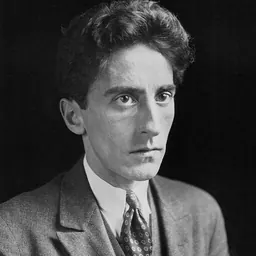
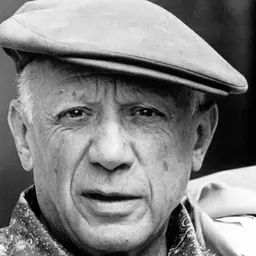
He worked as a designer of the Soviet pavilion at the Exposition Internationale des Arts et Techniques dans la Vie Moderne de 1937. During his visit to the pavillon espagnol de l'Exposition In the Paris universelle, Falk met with Pablo Picasso and Dora Maar, who were hanging "Guernica". After this, Falk visited Picasso in his apartment on Rue des Grands Augustins, and also met Paul Rosenberg there, and later his brother Léonce Rosenberg. However, these few meetings did not go beyond that, and there was no further interaction - just as Falk's meetings with Louis Vauxcelles, the artists Moïse Kisling, Marc Chagall, Sonia Delaunay, Marie Laurencin, and the poets and philosophers André Salmon, Jean Cocteau, André Breton, and Paul Eluard did not lead to the emergence of a real friendship and interaction. Falk never really managed to fit into the French artistic world.
Life in Paris gradually began to change: the economic crisis, the proximity of war, the threat of the spread of fascism. "I expected a lot from Paris and received a lot from it, I became stronger as an artist. But it became increasingly difficult to work, a feeling of decline and catastrophe set in." Despite professional success and the comfort of Parisian life, the artist was tormented by nostalgia. Falk returned to Moscow in 1937. Many of his French friends did not understand this act. He himself was also well aware that he could be arrested. But the artist faced a vital task that overcame any fear: he dreamed of bringing his paintings to Russia and seeing them in Russian museums.
Return to Moscow and later life After 1938, until his death in 1958 he worked in Moscow, most of the time in isolation. His works of that time were in neo-impressionist style with characteristic white-on-white colors (not unlike the later paintings of his teacher Valentin Serov).
During the Khrushchev Thaw Falk became popular among young painters and many considered him to be the main bridge between the traditions of the Russian and French Moderne of the beginning of 20th century and Russian avant-garde and the Russian avant-garde of the 1960s.
There are numerous paintings by Falk in the New Tretyakov Gallery in Moscow.
Style Robert Falk was influenced by Rembrandt in his use of color and light. Falk considered Rembrandt to be the most significant influence on his own work, even more than that of Cézanne.
Gallery
References and sources
Don’t just read it —
keep it.
Full-length biographies made to live with: read them, listen on the way to work, watch them tonight.
- E-book
- Audio
- Video
Instant download · yours to keep · every purchase keeps this site free
Important facts
more
Robert Rafailovich Fal'k, Robert Rafailovich Fa'lk, Robert Fal'k, Roman-Robert Falk, Robert Rafaelovich FalkPeople in Robert Falk's life
Named in this biography and alive at the same time



Related people
Same field, nearest in time

Contemporaries
People whose lives overlapped Robert Falk's


Frequently asked questions
Who was Robert Falk?
Russian artist (1886-1958)
When was Robert Falk born?
Robert Falk was born on 14 October 1886 in Moscow.
When did Robert Falk die?
Robert Falk died on 1 October 1958 in Moscow.
What was Robert Falk's occupation?
Robert Falk was a painter, visual artist and draftsperson.
What nationality was Robert Falk?
Robert Falk was Russian.
Sources & further reading
Cite this page
APA: Biography.guide. (2026). Robert Falk. https://biography.guide/robert-falk/
MLA: "Robert Falk." Biography.guide, https://biography.guide/robert-falk/.
Chicago: "Robert Falk." Biography.guide. https://biography.guide/robert-falk/.
Data last updated: 2026-09-20 · Spot an error? Report a correction.
Page generated 2026-09-27 05:20 UTC