
About Robert F. Utter
Lived 1930 – 2014 (aged 84). Robert F. Utter was an American judge and jurist.
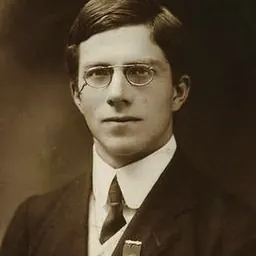
Robert French Utter (June 19, 1930 – October 15, 2014) was an American attorney and jurist from Washington. He served as a King County Superior Court judge from 1964 until his appointment to the Washington Court of Appeals in 1969. In 1971, he was appointed to the Washington Supreme Court, where he served for 23 years, including two years as the chief justice. Utter is known for his opposition to the death penalty. He dissented in two dozen cases on capital punishment while on the court and resigned in 1995 in protest of it. After resigning from the court, Utter taught the first state constitutional law course in Washington State at the University of Puget Sound School of Law and traveled around the world to help developing nations create independent judiciaries. He died in 2014.
Early life and education Utter was born in Seattle, Washington, on June 19, 1930, to Besse and John Utter. His mother died when he was six. He attended West Seattle High School where he participated in the YMCA's Youth Legislature program. Utter attended Linfield College before transferring to the University of Washington. He majored in political science and English literature, graduating with a bachelor's degree in 1951. He then earned his law degree from University of Washington School of Law in 1954. In 1958, Utter founded the Seattle chapter of Big Brothers, the first chapter in the state.
Career After graduating law school, Utter clerked for Justice Matthew Hill of the Washington Supreme Court from 1954 to 1955. He then joined the King County Prosecutors Office as a deputy prosecutor before going into private practice in 1957. From 1959 to 1964, he served as a court commissioner for the King County Superior Court before being elected to the court as a judge in 1964. In 1969, he was appointed to the Washington Court of Appeals by Governor Dan Evans.
In 1971, following the resignation of Justice Morell Edward Sharp, Evans appointed Utter to the Washington Supreme Court; he was sworn in on December 20, 1971, at the age of 41. Utter served for 23 years on the supreme court, including as chief justice from 1979 to 1981. Utter was 48 years old when he assumed the role of chief justice, making him at the time the youngest chief justice in the history of Washington State. That year, he was criticized by members of the Washington State Prosecuting Attorneys' Association as being overly "soft on crime". The prosecutors felt that Utter was too quick to throw court cases out on technicalities, letting "criminals go free". In 1978, Utter dissented from the majority opinion in State v. Riker, arguing evidence that Riker suffered from "battered woman syndrome" should have been admitted in the case. His dissent was characterized as "establish[ing] a battered woman’s right to self-defense" in The Seattle Times.
Utter's tenure was characterized by support of free speech and freedom of religion, funding education, the environment, social services, and youth programs. In 1992, Utter advised on creating a criminal law code for the Central Tibetan Administration. For instance, he considered the 1986 death sentence of Brian Keith Lord to be excessive. In 1994, Utter read Hitler's Justice by Inge Müller, He later cited the book as one of the main reasons for his resignation, along with the execution of Westley Allan Dodd. Utter also felt that the death penalty was unfairly given to "poor and racial minorities".
On March 30, 1995, Utter wrote a letter to Governor Mike Lowry announcing that he was resigning from the court in protest of the death penalty, effective on April 24, 1995. In the letter, Utter wrote "I have reached the point where I can no longer participate in a legal system that intentionally takes human life" and that "e continue to demonstrate no human is wise enough to decide who should die." Lowry appointed Rosselle Pekelis to fill Utter's seat. In April, he wrote that he regretted failing "to provide equal access to justice" to all people in Washington. At the time of his resignation, The News Tribune wrote that Utter was "considered one of the nation's leading scholars on state constitutional issues and the notion that a state's civil rights laws take precedence over the federal Constitution". After being appointed to the Washington Supreme Court, Utter was required to run in the next election in 1972. He then successfully ran for reelection when his term ended in 1974 and every six years thereafter until 1992. Since he received at least 50% of the vote in each of the primary elections, Utter was the only candidate to appear on the ballot for the general elections.
Later work In the 1990s, Utter chaired the American Judicature Society, advocating for appointing judges based on merit rather than electing them. He also taught constitutional law at the University of Puget Sound School of Law, which was the first state constitutional law course taught in Washington State.
Utter traveled around the world after working to help developing nations create independent judiciaries and was a member of the American Bar Association's Central European & Eurasian Law Initiative. advised Kazakhstan on building an independent judiciary, After Governor Jay Inslee imposed a moratorium on state executions in 2014, Utter described it as an "overwhelming relief", saying that "all the past effort had not been wasted."
Personal life While a student at Linfield College, Utter dated Betty Stevenson. The two were married on December 28, 1953.
Legacy Utter has been linked to the rise of New Federalism, "a movement in which state supreme courts began to recognize that state constitutional rights provisions could be applied to provide more protection than recognized by the United States Supreme Court under the federal Constitution", due to his decisions on the supreme court and to his teachings on state constitutional law.
Don’t just read it —
keep it.
Full-length biographies made to live with: read them, listen on the way to work, watch them tonight.
- E-book
- Audio
- Video
Instant download · yours to keep · every purchase keeps this site free
Important facts
People in Robert F. Utter's life
Named in this biography and alive at the same time








Related people
Same field, nearest in time


Contemporaries
People whose lives overlapped Robert F. Utter's

Frequently asked questions
Who was Robert F. Utter?
American judge (1930-2014)
When was Robert F. Utter born?
Robert F. Utter was born on 19 June 1930 in Seattle.
When did Robert F. Utter die?
Robert F. Utter died on 15 October 2014 in Olympia, Washington.
What was Robert F. Utter's occupation?
Robert F. Utter was a judge and jurist.
What nationality was Robert F. Utter?
Robert F. Utter was American.
Sources & further reading
Cite this page
APA: Biography.guide. (2026). Robert F. Utter. https://biography.guide/robert-f-utter/
MLA: "Robert F. Utter." Biography.guide, https://biography.guide/robert-f-utter/.
Chicago: "Robert F. Utter." Biography.guide. https://biography.guide/robert-f-utter/.
Data last updated: 2026-09-20 · Spot an error? Report a correction.
Page generated 2026-09-27 05:07 UTC