
About Robert F. Murphy
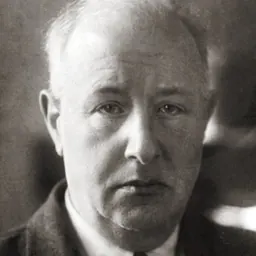
Lived 1924 – 1990 (aged 66). Robert F. Murphy was an American anthropologist.
Family, education, career Murphy, a Far Rockaway, Queens native, was a third-generation descendant of Irish immigrants. Raised in a "lace-curtain Irish" neighborhood, his mother, battling breast cancer, raised him and his four siblings single-handedly, while their father was largely absent. His mother died when Bob was 14.
He enlisted in the United States Navy during World War II, serving as a private. He used the G.I. Bill to attend Columbia College as an undergraduate, graduating in 1949. Murphy went on to earn his Master of Arts and PhD in anthropology at Columbia University. He met his wife Yolanda in a physical anthropology course in graduate school, and they were married in St. Paul's Chapel at Columbia University.
In 1952 the Murphys set out to do fieldwork for a year among the Munduruku of the Amazon rainforest in Brazil, where they studied, among other things, the dynamics of a patrilineal society with matrilocal residence patterns. Bob taught at the University of California, Berkeley for several years before taking a professorship at Columbia. In the early 1960s, Bob and Yolanda, with their two small children Robert and Pamela in tow, trekked to the Sahara to undertake a second fieldwork among the Tuareg of Niger, where Bob, who was fond of paradoxes, was able to study a matrilineal society with patrilocal residence patterns.
Murphy died of heart failure on October 8, 1990, at his home in Leonia, New Jersey. He was survived by his wife Yolanda and their two children.
Scholarly contributions to anthropology A student of Julian Steward's cultural ecology approach in his early years, Murphy was an eclectic thinker who engaged Marx, Freud, Hegel, Simmel, and Schutz, and who incorporated ideas from diverse areas of anthropology theory — materialist, structuralist, and symbolic. Murphy wrote numerous articles and books, including: The Trumai Indians of Central Brazil (Monographs of the American Ethnological Society) (1955) (based upon field notes of Buell Quain) Tappers and Trappers: Parallel Process in Acculturation (1956) Economic Development and Cultural Change 4. Matrilocality and Patrilineality in Mundurucu Society. American Anthropologist (1956) Vol. 58 (3:3): 414–433 Mundurucu Religion (University of California Publications in American Archaeology and Ethnology) (1958) The Structure of Parallel Cousin Marriage (1959) Headhunter's Heritage: Social and Economic Change Among the Mundurucu Indians (1960) Social Distance and the Veil (about Tuareg men's veiling practices) (1964) The Dialectics of Social Life: Alarms and Excursions in Anthropological Theory (1971) Robert H. Lowie (Leaders of Modern Anthropology) (1972) Evolution and Ecology: Essays on Social Transformation (1978, co-authored with Julian H. Steward and Jane C. Steward) American Anthropology, 1946–1970: Papers from the American Anthropologist (2002) Women of the Forest (1974), co-authored with Yolanda (first author), now in a 30th anniversary edition (2004)
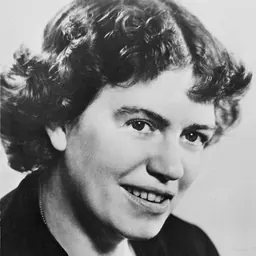
Margaret Mead called Women of the Forest "a salute to women's liberation in a portrait of a fascinating primitive people."
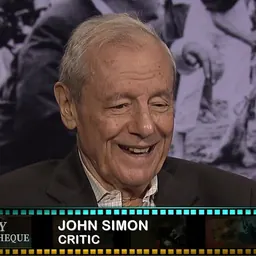
Teaching style According to the cited source, Murphy taught large undergraduate classes at Columbia University. He continued teaching despite his disability, using a motorized wheelchair and a microphone. He received several teaching and academic awards and was named a Fellow of the John Simon Guggenheim Memorial Foundation in 1968.
Other publications
Murphy, Robert F.
1970 Basin Ethnography and Ecological Theory. In Language and Culture of Western North America: Essays in Honor of Sven S. Liljeblad, edited by Earl H. Swanson Jr., pp. 152–171. Pocatello: Idaho State University Press. 1977 Introduction: The Anthropological Theories of Julian H. Steward. In Evolution and Ecology: Essays on Social Transformation, edited by Jane Cannon Steward and R.F. Murphy, pp. 1–40. Urbana: University of Illinois Press. 1981 Julian Steward. In Totems and Teachers, edited by Sydel Silverman, pp. 171–204. New York: Columbia University Press. 1981 (Book Review) The Way of the Shaman: A Guide to Power and Healing by Michael Harner. Review author: Robert Murphy American Anthropologist, New Series, Vol. 83, No. 3 (Sep. 1981), pp. 714–717 1986 Social Structure and Sex Antagonism. Journal of Anthropological Research 42 (1986), 407–416. 1987 American Anthropology. In Perspectives in Cultural Anthropology, edited by Herbert Applebaum. Albany: State University of New York Press.
Murphy, Robert, and Yolanda Murphy
1960 Shoshone-Bannock Subsistence and Society. University of California Anthropological Records. Berkeley: University of California Press, 16(7):293–338. 1986 Northern Shoshone and Bannock. In Handbook of North American Indians: 11. Great Basin, edited by Warren L. d'Azevedo, pp. 284–307. Washington, D.C.: Smithsonian Institution. Fried, Morton, Marvin Harris, and Robert Murphy, eds. 1967 War: The Anthropology of Armed Conflict and Aggression. Garden City, New York: Natural History Press.
Don’t just read it —
keep it.
Full-length biographies made to live with: read them, listen on the way to work, watch them tonight.
- E-book
- Audio
- Video
Instant download · yours to keep · every purchase keeps this site free
Important facts
People in Robert F. Murphy's life
Named in this biography and alive at the same time


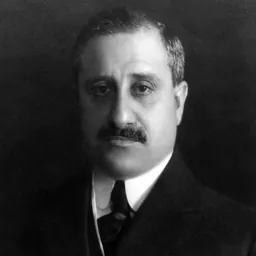

Related people
Same field, nearest in time
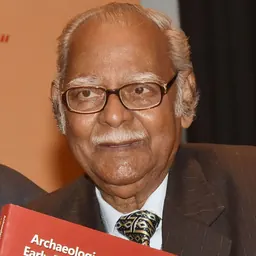

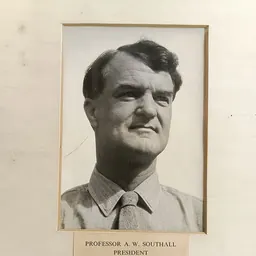

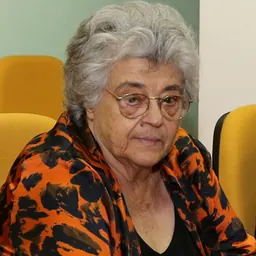

Contemporaries
People whose lives overlapped Robert F. Murphy's



Frequently asked questions
Who was Robert F. Murphy?
anthropologist (1924–1990)
When was Robert F. Murphy born?
Robert F. Murphy was born on 3 March 1924 in New York City.
When did Robert F. Murphy die?
Robert F. Murphy died on 8 October 1990 in New Jersey.
What was Robert F. Murphy's occupation?
Robert F. Murphy was an anthropologist.
What nationality was Robert F. Murphy?
Robert F. Murphy was American.
Sources & further reading
· DBpedia: Robert F. Murphy (anthropologist)
Cite this page
APA: Biography.guide. (2026). Robert F. Murphy. https://biography.guide/robert-f-murphy/
MLA: "Robert F. Murphy." Biography.guide, https://biography.guide/robert-f-murphy/.
Chicago: "Robert F. Murphy." Biography.guide. https://biography.guide/robert-f-murphy/.
Data last updated: 2026-09-20 · Spot an error? Report a correction.
Page generated 2026-09-27 05:29 UTC