
About Robert Eikhe
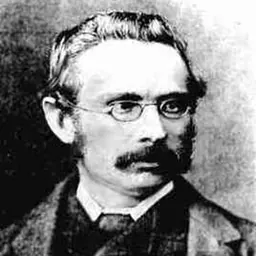
Lived 1890 – 1940 (aged 49). Robert Eikhe was a Russian revolutionary and politician.
Robert Indrikovich Eikhe (, ; 12 August 1890 — 4 February 1940) was a Latvian Bolshevik and Soviet politician who was the provincial head of the Communist Party of the Soviet Union in Siberia during the collectivization of agriculture, until his arrest during the Great Purge.
Early life Robert Eikhe's parents were farm labourers on an estate in Doblen County in what was then Courland province, in modern-day Latvia. He left school at the age of 13 or 14 to become an apprentice in a locksmith's workshop and joined the Social Democracy of the Latvian Territory (which was closely aligned to the Bolsheviks) during the 1905 Revolution. Arrested in August 1907, he spent two months in prison. In February 1908, he was arrested with 18 others at an illegal meeting; he was released under police supervision after six months in prison.
At the end of 1908 he emigrated to the UK. He was a stoker on a steamboat on long voyages, worked in Scotland at a coal mine, and later at a zinc smelter in West Hartlepool. In a single month, in May–June 1931, 39,788 peasant families in West Siberia had their farms seized. By 8 July, the troika had lists of 10,924 people who were marked for execution, and 15,036 who were to be sent to the Gulag. By 5 October, the troika had sentenced 13,216 people to death, and 6,205 to the Gulag. Among the victims were Eikhe's former second-in-command V.P. Shubrikov and the chairman of the West Siberian territorial party executive, F.P. Griadinsky
During the preparation of the "Latvian Operation" – in which thousands of Latvians were arrested and killed – Eikhe was summoned to Moscow, and on 30 October 1937 was appointed to the lesser post of USSR People's Commissar for Agriculture.
Arrest and execution Eikhe was arrested on 29 April 1938, as the NKVD enacted Order 49990, which called for the mass arrest of Latvians throughout the USSR. After being tortured by an NKVD officer named Zinovy Ushakov, he confessed to various counter-revolutionary crimes, and implicated others, but after Ushakov had been arrested – when Nikolai Yezhov was replaced as head of the NKVD by Lavrentiy Beria – Eikhe wrote to Stalin on 1 October 1938, renouncing his confession. He sent a second declaration, on 27 October, saying that his confession had been mostly written by Ushakov, "who utilised the knowledge that my broken ribs have not properly mended and have caused me great pain." He persisted in asserting his innocence during his closed trial, on 2 February 1940, but was sentenced to death nonetheless. The following day, he was taken to Beria's office, and subjected to a prolonged beating by the expert torturer Boris Rodos and two other officers (Major General Anatoly Esaulov) and State Security Officer Nikolaev-Zhurid, in a final attempt to force him to confess. Despite being knocked out and beaten while he was prone, and having an eye gouged out, he refused to confess, and was taken away for execution.
As he later wrote to Stalin before his execution: "I now pass to the most shameful page of my life and to my really grave guilt before the Party and before you. This is about my confessions of Communist Party activity. Commissar Kobulov told me that it was impossible to invent all this, and indeed I could never have invented it. The situation was as follows: unable to endure the tortures inflicted on me by Ushakov, Nikolaev-Zhurid and Esaluov, especially the former, who cleverly took advantage of the fact that after the fracture my spine was still badly overgrown and caused me unbearable pain, they forced me to slander myself and other people. I gave this false testimony when the investigator interrogated me for 16 hours, drove me to loss of consciousness, and when he put the ultimatum that you should choose between two pens (a pen and the handle of a rubber truncheon), I, believing that I had been brought to the new prison to be shot, again showed the greatest cowardice and gave slanderous testimony."
Eikhe's wife Yevgenia Yevseyevna Rubtsova was arrested with him in April 1938 and shot on 26 August.
Eikhe's torture and execution was a prominent theme of the famous Secret Speech that Stalin's successor Nikita Khrushchev delivered at the 20th Communist Party Congress in February 1956. He was formally rehabilitated a month later.
Don’t just read it —
keep it.
Full-length biographies made to live with: read them, listen on the way to work, watch them tonight.
- E-book
- Audio
- Video
Instant download · yours to keep · every purchase keeps this site free
Important facts
People in Robert Eikhe's life
Named in this biography and alive at the same time


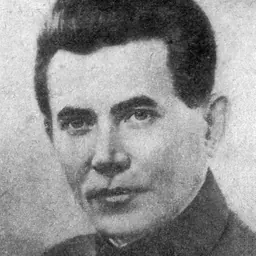


Related people
Same field, nearest in time

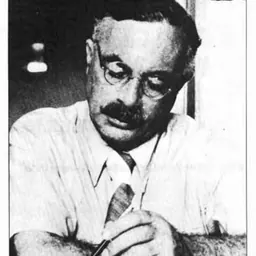
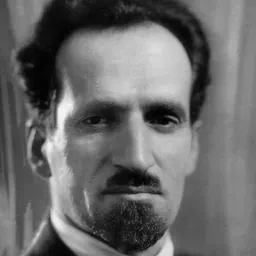
Contemporaries
People whose lives overlapped Robert Eikhe's
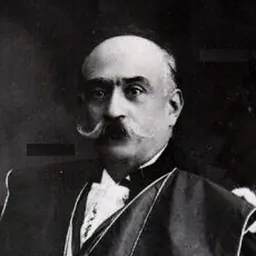




Frequently asked questions
Who was Robert Eikhe?
Soviet revolutionary (1890-1940)
When was Robert Eikhe born?
Robert Eikhe was born on 12 August 1890 in Dobele.
When did Robert Eikhe die?
Robert Eikhe died on 2 February 1940 in Moscow.
What was Robert Eikhe's occupation?
Robert Eikhe was a revolutionary and politician.
What nationality was Robert Eikhe?
Robert Eikhe was Russian.
Sources & further reading
Cite this page
APA: Biography.guide. (2026). Robert Eikhe. https://biography.guide/robert-eikhe/
MLA: "Robert Eikhe." Biography.guide, https://biography.guide/robert-eikhe/.
Chicago: "Robert Eikhe." Biography.guide. https://biography.guide/robert-eikhe/.
Data last updated: 2026-09-20 · Spot an error? Report a correction.
Page generated 2026-09-27 05:32 UTC