
About Robert Coles
Lived 1929 – 2026 (aged 96). Robert Coles was an American psychiatrist, psychologist, educator, writer, university teacher and physician.
Martin Robert Coles (October 12, 1928 – June 4, 2026) was an American author, child psychiatrist and academic who was a professor at Harvard University.
Biography
Early life and education Martin Robert Coles was born in Boston, Massachusetts, on October 12, 1928, to Philip Coles, an immigrant from Leeds, England, United Kingdom, and Sandra Young Coles, originally from Sioux City, Iowa. He had a Jewish and Catholic heritage on his father's side, and an Episcopalian background on his mother's side. Robert attended Boston Latin School, where he played tennis, ran track and edited the school literary magazine. In 1946, he entered Harvard College, where he studied English literature and helped to edit the undergraduate literary magazine, The Harvard Advocate. He graduated magna cum laude and earned Phi Beta Kappa honors in 1950.
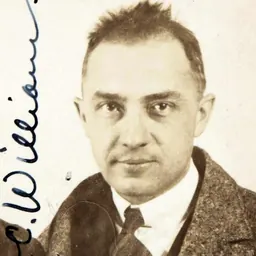
Coles originally intended to become a teacher or professor but as part of his senior honors thesis, he interviewed the poet and physician William Carlos Williams, who promptly persuaded him to go into medicine.
Knowing that he was to be called into the U.S. Armed Forces under the Doctor Draft, Coles joined the Air Force in 1958 and was assigned the rank of captain. His field of specialization was psychiatry, his intention eventually to sub-specialize in child psychiatry. He served as chief of neuropsychiatric services at Keesler Air Force Base in Biloxi, Mississippi, and was honorably discharged in 1960. He returned to Boston and finished his child psychiatry training at the Children's Hospital. In July 1960, he was married to Jane Hollowell, and the couple moved to New Orleans.
Career
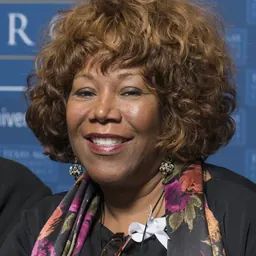
Ruby Bridges In New Orleans In 1960, Coles witnessed six-year-old Ruby Bridges, protected by U.S. Federal marshals, "walking through a screaming mob to integrate a public school", in the words of the New York Times. He volunteered to support and counsel Ruby and her family during this difficult period. Coles wrote a series of articles for The Atlantic Monthly on Ruby and other black children, who, along with their white classmates and their families, were targets of daily public protests, intimidation, and even death threats during the desegregation of public schools in New Orleans.
These articles led to his first book, Children of Crisis: A Study of Courage and Fear, and ultimately to his decision to develop that book into a series of books documenting how children and their parents deal with profound change, a series that won him the Pulitzer prize in 1973. In 1995 he returned to his original material and wrote The Story of Ruby Bridges, a popular children's book, published by Scholastic Corporation.
Other works In addition to working with children in New Orleans and Atlanta, Coles wrote non-technical articles for a number of national publications, including The Atlantic Monthly, The New Republic, Saturday Review, and The Times of London. By 1969, Coles wrote in-depth profiles for The New Yorker and contributed regular columns to The New Republic, New Oxford Review, America, and the American Poetry Review.
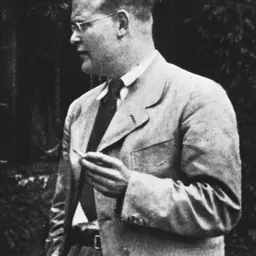
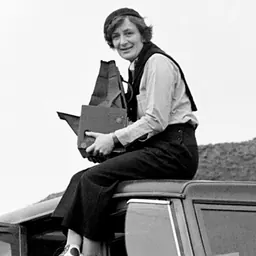
At the urging of Erik Erikson, in 1963 Coles became affiliated with the University Health Services at Harvard as a research psychiatrist. Gradually, he began teaching in the Harvard Medical School, eventually becoming Professor of Psychiatry and Medical Humanities in 1977. the Business School, the Law School, the Extension School and the School of Education, where in 1995 he was given a newly established position as James Agee Professor of Social Ethics. He came to teach courses not only in the moral, spiritual, and social sensibilities of children but also in those phenomena generally, especially as expressed in stories, both literary fictions and oral narratives, and as affected by conditions of poverty and social injustice. As a longtime professor, Coles has influenced generations of Harvard undergraduates and graduate students. In 2007, Harvard University named an annual Call of Service lecture in honor of Coles. including the novelist Walker Percy (who dedicated his final novel, The Thanatos Syndrome, to Coles), the poet William Carlos Williams, writer James Agee, novelist Flannery O'Connor and others, such as Dorothy Day, Dietrich Bonhoeffer, Simone Weil and Dorothea Lange.
Controversy In a 2003 review of Coles's book on musician Bruce Springsteen, music critic David Hajdu questioned the truthfulness and accuracy of Coles's reports of the opinions on Springsteen held by various people, suggesting that some source quotations may have been fabricated:The fact that William Carlos Williams and Walker Percy had such extensive conversations with Robert Coles on the subjects of the New Jersey pop singers Frank Sinatra and Bruce Springsteen and that those discussions yielded insights so parallel and neatly suited to Coles's own take on Springsteen is incredible—utterly incredible. I was not there to overhear them, of course, and it is impossible to check with Williams and Percy, or with the late Erikson and Shawn, whom Coles's other deceased sources quotes in his book's opening sections. But I did ask Will Percy about the comments on Springsteen that Coles attributes to his uncle, and he called them "outrageous". Walker Percy "definitely didn't talk like that", according to his nephew. While "the facts of his subjects' lives are indisputable", one Coles scholar cautions that "some distortion is perhaps inevitable given Coles's method and purposes and expectations of his readers. The portraits are not written as true documentary accounts of the lives of his subjects but are presented as composite views of many [subjects] designed to highlight certain features of American social life neglected in other accounts of the poor. And if they are not true, neither are they false. In some respects... they have the status of fiction based very firmly on the transcription of life. They examine the range of human possibility beyond category and social stereotype".
Death He died in Lincoln, Massachusetts, on June 4, 2026, at the age of 97. Coles and his wife co-authored the 1978 book Women of Crisis: Lives of struggle and hope. She died of a brain tumor in 1993.
Legacy Coles's personal and professional papers are archived at the University of North Carolina, Chapel Hill, and at Michigan State University.
Honors Pulitzer Prize for General Nonfiction, 1973 Presidential Medal of Freedom, 1998 National Humanities Medal, 2001
Don’t just read it —
keep it.
Full-length biographies made to live with: read them, listen on the way to work, watch them tonight.
- E-book
- Audio
- Video
Instant download · yours to keep · every purchase keeps this site free
Important facts
People in Robert Coles's life
Named in this biography and alive at the same time




Related people
Same field, nearest in time

Contemporaries
People whose lives overlapped Robert Coles's


Frequently asked questions
Who was Robert Coles?
American psychiatrist
When was Robert Coles born?
Robert Coles was born on 12 October 1929 in Boston.
When did Robert Coles die?
Robert Coles died on 4 June 2026 in Lincoln.
What was Robert Coles's occupation?
Robert Coles was a psychiatrist, psychologist, educator, writer, university teacher and physician.
What nationality was Robert Coles?
Robert Coles was American.
Sources & further reading
· DBpedia: Robert Coles (psychiatrist)
Cite this page
APA: Biography.guide. (2026). Robert Coles. https://biography.guide/robert-coles-psychiatrist/
MLA: "Robert Coles." Biography.guide, https://biography.guide/robert-coles-psychiatrist/.
Chicago: "Robert Coles." Biography.guide. https://biography.guide/robert-coles-psychiatrist/.
Data last updated: 2026-09-20 · Spot an error? Report a correction.
Page generated 2026-09-27 05:00 UTC