
About Robert C. Osborn
Lived 1904 – 1994 (aged 90). Robert C. Osborn was an American visual artist and draftsperson.
Robert Chesley Osborn (October 26, 1904 – December 20, 1994) was an American satiric cartoonist, illustrator and author.
Pre-World War II career Osborn was born October 26, 1904, in Oshkosh, Wisconsin. He witnessed a fatal aviation crash in June 1916 of Charles Franklin Niles. He entered the University of Wisconsin in 1923, then transferred to Yale in 1923. At Yale, together with Dwight Macdonald, Wilder Hobson, Geoffrey T. Hellman, and Jack Jessup, Osborn helped publish campus humor magazine The Yale Record and was accepted into Yale's Elizabethan Club.
After graduating from Yale in 1928, he studied painting in Rome and Paris, then returned to the U.S. and began teaching art and philosophy at the Hotchkiss School in Lakeville, Conn. He found breaking into the ranks of serious artists difficult, and he soon turned to caricature, sometime after suffering from a perforated ulcer while at his fifth year of teaching at The Hotchkiss School.
World War II
The Dilbert years
Osborn enlisted when World War II began, hoping to become a U.S. Navy pilot. However, the Navy apparently decided that he would be better employed with his hand wrapped around a pen rather than around a joystick: he was soon learning, then applying the art of "speed drawing", under the command of the photographer Edward Steichen in a special information unit in which pilot training manuals such as Shark Sense were produced. Osborn began drawing cartoons of a pilot who was hapless, arrogant, ignorant and perpetually blundering in ways that put himself and his crew at unnecessary risk. The name of this character was Dilbert Groundloop also known as "Dilbert the Pilot" and "Dilbert" was soon to become a slang term used to refer to "sailor who is a foul-up or a screwball." Scott Adams credits Osborn as an indirect source of inspiration for the main character in his own Dilbert cartoons. It is not certain how many drawings Osborn produced for Navy manuals; estimates range from 2,000 to 40,000. some of which appeared in the New York Times and Life magazine. For a while, "dilbert" became a synonym for "blunder" for Navy pilots. In 1943, Dilbert was played by actor Huntz Hall in a US Navy training film Don't Kill your Friends.
Grampaw Pettibone During the Second World War Osborn also drew cartoons of an experienced but somewhat curmudgeonly old Navy pilot, Grampaw Pettibone. Known as the "Sage of Safety", this long-bearded ancient was created in 1943 to educate Navy pilots in safety following a series of avoidable flying mishaps. Osborn illustrated the feature in Naval Aviation News for over 51 years, from 1943 until 1994, when artist Ted Wilbur took over.
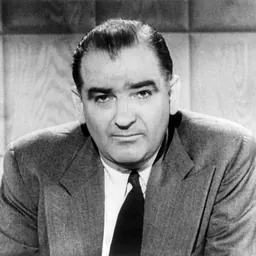
Postwar career After Osborn's stint in the Navy ended in 1946, he wrote a book called War is No Damn Good!, including a nightmarish skull-like depiction of an atomic bomb's mushroom cloud drawn only two weeks after Hiroshima, which prompted critic Steve Heller to call it "the first antiwar book of the nuclear age." The title alluded to cartoonist William Steig's caption, "People are no damn good." Osborn later produced political cartoons, ridiculing Senator Joseph McCarthy,
Critical reception According to Osborn's New York Times obituary, over his 50-year career, Osborn's
sardonic and often savage drawings in books and magazines have arrested readers with their images of bloated power, violence and death. At the same time, he could be wittily ironic about society's pretensions, spoofing subjects like psychiatry, suburbanites and social climbing.
Osborn characterized himself as "a drawer" whose figures "seemed to come right out of my subconscious." Motherwell was among those who compared Osborn's graphic work to that of Daumier, Goya, Saul Steinberg, as well as to the sculpture of Alexander Calder,
Reviewing that show in The New York Times, Times art critic John Russell wrote of Osborn's exhibited Chaplin drawings that Few people have a nimbler, wittier or more versatile way with pen and pencil than Robert Osborn. He died of bone cancer, and was survived by two sons, Nic, a naturalist and photographer, and Eliot, a musician and teacher, both of Taconic, Connecticut.
Books written How to Shoot Ducks (1939) How to Shoot Quail (1939) How to Catch Trout (1939) How to Ski (1942) Aye, Aye, Sir! (1943) Dilbert: Just an Accident Looking for a Place to Happen! (1943) War is No Damn Good! (1946) How to Work for Peace (1948), with Fred Smith How to Play Golf (1949) Low & Inside (1953) How to Shoot Pheasant (1955) Osborn on Leisure (1957) The Vulgarians (1960) Dying to Smoke (1964) with Fred W. Benton, MD Mankind May Never Make It! (1968) An Osborn Festival of Phobias (1971), with Eve Wengler Osborn on Osborn (1982) (autobiography) Osborn on Conflict: 40 Brush Drawings (1984) Introduction by Robert Motherwell The Best of Gramps (1996) (posthumous), ed. by Association of Naval Aviation
Books illustrated If You Want to Build a House, Elizabeth Baur Kassler (Elizabeth B. Mock), Museum of Modern Art, 1946 Safe for Solo: What Every Young Aviator Should Know, Frederick M. Reeder, Rear Adm USN (Ret.), 1947 Acres and Pains, S.J. Perelman, 1947 Snobs: a guidebook to your friends, your enemies, your colleagues and yourself, Russell Lynes, 1950 Strategy in Poker, Business and War, John McDonald, 1950. (McDonald was the ghostwriter for Alfred P. Sloan's My Years with General Motors. McDonald probably came to Sloan's attention because of this strategy book; see Alfred P. Sloan: Critical Evaluations in Business and Management, John Cunningham Wood, Michael C. Wood, p. 91) Is Anybody Listening? How and why U. S. Business Fumbles when it Talks with Human Beings, William H. Whyte, 1952 The Wonderful World of Books, Alfred Stefferud, 1953 Trial by Television and Other Encounters, Michael Whitney Straight, 1954 The Spoor of Spooks, and Other Nonsense, Bergen Evans, 1954 Architecturally Speaking, Eugene Raskin, 1954 The Exurbanites, A. C. Spectorsky, 1955 Women & Children First, Paul Steiner, 1955 Parkinson's Law, and Other Studies in Administration, C. Northcote Parkinson, 1957 The Insolent Chariots, John Keats, 1958 The Decline of the American Male, editors of Look, 1958 Subverse: Rhymes for Our Times, Marya Mannes (AKA "Sec"), 1959 Don't Get Perconel with a Chicken, H. Allen Smith, 1959 The Law and Profits, C. Northcote Parkinson, 1960 I Met a Man, John Ciardi, 1961 A Modern Demonology, Frank Getlein, 1961 Basics: An I-Can-Read Book for Grownups, Eve Merriam, 1962 The Everlasting Cocktail Party: A Layman's Guide to Culture Climbing, Peter Blake, 1964 The Song of Paul Bunyan & Tony Beaver, Ennis Rees, 1964 Great Science Riddles, Rose Wyler, 1965 Gardens Make Me Laugh, James Rose, 1965 Computers on Campus: A Report to the President on their Use and Management, John Caffrey, American Council on Education, 1967 Mrs. Parkinson's Law: And Other Studies in Domestic Science, C. Northcote Parkinson, 1968 Not So Rich as You Think, George R. Stewart, 1968 International Conflict for Beginners, Roger Fisher, 1969 (foreword by Edward M. Kennedy) Missile Madness, Herbert Scoville, 1970 The Nixon Watch, John Osborne, 1970
Exhibitions Charles Chaplin, 1987
Archives and collections Robert Osborn Papers. Yale Collection of American Literature, Beinecke Rare Book and Manuscript Library. The Library of Congress The Pritzker Military Museum & Library The Smithsonian Institution
Don’t just read it —
keep it.
Full-length biographies made to live with: read them, listen on the way to work, watch them tonight.
- E-book
- Audio
- Video
Instant download · yours to keep · every purchase keeps this site free
Important facts
People in Robert C. Osborn's life
Named in this biography and alive at the same time






Related people
Same field, nearest in time



Contemporaries
People whose lives overlapped Robert C. Osborn's


Frequently asked questions
Who was Robert C. Osborn?
American cartoonist (1904–1994)
When was Robert C. Osborn born?
Robert C. Osborn was born on 26 October 1904 in Oshkosh.
When did Robert C. Osborn die?
Robert C. Osborn died on 20 December 1994 in Salisbury.
What was Robert C. Osborn's occupation?
Robert C. Osborn was a visual artist and draftsperson.
What nationality was Robert C. Osborn?
Robert C. Osborn was American.
Sources & further reading
· DBpedia: Robert Osborn (satirist)
Cite this page
APA: Biography.guide. (2026). Robert C. Osborn. https://biography.guide/robert-c-osborn/
MLA: "Robert C. Osborn." Biography.guide, https://biography.guide/robert-c-osborn/.
Chicago: "Robert C. Osborn." Biography.guide. https://biography.guide/robert-c-osborn/.
Data last updated: 2026-09-22 · Spot an error? Report a correction.
Page generated 2026-09-27 05:02 UTC