
Robert Bruce Foote
British geologist and archaeologist
About Robert Bruce Foote
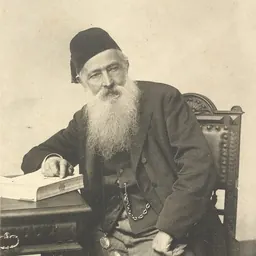
Lived 1834 – 1912 (aged 78). Robert Bruce Foote was an anthropologist, archaeologist and geologist.
Robert Bruce Foote (22 September 1834 – 29 December 1912) was a British geologist and archaeologist who conducted geological surveys of prehistoric locations in India for the Geological Survey of India. For his contributions to Indian archaeology, he is called the father of Indian prehistory. He discovered the site of Attirampakkam (then part of the Madras Presidency, near Chennai), a Madrasian culture.
Work Foote joined the Geological Survey of India (GSI) on 29 December 1858 and was posted in the Madras Presidency, Hyderabad State and Bombay Presidency. An interest in Paleolithic life was inspired by the work of Joseph Prestwich in 1859. In 1863, after his archaeological survey began, he discovered India's first conclusive Paleolithic stone tool (a hand axe). He found the tool in southern India (Pallavaram, near Madras). After the discovery, he and William King went on to discover more such tools and settlements in Southern and Western India. In 1884, he discovered the long Belum Caves, the second largest cave in the Indian subcontinent. In 1887, he became a Director of the GSI, and retiring in 1891, he joined the state of Baroda.
As a geologist, one of his significant contributions to Indian geology was the "Geological Features of the South Mahratta Country and Adjacent Districts" (i.e., Border districts of Maharashtra, Karnataka and Andhra Pradesh States in India).
Foote built a valuable collection due to 40 years of geological and pre-historic expeditions in various parts of western and southern India. Foote's collection of antiquities was all sold to the Madras Government Museum in 1906, where it is quoted to be a valuable treasure.
Later life Later, he settled in Yercaud, where his father-in-law Reverend Peter Percival had worked and lived.
Death He died on 29 December 1912 and was cremated at Calcutta; his ashes were deposited at Holy Trinity Church, Yercaud, Tamil Nadu, India. There is a memorial to him there. Foote was a Fellow of the Geological Society, London, from 1867 and a Fellow of the Royal Anthropological Institute.
Family His grandson was Major General Henry Bowreman Foote, who was the recipient of the Victoria Cross for his contributions to realm's defence during the Second World War.
Don’t just read it —
keep it.
Full-length biographies made to live with: read them, listen on the way to work, watch them tonight.
- E-book
- Audio
- Video
Instant download · yours to keep · every purchase keeps this site free
Important facts
People in Robert Bruce Foote's life
Named in this biography and alive at the same time
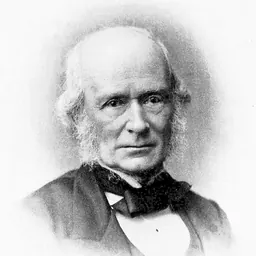



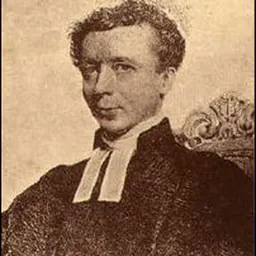
Related people
Same field, nearest in time

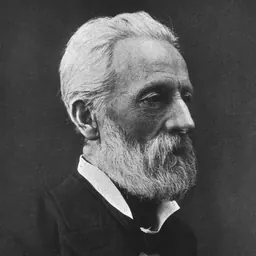
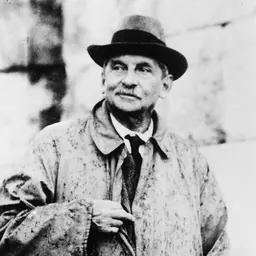


Contemporaries
People whose lives overlapped Robert Bruce Foote's




Frequently asked questions
Who was Robert Bruce Foote?
British geologist and archaeologist (1834–1912)
When was Robert Bruce Foote born?
Robert Bruce Foote was born on 22 September 1834.
When did Robert Bruce Foote die?
Robert Bruce Foote died on 29 December 1912 in Kolkata.
What was Robert Bruce Foote's occupation?
Robert Bruce Foote was an anthropologist, archaeologist and geologist.
Sources & further reading
· Wikipedia: Robert Bruce Foote
Cite this page
APA: Biography.guide. (2026). Robert Bruce Foote. https://biography.guide/robert-bruce-foote/
MLA: "Robert Bruce Foote." Biography.guide, https://biography.guide/robert-bruce-foote/.
Chicago: "Robert Bruce Foote." Biography.guide. https://biography.guide/robert-bruce-foote/.
Data last updated: 2026-09-20 · Spot an error? Report a correction.
Page generated 2026-09-27 05:18 UTC