
About Robert Borofsky
Born 1944. Robert Borofsky is an American ethnologist.
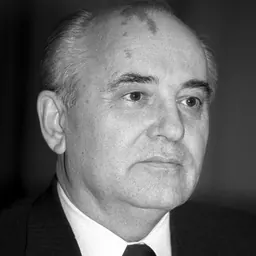
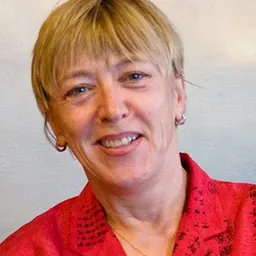
Robert Borofsky is an American anthropologist specializing in public anthropology and the Pacific. A number of his works continue to be read in college curricula today. Before retiring in 2020, Borofsky concentrated on undergraduate education as a Professor of Anthropology at Hawaii Pacific University. In 2001, he initiated the California Series in Public Anthropology, successfully editing the series for over a decade. Two presidents (Mikhail Gorbachev and Bill Clinton) as well as three Nobel Laureates (Amartya Sen, Jody Williams, and Mikhail Gorbachev) have contributed to the Series either through books or forwards. Now retired, he directs the Center for a Public Anthropology focusing on the Center’s Public Anthropology Project which annually involves thousands of introductory anthropology students from across Canada and the United States.
Career Robert Borofsky received his Ph.D. from the University of Hawaiʻi at Mānoa. Along with his wife and a daughter, he spent 41 months – from 1977-81 – on the coral atoll of Pukapuka carrying out field research for his doctoral dissertation examining Pukapukan and anthropological conceptions of the past which, in revised form, was published as Making History: Pukapukan and Anthropological Conceptions of Knowledge (1987).
In addition, Borofsky is the author or editor of a number of other books including, Remembrance of Pacific Pasts: An Invitation to Remake History (2000, open access 2020), Yanomami: The Fierce Controversy and What We Can Learn From It (2005), Why a Public Anthropology (2011), An Anthropology of Anthropology: Is it Time to Shift Paradigms (open access 2019)
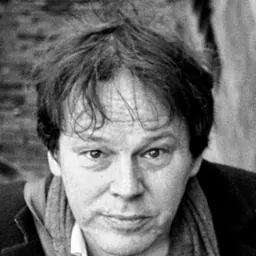
In respect to An Anthropology of Anthropology, David Graeber writes “Anthropologists have written almost nothing about conditions of work, patronage, funding, institutional hierarchy in the academy—that is, the power relations under which anthropological writing is actually produced. Rob Borofsky is one of the few who’s had the requisite courage to do so.” Nancy Scheper-Hughes asserts, “Borofsky’s book is brimming with ideas for redefining anthropology. He shows close up through case studies how the institutional structures of the academy have controlled and restricted anthropology as an intellectual discipline. He asks tough questions about individual accountability, ethics, and self-interests. . . . I recommend this incisive and valuable book to anyone who cares about the future of our field. Once you read it, you will see why.” Robert Borofsky coined the now widely cited term public anthropology, first for the University of California book series he edited and then for the field itself. In 2018, Borofsky suggested four strategies that collectively emphasized public anthropology’s paradigm-shifting intent.
Benefitting Others. Rejecting the minimalist ethic of “do no harm” in favor of a more positive, affirmative stance – one that seeks to benefit others by addressing social inequalities and alleviating suffering both in print and in practice. Fostering Alternative Forms of Accountability. Challenging evaluation systems that privilege publication quantity, and instead, focusing more on the real-world impact of anthropological research. Transparency. Calling on anthropologists to share their fieldnotes to enable cumulative knowledge, while also exposing the patronage dynamics that govern hiring and publication within the discipline. As Justice Louis Brandeis famously stated: “Publicity is justly commended as a remedy for social and industrial diseases. Sunlight is said to be the best of disinfectants; electric light the most efficient policeman.” Collaborating with Others. Insisting that meaningful change requires working alongside non-academic partners rather than speaking only to disciplinary insiders.
In line with these strategies, Borofsky played a significant role during the Yanomami Blood Controversy – a controversy that attracted world-wide attention (see Borofsky 2005:3) – in getting American universities to return the Yanomami blood samples they held in cold storage. For a signed note of appreciation by the key Yanomami spokesperson and shaman, DAVI KOPENAWA YANOMAMI, to Bruce Albert and Rob Borofsky for their help in this successful campaign, please click here. For several years, Borofsky has worked with Altmetrics.com, highlighting anthropologists whose publications attract the broader public’s attention – particularly in news outlets and policy documents from around the world (see and especially ). In a rare move for an anthropologist, in 2024 he published his fieldnotes – numbering over 12,000 pages – on the internet for Pukapukans and others to read and comment on.
Books 2023 Revitalizing Anthropology Let's Focus the Field on Benefiting Others: Graduate Student Visions from Australia, Canada, China, Guatemala, Japan, The United States, and Zimbabwe. Editor. Kailua, Hi: Center for a Public. Open Access https://books.publicanthropology.org/revitalizing-anthropology.pdf
2019 An Anthropology Of Anthropology: Is It Time To Shift Paradigms? Kailua, Hi: Center For A Public Anthropology. Open Access https://books.publicanthropology.org/an-anthropology-of-anthropology.html
2018A Showing Anthropology Matters: Public Anthropology in Action. Editor. Kailua, Hi: Center For A Public Anthropology Center For A Public Anthropology. Open Access https://books.publicanthropology.org/showing-anthropology-matters.html
2018B Why A Public Anthropology? Abridged And Revised Student Edition https://publicanthropology.net/static/pdf/why_a_public_anthropology.pdf
2011 Why A Public Anthropology? Kailua, Hi. Center for a Public Anthropology.
2005 Yanomami: The Fierce Controversy And What We Can Learn From It. Editor. Berkeley, Ca: University Of California Press. Https://Www.Ucpress.Edu/Books/Yanomami/Paper
1994 Assessing Cultural Anthropology, Editor New York, Ny: Mcgraw-Hill.
1987 Making History; Pukapukan And Anthropological Constructions Of Knowledge, (New York: Cambridge University Press).
Don’t just read it —
keep it.
Full-length biographies made to live with: read them, listen on the way to work, watch them tonight.
- E-book
- Audio
- Video
Instant download · yours to keep · every purchase keeps this site free
Important facts
People in Robert Borofsky's life
Named in this biography and alive at the same time



Related people
Same field, nearest in time


Contemporaries
People whose lives overlapped Robert Borofsky's


Frequently asked questions
Who is Robert Borofsky?
American anthropologist (1944-)
When was Robert Borofsky born?
Robert Borofsky was born in 1944.
What is Robert Borofsky's occupation?
Robert Borofsky is an ethnologist.
What nationality is Robert Borofsky?
Robert Borofsky is American.
Sources & further reading
Cite this page
APA: Biography.guide. (2026). Robert Borofsky. https://biography.guide/robert-borofsky/
MLA: "Robert Borofsky." Biography.guide, https://biography.guide/robert-borofsky/.
Chicago: "Robert Borofsky." Biography.guide. https://biography.guide/robert-borofsky/.
Data last updated: 2026-09-20 · Spot an error? Report a correction.
Page generated 2026-09-27 05:09 UTC