
About Robert Ballard Long
Lived 1771 – 1825 (aged 53). Robert Ballard Long was a British military personnel.
Lieutenant-General Robert Ballard Long (4 April 1771 – 2 March 1825) was a British army officer who served in the French Revolutionary and Napoleonic Wars. Serving in the British and Hanoverian armies, despite seeing extensive military service he never managed to achieve high command due to Long's abrasive manner with his superiors and alleged tactical ineptitude. Although he served as a cavalry commander in the Peninsular War between 1811 and 1813, Long was eventually replaced Colquhoun Grant, which ended Long's active military career.
Early life
Robert Ballard Long was born on 4 April 1771 in Chichester, West Sussex, one of twin sons, the other being named Charles, born to the British historian Edward Long and his wife Mary. Long received a formal education, attending Harrow School, which he left in 1789. Following three years of studying military theory at the University of Göttingen, Long was commissioned into the British Army's 1st King's Dragoon Guards at the rank of cornet on 4 May 1791. Aided by his family's wealth, Long was promoted to lieutenant on 25 February 1793 captain in November of that year. In June 1794, he was sent with his regiment to the Low Countries and fought in the Flanders campaign. By the winter of 1794, Long had left his regiment and was attached to the staff of General Sir George Don during the British retreat into Germany and return to England.
Following his arrival in England, Long served as an aide-de-camp to General Sir William Augustus Pitt, who commanded the shore defences at Portsmouth. A friendship developed between the two men, which would serve Long well in his future career. In mid-1796, Long was transferred to the Hanoverian Army, first as an officer in the York Rangers and then as a lieutenant colonel in the Hompesch Mounted Riflemen with a commission he purchased from Baron Hompesch himself for £2,000. His regiment was amongst those dispatched under Sir John Moore to suppress the Irish Rebellion of 1798, with Long serving in the town of Wexford.
Long was with the regiment for two years during which time it was remodelled as a hussar formation. Eventually the name too changed, becoming the 15th 'King's' Light Dragoons (Hussars). Long is mentioned frequently in the anonymously authored book "Jottings from my Sabretasch." The author, a troop sergeant of the 15th Light Dragoons, looked upon Long as a peerless commander. He ascribed virtually all of the superiorities of organisation or training that he claimed for his regiment, over the rest of the British cavalry, to Long's initiatives when in command.
Peninsular War In 1808 with the dispatch of Sir John Moore's army to Spain, Long again applied for a position and was welcomed by his former commander, who by the time of Long's arrival was preparing to fight the desperate rearguard action of the Battle of Corunna amid the ruins of his campaign. Long did not have a command during the battle but instead served on his commander's staff, presumably being present at Moore's death. Returning to England, Long was soon recruited for Lord Chatham's disastrous Walcheren Expedition as adjutant-general. Beresford also claimed that his taking personal command of the heavy dragoons had prevented Long from ordering them to attempt a suicidal charge against French infantry squares. Long was of the opinion, and was subsequently supported in this by the historian Sir William Napier, that if Beresford had released the British brigade of heavy dragoons he would have been able to force the whole French column to surrender. This was the start of the abrasive and acrimonious relationship between Beresford and Long. At the subsequent clash at Los Santos (16 April 1811) Long managed to retain the heavy dragoons under his command and inflicted a reverse on the French cavalry, the French 2nd Hussars suffering considerable losses. On two subsequent occasions, Long was ordered to withdraw from action without engaging whilst still delaying the French through manoeuvre, though Long maintained that he was given orders merely to fall back to a certain position, with no mention being made about delaying the French advance. On each occasion Long withdrew too quickly and gave the French time to respond, apparent failures which frustrated Beresford enough to take advantage of Long's junior rank in relation to allied Spanish cavalry generals to relieve Long of his command, on the day of the Battle of Albuera, and replace him with the more senior general William Lumley. Long subsequently took an honourable part in the battle, though under Lumley's command. Long also served under Lumley at the Battle of Usagre on 25 May 1811, when the British cavalry neatly trapped two regiments of French dragoons at a bridge, inflicting severe casualties.
Long was given command of a light cavalry brigade in June 1811, following his promotion to major general, these troops were involved in a skirmish near Elvas, where a picket of around fifty men of the 11th Light Dragoons was captured (only one man escaped). Wellington was present on this occasion and gave Long a strongly worded reprimand which effectively stalemated his career. Long's political friends were, however, too strong at this stage to allow his recall from active service and therefore Long maintained his brigade command. He commanded the cavalry under Sir Rowland Hill at Arroyo dos Molinos, where a whole French infantry division and several regiments of cavalry were trapped and destroyed as fighting units. Long's cavalry charged and broke the French cavalry and captured over 200 of them plus three pieces of artillery (General Bron, commanding the French cavalry, and the Prince of Aremberg, commander of the 27th Chasseurs, were also captured).
Long commanded a brigade (consisting of a single regiment - the 13th Light Dragoons) at the Battle of Vitoria in 1813. He fought at the Battle of the Pyrenees later in the same year. When Marshal Soult's large-scale attack across the Pyrenees was launched, on 25 July 1813, it caught Wellington's forces off guard and in an extended state. Long's brigade was acting as the vital link between the two main bodies of Anglo-allied troops. It was in this situation that Long performed the most important service in his active military career. General Lowry Cole sent a dispatch to Wellington to say that a French army of about 35,000 men had forced him from his defensive position and that he was falling back. The dispatch came into Long's hands and he, upon his own initiative, opened it and made a copy to be sent to his immediate superior Sir Rowland Hill. Hill then forwarded the dispatch to Wellington who had recently moved his headquarters. The original copy of the dispatch went to the location Wellington's previous headquarters and did not reach him that evening. Long's intelligent actions allowed Wellington time to react to Soult's movements; had any appreciable delay occurred before Wellington became apprised of the situation the results could have been disastrous for the allied army.
The end of active service
Long's final action was in the Siege of Pamplona, after which he was recalled by the Duke of York to England with Wellington's agreement.
To his subordinates he appears to have been a popular and respected figure; characteristically he refused to allow Wellington's censure of the 13th Light Dragoons, following Campo Mayor, to be entered in the regiment's official record. From the rank-and-file he gained the affectionate appellation "Bobby Long." The officers and men of the 13th Light Dragoons repaid his regard for them when they voluntarily subscribed to the purchase of a set of silver plate for Long when he was replaced in command of his brigade.
Unfortunately, Long could not, it seems, avoid entering into vituperative conflicts with his superiors. When the men he made personal enemies of included royal princes (both later to become kings) and a field marshal (albeit in the Portuguese service) Long's career and reputation were bound to be adversely affected. An example of the less attractive side of Long's character is the manner in which he operated a campaign of irritation against Beresford after Campo Mayor. Long harassed Beresford by requesting clarification, to the minutest degree, of virtually every order he was given. Long did not seem to recognise that there were conflicts he had no hope of winning. Beresford was the superior officer with all the advantage of power within the relationship. Long's campaign backfired badly when Beresford, as soon as opportunity allowed, replaced him as the commander of the cavalry.
The British historian and Peninsular War veteran, Sir William Napier, was a severe critic of Beresford's record as army commander during the Albuera Campaign; in criticising Beresford he involved Long's opinions as part of his argument. The publication of Napier's history led to a long running and acrimonious argument in print between Beresford and his partisans on one side, with Napier and Long's nephew Charles Long (Long having died before the controversy reached the public arena) on the other. Recently, Long's performance as a cavalry general has received more favourable comment in Ian Fletcher's revisionist account of the British cavalry in the Napoleonic period. Long was a regular letter writer, particularly to his twin brother Charles. The lively letters he wrote whilst on campaign in the Peninsular War were collected, edited and published in 1951. They provide a valuable insight into the workings of Wellington's army, particularly the cavalry.
Don’t just read it —
keep it.
Full-length biographies made to live with: read them, listen on the way to work, watch them tonight.
- E-book
- Audio
- Video
Instant download · yours to keep · every purchase keeps this site free
Important facts
People in Robert Ballard Long's life
Named in this biography and alive at the same time



Related people
Same field, nearest in time
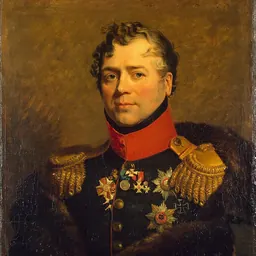

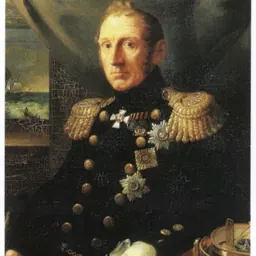

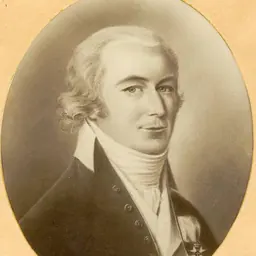
Contemporaries
People whose lives overlapped Robert Ballard Long's




Frequently asked questions
Who was Robert Ballard Long?
officer of the British and Hanoverian Armies
When was Robert Ballard Long born?
Robert Ballard Long was born on 4 April 1771 in Chichester.
When did Robert Ballard Long die?
Robert Ballard Long died on 2 March 1825 in Berkeley Square.
What was Robert Ballard Long's occupation?
Robert Ballard Long was a military personnel.
What nationality was Robert Ballard Long?
Robert Ballard Long was British.
Sources & further reading
· Wikipedia: Robert Ballard Long
· DBpedia: Robert Ballard Long
Cite this page
APA: Biography.guide. (2026). Robert Ballard Long. https://biography.guide/robert-ballard-long/
MLA: "Robert Ballard Long." Biography.guide, https://biography.guide/robert-ballard-long/.
Chicago: "Robert Ballard Long." Biography.guide. https://biography.guide/robert-ballard-long/.
Data last updated: 2026-09-20 · Spot an error? Report a correction.
Page generated 2026-09-27 05:32 UTC