
About Robert B. Williams
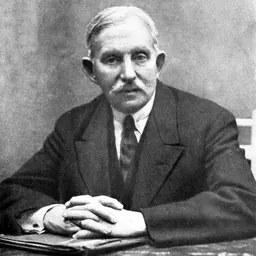
Lived 1901 – 1977 (aged 75). Robert B. Williams was an American military leader and military aviator.
Robert Boyd Williams (November 9, 1901 – February 10, 1977) was a major general in the United States Army Air Forces and an eminent combat commander during World War II. He personally led the B-17 raid on the Schweinfurt ball-bearing factories on 17 August 1943, the first large-scale deep penetration bombing raid on Germany. He was also an important personage in the training of heavy bombardment units both before and after his combat tour.
Early life Robert B. Williams was born in the small Texas city of Albany and graduated from Texas Agricultural and Mechanical College with a Bachelor of Science degree in civil engineering in 1923. He was commissioned a second lieutenant in the Army Air Service on June 6, 1923.
Pre-war career Williams entered flying training in June 1923 at Brooks Field in San Antonio. In January 1924, he began advanced flying training at nearby Kelly Field. In May 1926, Williams was transferred to France Field in the Panama Canal Zone, where he served with the 6th Composite Group and the 7th Observation Squadron. There, on 11 November 1927, he was promoted to first lieutenant. In February 1938, Williams participated in a goodwill tour by six B-17s from Langley Field to Buenos Aires, Argentina, and back. In November 1939, he took part in a second goodwill flight when seven B-17s of the 2nd Group flew to Rio de Janeiro, Brazil and back. Williams received the Order of the Southern Cross from the government of Brazil in 1940 for his participation in the Rio flight.
Schweinfurt was the primary target of a larger mission in which aircraft factories at Regensburg were to be attacked simultaneously by B-17s of the 4th Bombardment Wing, to divide Luftwaffe interceptor reaction, with the Regensburg force continuing on to North Africa instead of returning to its home bases. The "double strike" had already been postponed once by bad weather. Timing was crucial to success of the plan, complicated by the 11-hour length of the Regensburg mission, which required a takeoff soon after dawn to allow it to reach North African bases while it was still daylight. A thick fog covered the bases of both forces at the scheduled takeoff time, however, forcing a postponement of launch of the mission. The Regensburg force delayed its takeoff 90 minutes but then proceeded, while Williams' force was delayed a further four hours. Rather than postpone the mission again, the Schweinfurt force also took off, completely disrupting the timing of the mission. The Regensburg force was nearly to its target, which allowed the entire German interceptor force to refuel and rearm before concentrating on the second mission.
Bob Williams's achievements are less well known, but his stature looms as great in the eyes of his men and associates. Actually, neither could exercise much command control during the mission. Their contribution had come in the months of training and indoctrination and inspiration. But their presence on the mission meant a lot to the crews and to the conduct of the operation.
Bob Williams was a few years senior to the rest of us. He had been one of the few chosen to pilot a B-17 in the early days of the 2d Bombardment Group at Langley Field, Virginia. To me he seemed the very personification of "the officer and gentleman." As a commander he was urbane and personable without any hint of familiarity. He was an exacting but an understanding taskmaster, and whatever the job he demanded, he could do it better himself. It has seemed to me that the perfect achievement of leadership lies in getting other people to do what you want them to do because you are convinced that it is both right and necessary to do, and they are inspired to want to do it. To my mind, Bob Williams provided that kind of leadership. He was the "follow me" kind of leader.
Bob Williams had been selected to go to England as an observer before the U.S. entered the war. He was wounded and lost an eye during a heavy air raid on London. He had chosen to view the scene from the roof of his hotel rather than seek safety in a shelter. A bomb falling close at hand blasted nearby windows, and glass shards damaged one eye beyond repair. This would have sent most men to retirement or to inactive posts. Williams recovered enough to keep right on going.
On the Schweinfurt mission, Williams and his division went through torture during the hours of waiting for the weather to clear enough to permit takeoff. They knew that the carefully integrated plan of operations had been thrown out of balance by the fog that held the 1st Bomb Division on the ground long after the 3d Bomb Division had departed.
General Nathan Twining, who served many years with Bob Williams, says: "He is a wonderful man. Solid. Calm. Strong character. Competent. Great pilot. Great leader. One of the best."
Later Action Williams commanded the 1st Bomb Division in the first largescale daylight attack against Berlin on March 6, 1944.
Return to U.S. Williams returned to the United States in October 1944 to become commanding general of the Second Air Force, Colorado Springs, Colorado. Williams served in that capacity until November 1945.
Awards and decorations Williams' decorations from World War II included the Distinguished Service Cross, the Distinguished Service Medal, Great Britain's Order of the Bath, and France's Legion of Honor and Croix de Guerre. The Distinguished Service Cross (DSC) is the second highest military decoration that can be awarded to a member of the United States Army, awarded for extreme gallantry and risk of life in actual combat with an armed enemy force. Williams and several other Texas A&M alumni general officers were conferred honorary doctorates by the university on April 21, 1946.
Later life Williams retired, disability received in the line of duty, on 1 July 1946 as a major general. and died on 10 February 1977 at the age of 75.
Memorial A sculpture by New Mexico artist Duke Sundt honoring Williams and two other World War II heroes was dedicated in February 2006 at the courthouse in Williams' hometown of Albany, Texas. The Albany Heroes' Monument honors Williams, Lt. Col. William E. Dyess, namesake of Dyess Air Force Base, and Rear Admiral Emory Arden Grantham, who supervised wartime Naval ship repairs at the Puget Sound Naval Shipyard and the Pearl Harbor Naval Shipyard. The life size bas relief portraits are accompanied by biographical information on plaques.
The memorial lists Williams' rank as Lieutenant General and says that he retired in the 1950s.
Don’t just read it —
keep it.
Full-length biographies made to live with: read them, listen on the way to work, watch them tonight.
- E-book
- Audio
- Video
Instant download · yours to keep · every purchase keeps this site free
Important facts
People in Robert B. Williams's life
Named in this biography and alive at the same time


Related people
Same field, nearest in time


Contemporaries
People whose lives overlapped Robert B. Williams's



Frequently asked questions
Who was Robert B. Williams?
American Air Force general (1901–1977)
When was Robert B. Williams born?
Robert B. Williams was born on 9 November 1901 in Albany.
When did Robert B. Williams die?
Robert B. Williams died on 10 February 1977 in San Antonio.
What was Robert B. Williams's occupation?
Robert B. Williams was a military leader and military aviator.
What nationality was Robert B. Williams?
Robert B. Williams was American.
Sources & further reading
· Wikipedia: Robert B. Williams
· DBpedia: Robert B. Williams (general)
Cite this page
APA: Biography.guide. (2026). Robert B. Williams. https://biography.guide/robert-b-williams-military-leader/
MLA: "Robert B. Williams." Biography.guide, https://biography.guide/robert-b-williams-military-leader/.
Chicago: "Robert B. Williams." Biography.guide. https://biography.guide/robert-b-williams-military-leader/.
Data last updated: 2026-09-27 · Spot an error? Report a correction.
Page generated 2026-09-27 05:16 UTC