
Robert Atherton Edwin
British naval officer and meteorologist in New Zealand
About Robert Atherton Edwin
Lived 1839 – 1911 (aged 71). Robert Atherton Edwin was a New Zealand and British meteorologist and naval officer.
Robert Atherton Edwin (16 August 1839 – 15 July 1911) was a meteorologist and weather forecaster, who after a career in the Royal Navy was instrumental in the establishment of the New Zealand Meteorological Office, becoming its first director in 1900 and remaining in post until 1907. He was also an accomplished artist, specializing in marine art.
Early life Edwin was born in Camden Town, London, the son of Felix Edwin, a senior commander in the Royal Navy, and his wife, Marianne Atherton of Walton Hall, Liverpool. His father had toured Southern France with his future brother–in– law, a Royal Navy Officer, Lt Bertram Mitford Atherton after the Napoleonic Wars. His maternal cousins were the Mitford family. His parents had married in Belgium.
He attended Wimborne Minster Grammar School in Dorset, as did his younger brother, Edward Edwin, who also followed the family tradition by joining the Royal Navy. His brother's journal describes life aboard during the outbreak of Yellow Fever during 1873–74. His brother later became the Royal Navy Paymaster Jamaica.
Royal Navy career Edwin joined the Royal Navy as a cadet in January 1853 on HMS Victory, months prior to her sinking in April 1854. He went on serve onboard . As a midshipman on during the Crimean War, he was wounded at the siege of Sevastopol in October 1854.
With on the China Station, he took part in the capture of Guangzhou in 1857. Edwin, who had studied meteorology in the Royal Navy, was influenced by the tradition of practical weather science of which Admiral Robert FitzRoy and the American, Matthew Fontaine Maury, were the most distinguished contemporary exponents. Spurred by the need for timely weather information that would enhance maritime safety, FitzRoy had begun daily forecasts from his Board of Trade office in London in 1860. By this date the forecasting of general weather patterns had become practicable. The use of reliable barometers enabled the accurate measurement of variations in air pressure – the fundamental principle in the assessment of weather changes. These measurements were taken simultaneously at widely separated weather stations, and by means of the electric telegraph were rapidly transmitted to a central office. There FitzRoy's synoptic weather chart allowed the observations to be collated in a coherent visual form from which forecasts could be made. Edwin had been asked to consult with Hector, and the Royal Society of New Zealand, and in January 1874 Edwin proposed an expanded scheme of weather forecasting and storm warnings to the commissioner of customs (nominal head of the Marine Department), volunteering to set it up. The original 17 observer stations had increased to 28 and extended from Auckland to The Bluff. Most were at ports, with the harbourmasters acting as weather observers; the co-operation of the Telegraph Department was assured. Every day, observations of the general weather together with wind direction and force, the barometer reading, the shade temperature, and the sea conditions were telegraphed to Wellington. From these observations, Edwin prepared synoptic charts, and dispatched the forecast for the next 24 hours to each station and to the principal newspapers. If high winds were predicted, storm warnings were sent to the ports. Later, with growing experience of the isobaric patterns typical of New Zealand and making use of Australian weather reports received daily via the trans-Tasman cable from 1876, Edwin was able to classify the associated weather systems and apply empirical rules for forecasting. His predictions were heavily reliant on charting the passage of depressions and their accompanying 'backing winds'. When he retired as director of the Meteorological Office on 31 March 1909, his staff had expanded to four and daily forecasts were being sent to over 90 towns as well as to the newspapers and to selected lighthouses.
Edwin also published a number of scientific papers on his forecasting methods and on atmospheric circulation in the southern hemisphere. He had joined the Wellington Philosophical Society in 1872, and later became a fellow of the Royal Meteorological Society prior to 1884.
Personal life He married Amelia Charlotte Bridgen at Wellington, the third daughter of the Assistant-Commissary General of Van Diemen's Land, Charles Bridgen on 26 July 1871 at Old St Paul's, Wellington. After a short retirement he died at his home in Wellington on 15 July 1911, survived by his wife, three daughters and a son.
His son, Alexander Mitford Edwin (1873–1937) became a prominent Union Steam Ship Company master.
Don’t just read it —
keep it.
Full-length biographies made to live with: read them, listen on the way to work, watch them tonight.
- E-book
- Audio
- Video
Instant download · yours to keep · every purchase keeps this site free
Important facts
People in Robert Atherton Edwin's life
Named in this biography and alive at the same time
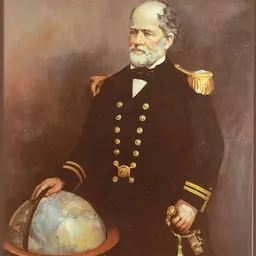


Related people
Same field, nearest in time
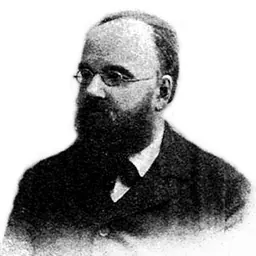


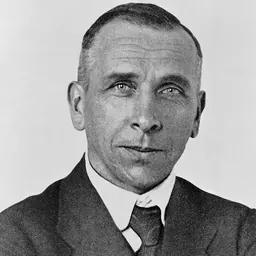
Contemporaries
People whose lives overlapped Robert Atherton Edwin's

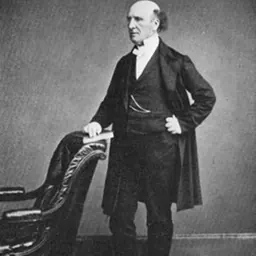

Frequently asked questions
Who was Robert Atherton Edwin?
British naval officer and meteorologist in New Zealand
When was Robert Atherton Edwin born?
Robert Atherton Edwin was born on 16 August 1839 in Camden Town.
When did Robert Atherton Edwin die?
Robert Atherton Edwin died on 15 July 1911 in Wellington.
What was Robert Atherton Edwin's occupation?
Robert Atherton Edwin was a meteorologist and naval officer.
What nationality was Robert Atherton Edwin?
Robert Atherton Edwin was New Zealand and British.
Sources & further reading
· Wikipedia: Robert Atherton Edwin
· DBpedia: Robert Atherton Edwin
Cite this page
APA: Biography.guide. (2026). Robert Atherton Edwin. https://biography.guide/robert-atherton-edwin/
MLA: "Robert Atherton Edwin." Biography.guide, https://biography.guide/robert-atherton-edwin/.
Chicago: "Robert Atherton Edwin." Biography.guide. https://biography.guide/robert-atherton-edwin/.
Data last updated: 2026-09-20 · Spot an error? Report a correction.
Page generated 2026-09-27 05:26 UTC