
About Rick Griffin
Lived 1944 – 1991 (aged 47). Rick Griffin was an American illustrator, writer, comics artist, graphic designer and designer.
Richard Alden Griffin (June 18, 1944 – August 18, 1991) was an American artist and one of the leading designers of psychedelic posters in the 1960s. He was a key figure in the underground comix movement as a founding member of the Zap Comix collective. Griffin was closely identified with the Grateful Dead, designing some of their best-known posters and album covers including Aoxomoxoa. His work within the surfing subculture included both film posters and his comic strip, Murphy.
Early life Griffin was born near Palos Verdes amidst the surfing culture of southern California. Griffin biographer Tim Stephenson notes: "His father was an engineer and amateur archaeologist and as a boy Rick accompanied him on digs in the Southwest. It was during this time that Rick was exposed to the Native American and ghost town artifacts that were to influence his later work. Rick was taught to surf by Randy Nauert at the age of 14 at Torrance Beach. The pair had met at Alexander Jr. High, and were to become lifelong friends, Rick producing much of the artwork for Randy's future band, the Challengers." Griffin was intrigued by the psychedelic rock posters being designed by Stanley Mouse and Alton Kelley so after taking time out for a Mexican surfing trip, Rick and Ida headed to San Francisco to check out the scene. the "Flying Eyeball" poster for Jimi Hendrix.
Comics Griffin was a key figure and founding member of the Zap Comix collective. Man from Utopia (1972), Tales from the Tube (1972), and his Zap pages are considered to be his most notable comic works.
Comic Bibliography Source: Zap Comix #2-9, 11, 12, 14 (The Print Mint, 1968–1998) Yellow Dog #2 (The Print Mint, 1968 June) Yellow Dog #8 (The Print Mint, 1969 February) Bogeyman #2 (San Francisco Comic Book Company, 1969) Bogeyman #3 (Company & Sons, 1970 Changes #3 (Harbinger University Press, 1969) Jiz Comics (Apex Novelties, 1969) King Bee (Apex Novelties, 1969) Promethean Enterprises #1-5 (Bud Plant, 1969–1974) Radical America Komiks (Paul Buhle, 1969) Snatch Comics #2 (Apex Novelties, 1969) All Stars #2 (San Francisco Comic Book Co., 1970) The Dying Dolphin (The Print Mint, 1970) San Francisco Comic Book #1 (San Francisco Comic Book Company, 1970) San Francisco Comic Book #2 (The Print Mint, 1970) Man from Utopia (San Francisco Comic Book Company, 1972) Tales from the Tube (Surfer Publications, 1972) Berkeley Con Program Book (Rip Off Press, 1973) Eternal Comics (Last Gasp, 1973) Occult Laff-Parade (The Print Mint, 1973) Tales from the Berkeley-Con (Rip Off Press / Last Gasp, 1974) Zam (Zap Jam) (The Print Mint, 1974) Foopgoop Frolics Frantic Funnies Folio (Glenn Bray, 1975) Stoned Picture Parade #1 (San Francisco Comic Book Company, 1975) Heebie Jeebie Funnies #1 (Joel Milke, 1976) The Portfolio of Underground Art (Schanes & Schanes, 1980)
The Gospel of John Griffin became a born again Christian in November 1970, which led to fundamental changes in his lifestyle and in the style and content of his art. His 1973 painting Sail on Sailor for the band Mustard Seed Faith is an example of his fine art painting from this period. His most significant 1970s project was the creation of hundreds of paintings and drawings for The Gospel of John, published by the Christian record label Maranatha! Music. He also produced much album art for Maranatha! during the 1970s and 1980s.
Death and legacy Rick Griffin died shortly after a motorcycle accident on August 15, 1991, in Petaluma, California. He was thrown from his Harley-Davidson motorcycle when he collided with a van that suddenly turned left as he attempted to pass it. He was not wearing a helmet and sustained major head injuries. He died three days later, on August 18, in nearby Santa Rosa Memorial Hospital, at the age of 47.
His work has been cited as an inspiration by well-known artist Roger Dean, known for his designs for bands such as Yes and Asia, and by Mark Wilkinson, known for his designs for bands such as Marillion, Judas Priest and Iron Maiden.
Books McClelland, Gordon. The Art of Rick Griffin. Perigee Paper Tiger, 1980. Reprinted by Last Gasp, 2001. Harvey, Doug, edited by Susan Anderson. Heart and Torch: Rick Griffin's Transcendence. Laguna Art Museum, Gingko Press, 2007.
Don’t just read it —
keep it.
Full-length biographies made to live with: read them, listen on the way to work, watch them tonight.
- E-book
- Audio
- Video
Instant download · yours to keep · every purchase keeps this site free
Important facts
People in Rick Griffin's life
Named in this biography and alive at the same time



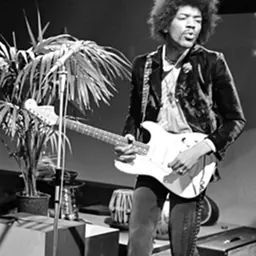




Related people
Same field, nearest in time




Contemporaries
People whose lives overlapped Rick Griffin's
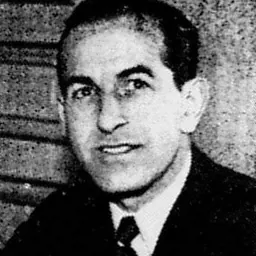



Frequently asked questions
Who was Rick Griffin?
American artist (1944–1991)
When was Rick Griffin born?
Rick Griffin was born on 18 June 1944 in Palos Verdes Peninsula.
When did Rick Griffin die?
Rick Griffin died on 18 August 1991 in Petaluma.
What was Rick Griffin's occupation?
Rick Griffin was an illustrator, writer, comics artist, graphic designer and designer.
What nationality was Rick Griffin?
Rick Griffin was American.
Sources & further reading
Cite this page
APA: Biography.guide. (2026). Rick Griffin. https://biography.guide/rick-griffin/
MLA: "Rick Griffin." Biography.guide, https://biography.guide/rick-griffin/.
Chicago: "Rick Griffin." Biography.guide. https://biography.guide/rick-griffin/.
Data last updated: 2026-09-20 · Spot an error? Report a correction.
Page generated 2026-09-27 05:00 UTC