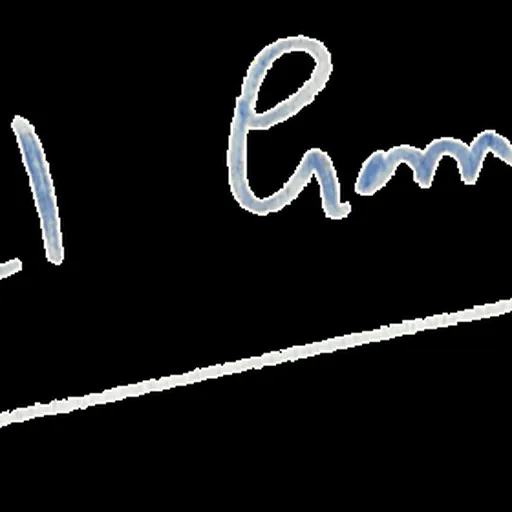
Richmal Crompton
English short-story writer and novelist
About Richmal Crompton
Lived 1890 – 1969 (aged 78). Richmal Crompton was a British writer, novelist, children's writer, humorist, short story writer and prose writer.
Richmal Crompton Lamburn (15 November 1890 – 11 January 1969) was a popular English writer, best known for her Just William series of books, humorous short stories, and to a lesser extent adult fiction books.
Life Richmal Crompton Lamburn was born in Bury, the second child of the Rev. Edward John Sewell Lamburn, a Classics master at Bury Grammar School and his wife Clara (née Crompton) Her brother, John Battersby Crompton Lamburn, also became a writer and is remembered under the name John Lambourne for his fantasy novel The Kingdom That Was (1931), and as a successful writer on natural science as John Crompton. Richmal also had a sister, Gwen, who was 18 months older, and a younger sister, Phyllis, who died of whooping cough at age 14 months.
Richmal Crompton attended St Elphin's Boarding School for the daughters of the clergy, originally based in Warrington, Lancashire, where Gwen also was in attendance. Richmal later moved with the school to a new location in Darley Dale, near Matlock, Derbyshire in 1904. In order to further her chosen career as a schoolteacher, she won a scholarship to Royal Holloway College, part of the University of London in Englefield Green, Surrey. Crompton was elected Senior Scholar for the first year students, was secretary of the Classics Club, and treasurer of the Christian Union. She graduated in 1914 with a BA honours degree in Classics (II class). Crompton took part in the Women's Suffrage movement.
In 1914, she returned to St Elphin's as a Classics mistress and later, at age 27, moved to Bromley High School in southeast London where she began her writing in earnest. Her biographer Mary Cadogan writes that she was an excellent and committed teacher at both schools. Having contracted poliomyelitis in 1923 she was left without the use of her right leg. She gave up her teaching career and began to write full-time. Crompton never married and had no children, but she greatly enjoyed being an aunt and a great-aunt. Crompton's first published story appeared in 1919, and the first of her quickly-popular "William" stories was published in Home magazine in February, 1919. Her William stories and her other literature were extremely successful, and three years after she retired from teaching, Crompton was able to afford to have a house (The Glebe) built in Bromley Common for herself and her mother, Clara.
Crompton died in 1969 at the age of 78, after a heart attack, in Farnborough Hospital. She left the copyright of all her books to her niece, Mrs Richmal C. L. Ashbee of Chelsfield, Kent; along with £57,623.
Work Crompton's best known books are the William stories, about a mischievous 11-year-old schoolboy and his band of friends, known as "The Outlaws". Her first published short story featuring William was "Rice Mould Pudding", published in Home magazine in 1919. She had written "The Outlaws" in 1917, but it was not published until March 1919. In 1922, the first collection, entitled Just-William, was published. She wrote 38 other William books throughout her life. The last, William the Lawless, was published posthumously in 1970. Another, Just William: The Book of the Film, consists of the script of the 1938 film as well as six of the stories on which it was based.
The William books sold over 12 million copies in the United Kingdom alone and they remain in print. They have been adapted for films, stage-plays, and numerous radio and television series. Illustrations by Thomas Henry contributed to their success. In 1934 Crompton wrote a controversial William story called "William and the Nasties," (published in the 1945 book William the Detective) which seems to contain both antisemitism and a recognition of antisemitism's dangers. The story was omitted from editions of the book after 1986.
Crompton saw her real work as writing adult fiction. Starting with The Innermost Room (1923), she wrote 41 novels for adults and published nine collections of short stories. Their focus was generally village life in the Home Counties Though these novels have the same inventiveness and lack of sentimentality as the 'William' books, after the Second World War such literature had an increasingly limited appeal.
Even William was originally created for a grown-up audience, as she saw Just William as a potboiler. She was pleased by its success, but seemed frustrated that her other novels and short stories did not receive the same recognition. Her first published story was published in The Girl's Own Paper in 1918, concerning a little boy named Thomas, a forerunner of William who reacts against authority. Crompton tried several times to reformulate William for other audiences. Jimmy (1949) was aimed at younger children, and Enter – Patricia (1927) at girls. Crompton wrote two more Jimmy books, but no more Patricia, and neither was as successful as William.
Crompton never disclosed the source of inspiration for the main character William; different opinions exist. According to the actor John Teed, whose family lived next door to Crompton, the model for William was Crompton's nephew Tommy: However, the adventures of Richmal's brother John (Jack) also are said to have provided the inspiration for some of William's activities, and Tommy's younger sister has insisted that William and other of Crompton's characters are more a result of the latter's fertile imagination than they are sketches of real persons.
It has been said that Crompton's fiction "is based on serious themes, albeit that her genre of choice is often comedy" and that in it "pomposity and selfishness must be exposed and each of us should listen to our guiding spirit." The William books have been translated into over twenty languages.
List of published works The publication dates are for the UK.
Just William short story collections
Just William, 1922 More William, 1922 William Again, 1923 William the Fourth, 1924 Still William, 1925 William the Conqueror, 1926 William the Outlaw, 1927 William in Trouble, 1927 William the Good, 1928 William, 1929 William the Bad, 1930 William's Happy Days, 1930 William's Crowded Hours, 1931 William the Pirate, 1932 William the Rebel, 1933 William the Gangster, 1934 William the Detective, 1935 Sweet William, 1936 William the Showman, 1937 William the Dictator, 1938 William and A.R.P., 1939 (also published as William's Bad Resolution, 1956) William and the Evacuees, 1940 (also published as William and the Film Star, 1956) William Does His Bit, 1941 William Carries On, 1942 William and The Brains Trust, 1945 Just William's Luck, 1948 William the Bold, 1950 William and the Tramp, 1952 William and the Moon Rocket, 1954 William and the Artist's Model, 1956 William and the Space Animal, 1956 William's Television Show, 1958 William the Explorer, 1960 William's Treasure Trove, 1962 William and the Witch, 1964 William and the Pop Singers, 1965 William and the Masked Ranger, 1966 William the Superman, 1968 William the Lawless, 1970
Just William plays
William and the Artist's Model, 1956 William the Terrible, BBC Radio Plays volume 1, 2008, published by David Schutte William the Lionheart, BBC Radio Plays volume 2, 2008, published by David Schutte William the Peacemaker, BBC Radio Plays volume 3, 2009, published by David Schutte William the Avenger, BBC Radio Plays volume 4, 2009, published by David Schutte William the Smuggler, BBC Radio Plays volume 5, 2010, published by David Schutte William's Secret Society, BBC Radio Plays volume 6, 2010, published by David Schutte
Miscellaneous books for children Enter – Patricia, 1927 Jimmy, 1949 Jimmy Again, 1951 Jimmy the Third, a compilation of stories from Jimmy and Jimmy Again, 1965
Others
The Innermost Room, 1923 The Hidden Light, 1924 Anne Morrison, 1925 The Wildings, 1925 David Wilding, 1926 The House, 1926 (also published as Dread Dwelling) Kathleen and I, and, of Course, Veronica, 1926 (short stories) Millicent Dorrington, 1927 A Monstrous Regiment, 1927 (short stories) Leadon Hill, 1927 The Thorn Bush, 1928 Roofs Off!, 1928 The Middle Things, 1928 (short stories) Felicity Stands By, 1928 (short stories) Sugar and Spice and Other Stories, 1928 (short stories) Mist and Other Stories, 1928 (short stories), republished in May 2015 by Sundial Press as "MIST And Other Ghost Stories" The Four Graces, 1929 Abbot's End, 1929 Ladies First, 1929 (short stories) Blue Flames, 1930 Naomi Godstone, 1930 The Silver Birch and Other Stories, 1931 (short stories) Portrait of a Family, 1931 The Odyssey of Euphemia Tracy, 1932 Marriage of Hermione, 1932 The Holiday, 1933 Chedsy Place, 1934 The Old Man's Birthday, 1934 Quartet, 1935 Caroline, 1936 The First Morning, 1936 (short stories) There Are Four Seasons, 1937 Journeying Wave, 1938 Merlin Bay, 1939 Steffan Green, 1940 Narcissa, 1941 Mrs Frensham Describes a Circle, 1942 Weatherly Parade, 1944 Westover, 1946 The Ridleys, 1947 Family Roundabout, 1948, republished in 2001 by Persephone Books Frost at Morning, 1950 Linden Rise, 1952 The Gypsy's Baby, 1954 Four in Exile, 1954 Matty and the Dearingroydes, 1956 Blind Man's Buff, 1957 Wiseman's Folly, 1959 The Inheritor, 1960 The House in the Wood - and other stories, 2022, 25 'lost' stories published by David Schutte The Apple Blossom Lady - and other stories, 2023, 27 'lost' stories published by David Schutte Oh, Clare! - 133 humorous sketches, 2024, 'lost' humorous sketches published by David Schutte The Dream - and other stories, 2024, 32 'lost' stories published by David Schutte
Other short stories Half-an-Hour. Adelaide Observer, 23 December 1922
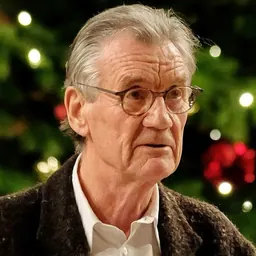
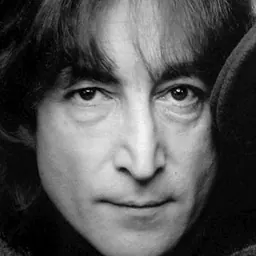
Legacy Crompton's stories about William have delighted and influenced a diverse array of notable Britons, including: Antonia Frasier, John Lennon, Norman Tebbit, Michael Palin, Auberon Waugh, Martin Jarvis, and Terry Pratchett.
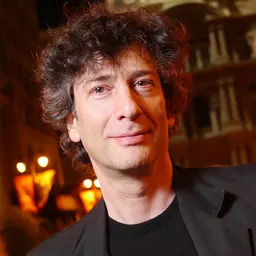
The novel and TV series Good Omens by Neil Gaiman and Terry Pratchett was inspired by Just William, with the premise being the Antichrist in the place of William, and his gang ("The Them") in place of "The Outlaws". The initial working title for the novel was "William the Antichrist".
Richmal Crompton's archives are held at Roehampton University, London, and at Wat Tyler Country Park, Pitsea, where some members of her family lived. A public house in Bromley is named in her honour and contains framed prints and texts from the William series.
Don’t just read it —
keep it.
Full-length biographies made to live with: read them, listen on the way to work, watch them tonight.
- E-book
- Audio
- Video
Instant download · yours to keep · every purchase keeps this site free
Important facts
People in Richmal Crompton's life
Named in this biography and alive at the same time





Related people
Same field, nearest in time




Contemporaries
People whose lives overlapped Richmal Crompton's


Frequently asked questions
Who was Richmal Crompton?
English short-story writer and novelist (1890–1969)
When was Richmal Crompton born?
Richmal Crompton was born on 15 November 1890 in Bury.
When did Richmal Crompton die?
Richmal Crompton died on 11 January 1969 in Farnborough, Princess Royal University Hospital.
What was Richmal Crompton's occupation?
Richmal Crompton was a writer, novelist, children's writer, humorist, short story writer and prose writer.
What nationality was Richmal Crompton?
Richmal Crompton was British.
Sources & further reading
Cite this page
APA: Biography.guide. (2026). Richmal Crompton. https://biography.guide/richmal-crompton/
MLA: "Richmal Crompton." Biography.guide, https://biography.guide/richmal-crompton/.
Chicago: "Richmal Crompton." Biography.guide. https://biography.guide/richmal-crompton/.
Data last updated: 2026-09-22 · Spot an error? Report a correction.
Portrait: Wikimedia Commons · author & licence
Page generated 2026-09-27 05:04 UTC