
Richards Heuer
Intelligence analyst
About Richards Heuer
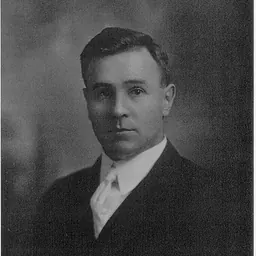
Lived 1927 – 2018 (aged 91). Richards Heuer was an American intelligence analyst.
Richards "Dick" J. Heuer, Jr. (July 15, 1927 – August 21, 2018) The former provides a methodology for overcoming intelligence biases while the latter outlines how mental models and natural biases impede clear thinking and analysis. Throughout his career, he worked in collection operations, counterintelligence, intelligence analysis and personnel security. In 2010 he co-authored a book with Randolph (Randy) H. Pherson titled Structured Analytic Techniques for Intelligence Analysis.
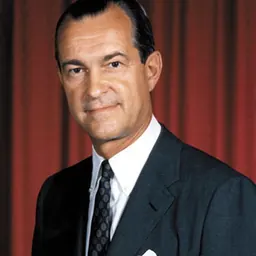
Background Richards Heuer graduated in 1950 from Williams College with a Bachelor of Arts in Philosophy. One year later, while a graduate student at the University of California, Berkeley, future CIA Director Richard Helms recruited Heuer to work at the Central Intelligence Agency.
Structured analytic techniques
Structured Analytic Techniques for Intelligence Analysis and key concepts Heuer's book Structured Analytic Techniques for Intelligence Analysis, published in 2010 (second edition 2015) and co-authored with Randy H. Pherson, provides a comprehensive taxonomy of structured analytic techniques (SATs) pertaining to eight categories: decomposition and visualization, idea generation, scenarios and indicators, hypothesis generation and testing, cause and effect, challenge analysis, conflict management and decision support. Heuer and Pherson advocate SATs as "enablers" of collective and interdisciplinary intelligence products. Second, increased knowledge of our inherent biases tends to be of little assistance to the analyst. And lastly, tools and techniques that apply higher levels of critical thinking can substantially improve analysis on complex problems. ACH is an eight step process to enhance analysis:
Identify all possible hypotheses Make a list of significant evidence and arguments Prepare a matrix to analyze the "diagnosticity" of evidence Drawn tentative conclusions Refine the matrix Compare your personal conclusions about the relative likelihood of each hypothesis with the inconsistency scores Report your conclusions Identify indicators
Heuer originally developed ACH to be included as the core element in an interagency deception analysis course during the Reagan administration in 1984 concentrated on Soviet deception regarding arms deals.
Involvement in the Nosenko case During the 1980s, Richards Heuer was deeply involved in analyzing the controversial Yuri Nosenko case. His paper, Nosenko: Five Paths to Judgment, was originally published in 1987 in the CIA's classified journal Studies in Intelligence, where it remained classified for eight years. In 1995, it was then published in Inside CIA's Private World, Declassified Articles from the Agency's Internal Journal, 1955–1992. The article is an explanation of how and why the errors associated with the Nosenko case occurred, and has been used for teaching deception analysis to analysts.
Heuer outlines five strategies for identifying truth in deception analysis cases, employing the Nosenko case as a use case throughout in order to demonstrate how analysts on the case failed to conclude that Nosenko was legitimate. Both are free to use and available in the public domain for download.
Adjudicative desk reference This large database supplements the Intelligence Community Adjudicative Guidelines which specify 13 categories of behavior that must be considered before granting a security clearance. Heuer's product provides far more detailed information about why these behaviors are a potential security concern and how to evaluate their severity. Though this background information is not official government policy, the reference has been approved by the Security Agency Executive Advisory Committee as a tool for assisting security investigators and managers. Appeals panels and lawyers have used it to deal with security clearance decisions, and it has also been proven useful to employee assistance counselors.
Online guide to security responsibilities This tool provides an all-in-one source for introducing new personnel to all the various intricacies of security. Additionally, it provides a wealth of information for security professionals seeking to prepare awareness articles or briefings. The software covers a variety of topics including (but not limited to): protecting classified information, foreign espionage threats and methods, and computer vulnerabilities. It is an updated version of the Customizable Security Guide. In hard copy format, there are over 500 pages of material.
Awards (1987) Agency Seal Medallion: "For developing and teaching an innovative methodology for addressing complex and challenging problems facing the intelligence community." (1988) CIA Recognition: "For outstanding contribution to the literature of intelligence." (1995) U.S. Congress Certificate of Special Congressional Recognition: "For outstanding service to the community." (1996) CIA Recognition: "For work on countering denial and deception." (2000) International Association of Law Enforcement Intelligence Analysts (IALEIA) "Publication of the Year" Award for Psychology of Intelligence Analysis (2008) International Association for Intelligence Education (IAFIE) Annual Award for Contribution to Intelligence Education
Don’t just read it —
keep it.
Full-length biographies made to live with: read them, listen on the way to work, watch them tonight.
- E-book
- Audio
- Video
Instant download · yours to keep · every purchase keeps this site free
Important facts
People in Richards Heuer's life
Named in this biography and alive at the same time


Related people
Same field, nearest in time






Contemporaries
People whose lives overlapped Richards Heuer's

Frequently asked questions
Who was Richards Heuer?
Intelligence analyst
When was Richards Heuer born?
Richards Heuer was born on 15 July 1927 in Philadelphia.
When did Richards Heuer die?
Richards Heuer died on 21 August 2018.
What was Richards Heuer's occupation?
Richards Heuer was an intelligence analyst.
What nationality was Richards Heuer?
Richards Heuer was American.
Sources & further reading
Cite this page
APA: Biography.guide. (2026). Richards Heuer. https://biography.guide/richards-heuer/
MLA: "Richards Heuer." Biography.guide, https://biography.guide/richards-heuer/.
Chicago: "Richards Heuer." Biography.guide. https://biography.guide/richards-heuer/.
Data last updated: 2026-09-20 · Spot an error? Report a correction.
Page generated 2026-09-27 05:32 UTC