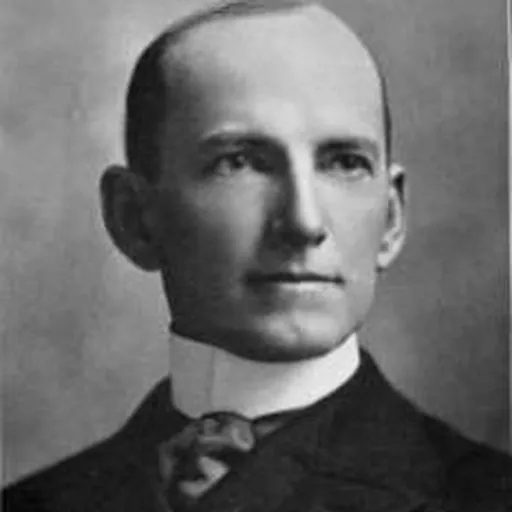
About Richard W. Austin
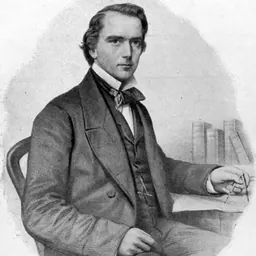
Lived 1857 – 1919 (aged 61). Richard W. Austin was an American politician, lawyer and diplomat.
Early life Austin was born on August 26, 1857, in Decatur, Alabama, the son of John and Mary (Parker) Austin. He attended public schools in Loudon County, Tennessee, and studied law at the University of Tennessee. He was admitted to the bar in 1878, and commenced practice in Knoxville, Tennessee.
Austin ran for Alabama's 8th district seat in the U.S. House of Representatives in 1890, but lost to the incumbent, former Confederate general Joseph Wheeler, 16,821 votes to 12,076. He was a delegate to the 1892 Republican National Convention at Minneapolis. He returned to Knoxville in 1893 to edit the Knoxville Republican.
In 1897, President McKinley appointed Austin United States Marshal for the Eastern District of Tennessee. One of the more notable actions of Austin as marshal came in June 1903, when he organized an unsuccessful effort to recapture outlaw Kid Curry, who had escaped from a Knoxville jail.
Austin ran for Tennessee's 2nd district congressional seat in 1904, but was defeated in the primary by Nathan W. Hale, who had the support of the Evans-Sanders block. In 1906, Austin was appointed United States consul at Glasgow, Scotland. He remained at this post until November 1907, when he resigned and returned to Tennessee to mount another congressional campaign.
Congress In 1908, the quarrel between the Evans-Sanders and Brownlow-Austin factions intensified when powerful Knoxville businessman William J. Oliver, a friend of Brownlow and Austin, led a band of armed ruffians to the state party's convention in Nashville, where they beat up Sanders and chased away his supporters. Determined to defeat Hale, the Brownlow faction aligned itself with the Malcolm Patterson faction of the state's Democratic Party, which was facing a similar rift between supporters of Patterson and supporters of his gubernatorial opponent, Edward W. Carmack. The Brownlow Republicans offered to vote for Patterson for governor, and in return, Patterson Democrats would vote for Austin in the 2nd district congressional election. With this support, Austin edged Hale on election day, 15,337 votes to 14,528.
Incensed, Hale and his supporters attempted unsuccessfully to prevent Austin from caucusing with House Republicans. John Chiles Houk, who generally supported the Evans-Sanders faction, convinced Patterson to abandon his support for Austin and Brownlow. This move proved untimely, however, as Patterson's popularity plummeted due to his actions in the aftermath of the Cooper-Carmack shootout. Though Hale had the support of Houk and the influential Knoxville Journal, Austin had the support of President William Howard Taft. Following a savage campaign in 1910, Austin again defeated Hale, this time by a margin of 15,761 votes to 11,755.
Austin was easily reelected in 1914 and 1916. At the 1916 Republican National Convention, he openly squabbled with ex-Governor Ben W. Hooper (a Sanders ally) over the state's delegate to the national committee. The persistent enmity of Houk, Sanders and Hooper finally took its toll in the March 1918 Republican primary, when Austin was defeated for the nomination by state party chairman J. Will Taylor.
During his five terms in Congress, Austin, a Taft ally, generally supported protectionist measures, such as tariffs on foreign imports. In February 1911, Austin delivered a memorial address on the House floor for Brownlow, who had died the previous year. In 1915, he supported a national exchange system that would help match job seekers with employers looking for help. During the House debate on the 19th Amendment in January 1918, Austin, referring to Congressman Jeannette Rankin of Montana, argued, "The highest, best, and strongest evidence that women's suffrage is a success has been established in this House by the enviable record made by our colleague from Montana, who has won the respect, confidence, and admiration of the members and officials of this House."
Death Austin died in Washington, D.C., on April 20, 1919, just over a month after the end of his final congressional term. He is interred at Old Gray Cemetery in Knoxville, Tennessee.
Don’t just read it —
keep it.
Full-length biographies made to live with: read them, listen on the way to work, watch them tonight.
- E-book
- Audio
- Video
Instant download · yours to keep · every purchase keeps this site free
Important facts
People in Richard W. Austin's life
Named in this biography and alive at the same time



Related people
Same field, nearest in time



Contemporaries
People whose lives overlapped Richard W. Austin's





Frequently asked questions
Who was Richard W. Austin?
American politician, attorney and diplomat (1857–1919)
When was Richard W. Austin born?
Richard W. Austin was born on 26 August 1857 in Decatur.
When did Richard W. Austin die?
Richard W. Austin died on 20 April 1919 in Washington, D.C..
What was Richard W. Austin's occupation?
Richard W. Austin was a politician, lawyer and diplomat.
What nationality was Richard W. Austin?
Richard W. Austin was American.
Sources & further reading
· Wikipedia: Richard W. Austin
Cite this page
APA: Biography.guide. (2026). Richard W. Austin. https://biography.guide/richard-w-austin/
MLA: "Richard W. Austin." Biography.guide, https://biography.guide/richard-w-austin/.
Chicago: "Richard W. Austin." Biography.guide. https://biography.guide/richard-w-austin/.
Data last updated: 2026-09-22 · Spot an error? Report a correction.
Portrait: Wikimedia Commons · author & licence
Page generated 2026-09-27 05:04 UTC