
About Richard Usborne
Lived 1910 – 2006 (aged 95). Richard Usborne was a British journalist.
Richard Alexander Usborne (16 May 1910 – 21 March 2006) was a journalist, advertising executive, schoolmaster and author. After the publication of his book Wodehouse at Work in 1961 he became regarded as the leading authority on the works of P. G. Wodehouse. He published or contributed to nine more books on the subject. He adapted eight Wodehouse novels and several other of the author's works for broadcast on BBC radio between 1979 and 1996.
Biography Early years Richard Usborne was born on 16 May 1910 at Simla, in British India, the son of Charles Frederick Usborne, a member of the Indian Civil Service, and his wife Janet Muriel, née Lefroy. He was educated in England at Summer Fields Preparatory school, Charterhouse School and then Balliol College, Oxford, where he was a prominent sportsman, competing in association football and squash rackets. He graduated BA (Literae humaniores) in 1932.
Usborne failed to enter the Indian Civil Service because of a heart murmur, and became a schoolmaster for a while. From 1933 to 1936 he worked in advertising agencies, and in 1936, together with three friends, he invested in a listings magazine, London Week, later called What's On. As part-owner and editor, Usborne came up with the novel idea of a restaurant column. When he described a West End restaurant, the Dieu Donné, as the sort of place where you would say nothing if you saw your wife because she would want to know why you were there too, the owner of the restaurant successful sued for libel.
In 1948 Usborne became assistant editor of the Strand Magazine, then edited by Macdonald Hastings. The Strand was known for first publishing the Sherlock Holmes stories of Arthur Conan Doyle and later the stories of P. G. Wodehouse. Usborne was remembered for giving "warm, cheerful and avuncular encouragement to young and inexperienced budding writers". By the late 1940s the magazine was suffering from falling circulation and rising costs; the final issue was published in March 1950. Usborne then worked on the Leader Magazine before returning to teaching as a master at St Paul's School, where, one pupil recalled, he "taught my youthful generation how to read poetry, to learn to love it and even to write it". His final career move took him back to advertising; he became a director of the advertising company Graham and Gillies, where he remained until he retired in 1970. He died in London on 21 March 2006, aged 95. Potter's example of the ploy was against a self-regarding "expert", who has just returned from a visit to Florence and remarks, "And I was glad to see with my own eyes that this Left-wing Catholicism is definitely on the increase in Tuscany"; to which the "lifeman" replies with the offputting interjection, "Yes, but not in the South." |group=n Usborne continued to write for Punch during the succeeding decades; his final contribution was a 90th-birthday tribute to P. G. Wodehouse, published in October 1971.
Clubland Heroes In 1952 Usborne wrote his first book Clubland Heroes, published in 1953 with revised editions in 1975 and 1983. This work sought to reappraise the adventure stories of the British authors Dornford Yates, Sapper, and John Buchan. Usborne had first read the stories during childhood illnesses, but had retained an affection for them into adulthood. Despite this, he was not blind to the flaws in these authors' works, describing female characters as "cardboard" and noting that McNeile was "wonderfully forgetful", with characters dead in one book, but being alive in the next. Clubland Heroes was well received. E. V. Knox praised "the delightfully satirical way" in which Usborne summed up the characters and exploits of the heroes, Philip Toynbee called the book "a jeu d'esprit that will give great pleasure … a fine piece of gentle but sustained irony", and Punch found it "enjoyable and absorbing to read besides being penetrating criticism".
Wodehouse
Clubland Heroes brought Usborne to the attention of P. G. Wodehouse, who liked the book so much that he approved the suggestion that Usborne should write a study of his books, in time for his 80th birthday in 1961. Work began in 1958. The result was Wodehouse at Work (1961). Wodehouse cooperated with Usborne in the preparation of the book, although their contact was almost entirely by correspondence – rather more correspondence than Wodehouse found congenial. They met only once, when Usborne visited Wodehouse and his wife Ethel at their home on Long Island, New York, in 1971 (the year in which Wodehouse reached the age of ninety).
Although Wodehouse praised the book when it was published, he found its author – whom he called "a certain learned Usborne" – too inclined to bring in biographical details rather than concentrating on the works as agreed. When he received Usborne's draft he removed and destroyed a 20,000-word chapter on the subject. Even so far as study of his books was concerned, he found it unsettling to have his fiction subjected to extensive critical analysis. He thought Usborne paid too much attention to the school stories from Wodehouse's very early career, when, in his words, "I was hardly articulate".
In 1973 Usborne contributed to Homage to P. G. Wodehouse, a tribute edited by Thelma Cazalet-Keir, sister-in-law of Wodehouse's late stepdaughter Leonora. After Wodehouse's death in 1975 Usborne revised Wodehouse at Work to take account of the twelve new Wodehouse books that had appeared since 1961. |group=n As with the 1961 edition, reviews were excellent. The Guardian called it a classic, and commented:
Usborne published five more books focusing on Wodehouse. Vintage Wodehouse (1977) is an anthology which, among many other items, includes extracts from some of the Berlin broadcasts. Wodehouse Nuggets (1983) is a collection of Wodehouse quotations and vignettes, with illustrations from the Strand Magazine. The Penguin Wodehouse Companion (1988) includes a biography, synopses of all the novels and pen-portraits of the major characters. After Hours with P. G. Wodehouse (1991) is another anthology of the author's writings. Plum Sauce (2002) is an illustrated companion that draws on much of Usborne's earlier material. Reviewing it, The Philadelphia Inquirer called Usborne "the world's leading Wodehouse expert" and recommended readers to "grab" the book.
Usborne annotated Wodehouse's final, unfinished novel, which was published as Sunset at Blandings in 1977, noting that "if the going had remained good Sunset at Blandings might, under another title, have been ready for Christmas 1976". The text of an address given by Usborne at the opening of the P. G. Wodehouse Corner in the library of Dulwich College in October 1977 was published as Dr Sir Pelham Wodehouse, Old Boy in 1978. In 1983 Usborne was one of the contributors to Three Talks and a Few Words at a Festive Occasion, which contains the texts of talks on Wodehouse given by Usborne, Malcolm Muggeridge and William Douglas-Home in April 1982.
Wodehouse at Work to the End and Plum Sauce contain appendices about translations of Wodehouse into French. Examples of such vocabulary included pourvu de galette ("oofy"), déchiqueter ("to tear limb from limb"), and l'horrible drame de Steeple Bumpleigh ("the Steeple Bumpleigh horror").
Between 1979 and 1996 Usborne adapted some of Wodehouse's stories for broadcast on BBC Radio, beginning with a serialisation of Jeeves and the Feudal Spirit (1979), starring Michael Hordern as Jeeves and Richard Briers as Bertie Wooster; in 1985 Usborne's adaptations of seven Blandings short stories were broadcast and in 1987 he adapted the novel Summer Lightning, followed by Heavy Weather (1988), Pigs Have Wings (1989) and Galahad at Blandings starring Richard Vernon as Lord Emsworth and Ian Carmichael as Galahad Threepwood. The Times called it "a model for prep school memoirs".
Notes, references and sources
Don’t just read it —
keep it.
Full-length biographies made to live with: read them, listen on the way to work, watch them tonight.
- E-book
- Audio
- Video
Instant download · yours to keep · every purchase keeps this site free
Important facts
People in Richard Usborne's life
Named in this biography and alive at the same time



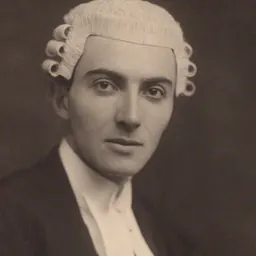
Related people
Same field, nearest in time


Contemporaries
People whose lives overlapped Richard Usborne's






Frequently asked questions
Who was Richard Usborne?
British author (1910–2006)
When was Richard Usborne born?
Richard Usborne was born on 16 May 1910 in Shimla.
When did Richard Usborne die?
Richard Usborne died on 21 March 2006.
What was Richard Usborne's occupation?
Richard Usborne was a journalist.
What nationality was Richard Usborne?
Richard Usborne was British.
Sources & further reading
Cite this page
APA: Biography.guide. (2026). Richard Usborne. https://biography.guide/richard-usborne/
MLA: "Richard Usborne." Biography.guide, https://biography.guide/richard-usborne/.
Chicago: "Richard Usborne." Biography.guide. https://biography.guide/richard-usborne/.
Data last updated: 2026-09-22 · Spot an error? Report a correction.
Page generated 2026-09-27 05:28 UTC