
About Richard Saunders Dundas
Lived 1802 – 1861 (aged 59). Richard Saunders Dundas was a British naval officer.
Vice-Admiral Sir Richard Saunders Dundas, (11 April 1802 – 3 June 1861) was a Royal Navy officer. As a captain, he took part in the capture of the Bogue forts in January 1841, during the First Opium War. He was appointed to the command of the Fleet in the Baltic Sea, in succession to Sir Charles Napier, in February 1855 and led the naval support during the latter stages of the Crimean War, enforcing a strict blockade and carrying out the bombardment of Sveaborg in August 1855. He was appointed First Naval Lord in the first Palmerston ministry in November 1857 and then, after stepping down to be Second Naval Lord during the second Derby–Disraeli ministry, he stepped up again to become First Naval Lord in the second Palmerston ministry in June 1859, remaining in office until his death. The prime minister (Viscount Palmerston) described Dundas as "a most distinguished officer".
Early career
The son of Robert Dundas, 2nd Viscount Melville and his wife Anne (née Huck-Saunders), Dundas was educated at Harrow School and joined the Royal Navy in 1817. After initial training at the Royal Navy College at Portsmouth, he joined the frigate HMS Ganymede in the Mediterranean Fleet.
Promoted to captain on 17 July 1824, Dundas took command of the sixth-rate HMS Volage on the North America and West Indies Station in September 1825 and then of the third-rate HMS Warspite on the East Indies Station in December 1826. He became secretary to his father, who was serving a second term as First Lord of the Admiralty, in 1828. Dundas was appointed Third Naval Lord in the Aberdeen ministry in January 1853 and then Second Naval Lord in the same ministry in June 1854. He was appointed to the command of the Baltic Fleet in the Baltic Sea, hoisting his flag in the first-rate HMS Duke of Wellington, in succession to James Dundas in February 1855. Dundas led the naval support during the latter stages of the Crimean War enforcing a strict blockade in the Baltic. and became Second-in-command of the Mediterranean Fleet, hoisting his flag in HMS Duke of Wellington, in April 1856.
Dundas was appointed Second Naval Lord in the First Palmerston ministry in April 1857 and then First Naval Lord in the same ministry in November 1857. Dundas stepped down to be Second Naval Lord in the Second Derby ministry in March 1858.
His body was returned to the family home, and he is buried beside his father and grandfather in the Dundas Vault in Old Lasswade Kirkyard, close to Melville Castle.
Don’t just read it —
keep it.
Full-length biographies made to live with: read them, listen on the way to work, watch them tonight.
- E-book
- Audio
- Video
Instant download · yours to keep · every purchase keeps this site free
Important facts
People in Richard Saunders Dundas's life
Named in this biography and alive at the same time
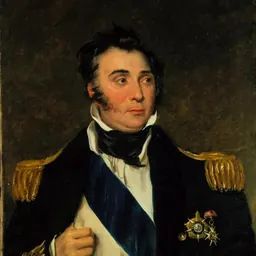


Related people
Same field, nearest in time

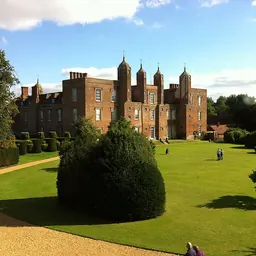
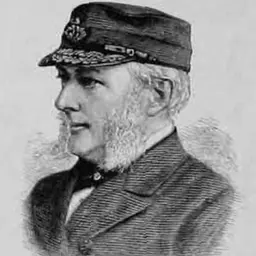
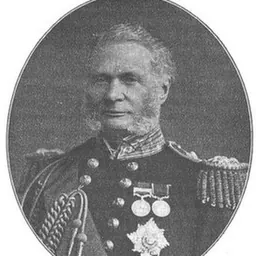


Contemporaries
People whose lives overlapped Richard Saunders Dundas's





Frequently asked questions
Who was Richard Saunders Dundas?
British Royal Navy officer (1802-1861)
When was Richard Saunders Dundas born?
Richard Saunders Dundas was born on 11 April 1802 in England.
When did Richard Saunders Dundas die?
Richard Saunders Dundas died on 3 June 1861 in London.
What was Richard Saunders Dundas's occupation?
Richard Saunders Dundas was a naval officer.
What nationality was Richard Saunders Dundas?
Richard Saunders Dundas was British.
Sources & further reading
· Wikipedia: Richard Saunders Dundas
· DBpedia: Richard Saunders Dundas
Cite this page
APA: Biography.guide. (2026). Richard Saunders Dundas. https://biography.guide/richard-saunders-dundas/
MLA: "Richard Saunders Dundas." Biography.guide, https://biography.guide/richard-saunders-dundas/.
Chicago: "Richard Saunders Dundas." Biography.guide. https://biography.guide/richard-saunders-dundas/.
Data last updated: 2026-09-20 · Spot an error? Report a correction.
Page generated 2026-09-27 05:17 UTC