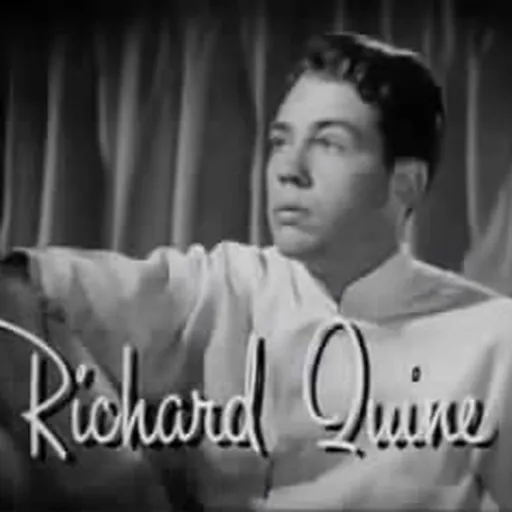
About Richard Quine
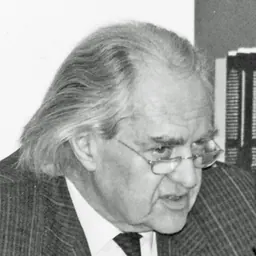
Lived 1920 – 1989 (aged 68). Richard Quine was an American film director, actor, screenwriter, stage actor, lyricist and songwriter.
Richard Quine (November 12, 1920 – June 10, 1989) was an American director, actor, and singer.
He began acting as a child in radio, vaudeville, and stage productions before being signed to Metro-Goldwyn-Mayer in his early twenties. When his acting career began to wane after World War II, Quine began working as a film director. He later moved into producing and directing television. Quine's films as director include Bell, Book and Candle (1958), The World of Suzie Wong (1960), Paris When It Sizzles (1964), How to Murder Your Wife (1965), and The Prisoner of Zenda (1979). George Axelrod called him "sweet and highly talented, but totally insane, which made him exactly my kind of person."
Career Child actor Born in Detroit, Quine's father was an actor. Quine's family moved to Los Angeles when he was six years old. As a child, he began working as a radio actor and became a minor radio star. He then appeared in vaudeville before moving on to stage roles.
Quine made his film debut in the drama Cavalcade (1933). He could also be seen in The World Changes (1933) (alongside a young Mickey Rooney), Counsellor-at-Law (1933), Jane Eyre (1934, as John Reed), Dames (1934), Wednesday's Child (1934) with Frankie Thomas, Little Men (1934), Life Returns (1935), A Dog of Flanders (1935) with Thomas, and Dinky (1935) with Jackie Cooper.
New York Quine left Los Angeles for New York City to return to stage acting. In 1939, Quine made his Broadway debut in the Jerome Kern/Oscar Hammerstein II stage musical Very Warm for May in 1939, which ran for 59 performances. The following year, he was cast as Frank Lippincott in the Broadway production of My Sister Eileen starring Shirley Booth which was a hit.
MGM actor His role in the stage version of My Sister Eileen led to Quine's being signed with Metro-Goldwyn-Mayer. Quine's first film for MGM was Babes on Broadway (1941), starring Judy Garland and Mickey Rooney. Rooney and Quine had been friends since childhood.
Just as his acting career seemed about to take off, he had to serve in the United States Coast Guard. While in the Coast Guard, he became a lieutenant and served in public relations department in San Diego, California.
Reportedly Harry Cohn offered to buy the script outright but they wanted to direct. Cohn responded: "How the hell do you think you can make a picture?" But then later another Columbia executive told Quine, "Mr. Cohn tells me you're going to direct a picture."
He was still under contract to MGM when the film was made. The film was successful and Quine was hired to a long-term contract at Columbia.
Quine continued to act for a while. He was third billed in The Clay Pigeon (1949), a low budget noir directed by Richard Fleischer and written by Carl Foreman at RKO. He had support roles in No Sad Songs for Me (1950) and Rookie Fireman (1950), both at Columbia.
At Columbia he directed some comedy shorts: A Slip and a Miss (1950) with Hugh Herbert, Foy Meets Girl (1950) with Eddie Foy, Jr, The Awful Sleuth with Bert Wheeler, and Woo-Woo Blues (1951) with Herbert.
In July 1951 he signed a seven-year contract with Columbia to direct.
Quine's first solo effort as director was the musical comedy The Sunny Side of the Street (1951) starring Frankie Laine. He followed it with Purple Heart Diary (1951) with Frances Langford.
Without Edwards, Quine directed episodes of Footlights Theater, General Electric Theater, and The Ford Television Theatre. Quine directed the film noir Pushover (1954) that launched Kim Novak as a star. Universal-International borrowed him to direct Tony Curtis in a musical, So This Is Paris (1954). Quine helped Edwards write the film that became Edwards' first feature as director, Bring Your Smile Along (1955) with Laine. Edwards and Quine wrote the script for a musical remake of My Sister Eileen (1955), which Quine directed, and He Laughed Last (1956), which Edwards directed. Quine Productions' first film was Strangers When We Meet (1960) with Kirk Douglas, Novak and Kovaks; the film was co-produced with Douglas' film production company, Bryna Productions.
Ray Stark hired him at the last minute to replace Jean Negulesco on The World of Suzie Wong (1960) with William Holden and Nancy Kwan at Paramount. Back at Columbia Quine did the narration for The Wackiest Ship in the Army (1960) with Lemmon.
Quine announced he would do several projects for his own company: The Image Makers with Glenn Ford, Roar Like a Dove with Doris Day, and The Fannie Brice Story for Ray Stark. He was also going to do Man Hunt in Kenya with William Holden. None of these films were made. He produced and directed Lemmon, Fred Astaire and Novak in The Notorious Landlady (1962), co written by Edwards. He was going to make A Bolt Out of the Blue and Fair Game with Holden and direct Sherlock Holmes on Broadway. None of these projects happened.
Quine directed and produced Paris When It Sizzles (1964) with Holden and Audrey Hepburn, done for his own company via Paramount. He went to Warner Bros. to direct Sex and the Single Girl (1964) with Curtis and Natalie Wood, then did How to Murder Your Wife (1965) with Lemmon (as a co-production between Quine Productions and Lemmon's Jalem Productions).
Quine produced and directed Synanon (1965) for Columbia, a little seen film about addicts. He returned to TV producing and directing episodes of the short-lived The Jean Arthur Show (1966). That series also lasted one season.
Quine directed Hotel (1967) for Warners. He was going to film Across the River and into the Trees but it was never made. Instead he did two films for Paramount, Oh Dad, Poor Dad, Mamma's Hung You in the Closet and I'm Feelin' So Sad (1967) for Ray Stark, and A Talent for Loving (1969). He was also meant to film The Owl and the Pussycat but Herbert Ross ended up doing it, with Barbra Streisand and George Segal.
Lyricist In addition to producing, directing and screenwriting, Quine was a lyricist. He wrote the lyrics for "Be Prepared," a song included in the film It Happened to Jane (1959), which he also produced and directed. In 1962, Quine wrote two songs, "Going Steady With a Dream" and "Strangers When We Meet," the latter the theme to the 1960 film of the same name, which Quine directed, and also for the film Don't Knock the Twist. Quine also wrote the theme song to his 1964 film Sex and the Single Girl.
1970s Quine returned to acting with a role in the movie Original: Do Not Project (1972). In the 1970s, Quine directed The Moonshine War (1970) at MGM and a pilot for a show based on Catch-22 starring Richard Dreyfuss.
He directed three episodes of Peter Falk's Columbo, including "Dagger of the Mind," an episode set in Britain. He also worked on another, much less successful NBC Mystery Movie series, McCoy, reuniting him with star Tony Curtis, whom Quine had directed in So This Is Paris and Sex and the Single Girl (1964). Quine's other directorial credits include W (1974) with Twiggy, and The Specialists (1975), and episodes of Hec Ramsey, McCloud and Project U.F.O.. His final completed film as a director was the film The Prisoner of Zenda (1979) starring Peter Sellers. Quine was hired to direct another Sellers film, The Fiendish Plot of Dr. Fu Manchu (1980). Before the script was even completed, Quine was fired owing to "creative differences" with Sellers.
Personal life Quine was married five times and had three children. His first marriage was in January 1942 to showgirl and model Susan Paley, several years his senior. On April 17, 1946, the couple adopted a ten-day-old baby boy whom they named Timothy Richard Quine. They separated on March 1, 1948, and were divorced later that year. In October 1952, Peters died of a chronic kidney infection and bronchial pneumonia, both of which were hastened by dehydration and starvation because she had stopped eating and drinking in the last few weeks of her life.
In September 1951, Quine married Barbara Bushman, the granddaughter of actor Francis X. Bushman. The couple had two children before separating in May 1958. They were divorced in March 1960.
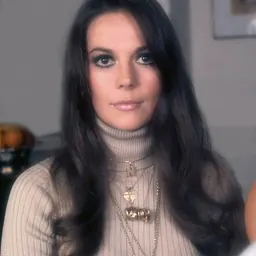
While Quine was separated from his third wife, he began dating actress Kim Novak, whom he had previously directed in Pushover (1954) and Bell, Book and Candle (1958). In 1959 the two became engaged while working on their third film together, Strangers When We Meet (1960). They planned to marry when shooting completed on Strangers but Novak ended the relationship shortly before the film was completed. He later dated actresses Judy Holliday, whom he had directed in Full of Life and The Solid Gold Cadillac (both 1956) and Natalie Wood (whom he also directed in Sex and the Single Girl (1964). On January 4, 1965, they married in Rosarito Beach, Mexico. The couple separated on June 10, 1968. In July 1969, Quine filed for divorce, citing "extreme cruelty." Their divorce became final in December 1970.
In 1977, Quine married Diana Balfour. They remained married until Quine's death in 1989.
Death After an extended period of depression and poor health, Quine shot himself in the head at his Los Angeles home on June 10, 1989. He was taken to UCLA Medical Center, where he died at the age of 68. His remains are interred in the Room of Prayer columbarium at Westwood Memorial Park in Los Angeles.
Filmography + Film Year Title Role Notes 1933 Cavalcade Uncredited 1933 The World Changes Richard, as a Boy Uncredited 1933 Counsellor at Law Richard Dwight, Jr. 1934 Jane Eyre John Reed 1934 Dames Unconfirmed role 1934 Wednesday's Child Bobby's antagonistic buddy Uncredited 1934 Little Men Ned 1935 Life Returns Mickey 1935 A Dog of Flanders Nicky Duval 1935 Dinky Jackie Shaw 1939 King of the Underworld Medical student Uncredited 1941 Babes on Broadway Morton Hammond 1941 Tish Theodore "Ted" Bowser 1942 My Sister Eileen Frank Lippincott 1942 For Me and My Gal Danny Hayden Uncredited 1942 Dr. Gillespie's New Assistant Dr. Dennis Lindsey 1942 Stand By for Action Ensign Lindsay 1943 The Rear Gunner Pilot with Sun Glasses Uncredited 1943 We've Never Been Licked Brad Craig Alternative title: Fighting Command 1946 The Cockeyed Miracle Howard Bankson Alternative title: The Return of Mr. Griggs 1948 Words and Music Ben Feiner, Jr. 1948 Leather Gloves Director, producer 1948 Command Decision Maj. George Rockton 1949 The Clay Pigeon Ted Niles 1950 No Sad Songs for Me Brownie 1950 Rookie Fireman Johnny Truitt 1950 Foy Meets Girl Director, short subject 1950 He's a Cockeyed Wonder Actor in drive-in movie Uncredited 1950 The Flying Missile Amn. Hank Weber UncreditedAlternative title: The Flying Fish 1951 The Awful Sleuth Director, short subject 1951 Woo-Woo Blues Director, short subject 1951 The Sunny Side of the Street Director 1951 Purple Heart Diary Director 1952 Sound Off Writer, director 1952 Castle in the Air Opening Narrator/Radio Announcer Writer, directorAlternative title: Rainbow 'Round My Shoulder 1953 All Ashore Writer, director 1953 Siren of Bagdad Director 1953 Cruisin' Down the River Director 1954 Drive a Crooked Road Writer (adaptation), director 1954 Pushover Director 1954 So This Is Paris Director 1955 Bring Your Smile Along Writer (story) 1955 My Sister Eileen Writer, director 1956 He Laughed Last Writer (story) 1956 The Solid Gold Cadillac Director 1956 Full of Life Director 1957 Operation Mad Ball Director 1958 Bell, Book and Candle Director 1959 It Happened to Jane Director, producer 1960 Strangers When We Meet Director 1960 The World of Suzie Wong Director 1960 The Wackiest Ship in the Army Narrator 1962 The Notorious Landlady Producer, director 1964 Paris When It Sizzles Producer, directorAlternative title: Together in Paris 1964 Sex and the Single Girl Director 1965 How to Murder Your Wife Director 1965 Synanon Producer, director 1967 Hotel Director 1967 Oh Dad, Poor Dad... Director 1969 A Talent for Loving DirectorAlternative title: Gun Crazy 1970 The Moonshine War Director 1974 W DirectorAlternative title: W is the Mark of Death 1979 The Prisoner of Zenda Director 1980 The Fiendish Plot of Dr. Fu Manchu Director (uncredited)
Don’t just read it —
keep it.
Full-length biographies made to live with: read them, listen on the way to work, watch them tonight.
- E-book
- Audio
- Video
Instant download · yours to keep · every purchase keeps this site free
Important facts
Family & relationships
People in Richard Quine's life
Named in this biography and alive at the same time





Related people
Same field, nearest in time



Contemporaries
People whose lives overlapped Richard Quine's




Frequently asked questions
Who was Richard Quine?
American actor and director (1920-1989)
When was Richard Quine born?
Richard Quine was born on 12 November 1920 in Detroit.
When did Richard Quine die?
Richard Quine died on 10 June 1989 in Los Angeles.
What was Richard Quine's occupation?
Richard Quine was a film director, actor, screenwriter, stage actor, lyricist and songwriter.
What nationality was Richard Quine?
Richard Quine was American.
Sources & further reading
Cite this page
APA: Biography.guide. (2026). Richard Quine. https://biography.guide/richard-quine/
MLA: "Richard Quine." Biography.guide, https://biography.guide/richard-quine/.
Chicago: "Richard Quine." Biography.guide. https://biography.guide/richard-quine/.
Data last updated: 2026-09-22 · Spot an error? Report a correction.
Portrait: Wikimedia Commons · author & licence
Page generated 2026-09-27 05:02 UTC