
About Richard P. Smiraglia
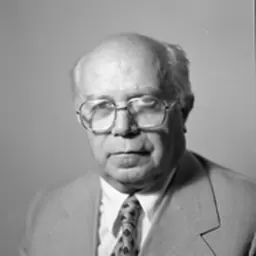
Born 1952. Richard P. Smiraglia is an American author, library scientist, university teacher, librarian and information scientist.
Richard Paul Smiraglia is an American information scientist and prominent figure in the field of knowledge organization. Smiraglia is an emeritus professor in the School of Information Studies at the University of Wisconsin–Milwaukee. He served as editor of the journal Knowledge Organization from 2005 to 2020. He is a cataloging theorist perhaps best known for his work concerning two concepts pertaining to bibliographic control, information retrieval, and knowledge organization: a definition of the meaning of a “work” derived from empirical and semiotic analysis, and “instantiation,” the phenomenon of an information object realized in time.
Smiraglia is also known for his work concerning music description and music information storage and retrieval He earned a Masters of Divinity and was ordained as an Episcopal priest in 1998.
Early life and education
Smiraglia was born in New York City on March 18, 1952, to Marcia Jane Hinds Jacob Smiraglia and guitarist Sylvio Carl Smiraglia (known professionally as Sal Salvador). Smiraglia provides a history of the treatment and role of works (as in literary works, musical works, etc. – intellectual or artistic creations) in catalogs and a survey of empirical research into the work phenomenon. Traditional modern library catalogs, Smiraglia observes, were designed to “inventory (first) and retrieve (second) specific documents,” and were built “on an assumption that there was a correspondence between a book and the work it contained – one item, one work, and vice versa." In the FRBR model, a work is a distinct intellectual or artistic creation (for instance, Shakespeare’s Romeo and Juliet); an expression is an intellectual or artistic realization of a work (the original language text of the play); a manifestation physically embodies a work’s expression (a 2007 edition of the First Quarto of Romeo and Juliet from Cambridge University Press); and an item is a single exemplar of a manifestation (a single copy of the edition of Romeo and Juliet just mentioned).
Through empirical and semiotic analysis of the work phenomenon, Smiraglia derives a somewhat more complex definition: “A work is a signifying, concrete set of ideational conceptions that finds realization through semantic or symbolic expression.” And for Smiraglia, there is no intermediate expression level, as in the FRBR model, between work and instantiation (manifestation). There are only different types of instantiations.
A work may find realization in a variety of different texts or other forms of semantic or symbolic expression, and this typically occurs once the work has acquired cultural significance and enters the canon. Romeo and Juliet, for instance, has spawned countless editions, an opera, several films, adaptations like West Side Story, and so forth. (And 30% to 60% of works in the general bibliographic population have generated families or networks of such related instantiations.) Some forms of instantiation are merely derivative, with the ideational and semantic content of the work remaining unchanged; these include simultaneous and successive editions, amplifications, and extractions. In other forms, such as translations, adaptations, and performances, ideational and semantic content experiences mutation. A mutation represents a work as a collaborative entity originating from the reaction of a culture (situated in a particular time and place) to that work. As the network of instantiations stemming from a work mutates over time, the work's cultural meaning changes accordingly.
Publications Books
Articles
Don’t just read it —
keep it.
Full-length biographies made to live with: read them, listen on the way to work, watch them tonight.
- E-book
- Audio
- Video
Instant download · yours to keep · every purchase keeps this site free
Important facts
People in Richard P. Smiraglia's life
Named in this biography and alive at the same time


Related people
Same field, nearest in time





Contemporaries
People whose lives overlapped Richard P. Smiraglia's





Frequently asked questions
Who is Richard P. Smiraglia?
information studies scholar
When was Richard P. Smiraglia born?
Richard P. Smiraglia was born on 18 March 1952 in New York City.
What is Richard P. Smiraglia's occupation?
Richard P. Smiraglia is an author, library scientist, university teacher, librarian and information scientist.
What nationality is Richard P. Smiraglia?
Richard P. Smiraglia is American.
Sources & further reading
· Wikipedia: Richard P. Smiraglia
· DBpedia: Richard P. Smiraglia
Cite this page
APA: Biography.guide. (2026). Richard P. Smiraglia. https://biography.guide/richard-p-smiraglia/
MLA: "Richard P. Smiraglia." Biography.guide, https://biography.guide/richard-p-smiraglia/.
Chicago: "Richard P. Smiraglia." Biography.guide. https://biography.guide/richard-p-smiraglia/.
Data last updated: 2026-09-20 · Spot an error? Report a correction.
Page generated 2026-09-27 05:19 UTC