
About Richard Lyons, 1st Viscount Lyons
Lived 1817 – 1887 (aged 70). Richard Lyons, 1st Viscount Lyons was a British diplomat and politician.
Richard Bickerton Pemell Lyons, 1st Earl Lyons, (26 April 1817 – 5 December 1887) was the leading British diplomat during the four great crises of the second half of the 19th century: Italian unification, the American Civil War, the Eastern Question, and the replacement of France by Germany as the dominant Continental power following the 1870 Franco-Prussian War.
Lyons resolved the Trent Affair during the American Civil War; and contributed to the Special Relationship and to the Entente Cordiale; and predicted, 32 years before World War I, the occurrence of an imperial war between France and Germany that was to destroy Britain's international dominance.
Lyons was offered the office of British Foreign Secretary on three occasions, by three different Prime Ministers (Gladstone, Disraeli, and Salisbury), and was encouraged to accept that office by Queen Victoria, but he declined every offer. Lyons endorsed the British Conservative Party faction of the 3rd Marquess of Salisbury, and was distrusted by Gladstonian Liberals as a 'Tory-leaning diplomat'.
Lyons's most recent biographer Jenkins (2014) considers Lyons to be the exemplar of the ‘Foreign Office mind’ who created a canon of practical norms of diplomacy, including the necessity for nominal neutrality in domestic party politics and for private correspondence with Cabinet ministers. Lyons founded the 'Lyons School' of British diplomacy: which consisted of Sir Edwin Egerton; Sir Maurice de Bunsen; Sir Michael Herbert; Sir Edward Baldwin Malet; Sir Frank Lascelles; Sir Gerard Lowther; Sir Edmund Monson, 1st Baronet; and Sir Nicholas O'Conor.
Family and early life Lyons was born in Boldre, Lymington, Hampshire, on 26 April 1817. His father was the diplomat and admiral Edmund Lyons, 1st Baron Lyons and his mother was Augusta Louisa Rogers. His siblings were: Anne Theresa Bickerton Lyons (1815 – 1894), who became Baroness von Würtzburg; and Captain Edmund Moubray Lyons (1819 – 1855); and Augusta Mary Minna Catherine Lyons (1821 – 1886), who became Duchess of Norfolk and the grandmother of Philip Kerr, 11th Marquess of Lothian.
His uncles included Vice-Admiral John Lyons and Lieutenant-General Humphrey Lyons (1802–1873), of the Indian Army. who throughout his career 'desired Anglo-French cooperation', and had 'a perceptive assessment of the French collective psyche', and was 'ever ready to exculpate French behaviour'.
Education
Lyons was tutored at Elizabeth College, Guernsey, by Sir John Colborne, in classics, English, French, arithmetic, and theology, where he received a Latin Prize in 1828. Lyons liked rhyming verse (including that of Lord Byron and Alexander Pope, both of which he could recite from memory), Latin verse, and melodic music.
Lyons returned to England to attend Winchester College, and subsequently Christ Church, Oxford, from which he received a BA in 1838 and an MA in 1843. During the 1880s he studied the works of John Henry Newman.
Minister to the United States Richard Lyons, 1st Viscount Lyons caricature in Vanity Fair (April 6, 1878). Lyons's diplomatic influence is demonstrated by the subtitle used instead of his name: 'Diplomacy'.
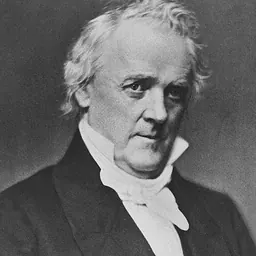
Lyons's first major appointment commenced in December 1858, after he had succeeded to his father's title of 2nd Baron Lyons, when he succeeded Lord Napier as British Envoy to the United States in Washington. He arrived in the United States two years before the outbreak of the American Civil War. The US President James Buchanan, who was ignorant of Lyons's precocious ability, was unhappy with the appointment of Lyons, who had only a few years as a diplomat: Buchanan stated that he wanted a 'man whose character was known in this country'. Lyons considered President Buchanan to be inept and described him as ‘too weak to wring his hands’.
Lord Lyons contended that the British ‘were the chosen people of history’ but was otherwise unprejudiced to French and to Americans. He was in America ‘witty and erudite’, and ‘tactful and discreet to the point of parody, and with ‘a subtle intelligence and a steely resolve’.
Geoffrey Madan records Lyons as the author of two aphorisms:
Americans are either wild or dull. If you're given champagne at lunch, there's a catch somewhere.
Lyons was reputed for his luxurious dinner parties, both when Ambassador to the United States and when Ambassador to Paris. Lyons's dinner parties ‘nothing could exceed’ in ‘dignity and faultless taste’. He agreed with Palmerston's remark that ‘dining is the soul of diplomacy’, and offered five courses of Moet and Chandon champagne to United States Senators.
Lyons's early American actions Lord Lyons resolved during 1859 the San Juan Island crisis (the "Pig War") by advanced informal disclosure of the ultimatum that he had been instructed to deliver to the US that enabled an agreement to occur before the animosity between Britain and the US created violence. Lyons then revised his judgement to predict an increasingly bloody conflict that would be won by the Union, but after which the Union would disintegrate as a consequence of internal animosities.
Lyons advocated British non-intervention and neutrality with both the North and the South. He considered Lincoln to be unrefined, and he thought U.S. Secretary of State William H. Seward to be abnormally prejudiced against Britain.
Lyons resigns from Washington Lord Lyons in December 1864 left Washington as a consequence of insufficient health, after his final meetings with Abraham Lincoln and with Seward, both of whom wished for his return to the position of British Ambassador at Washington. However, Lyons's health subsequently deteriorated further and, in the spring of 1865, compelled Lyons to resign his Ambassadorship to the United States. Lyons refused the preference of Queen Victoria and of the British Prime Minister Lord Palmerston that he return to his post in the USA, and he nominated Sir Frederick Bruce to be his successor: which the Queen and the Prime Minister accepted. and died on 5 December at Norfolk House, which was the residence of his nephew Duke of Norfolk. Lyons left to his brother-in-law The Duke of Norfolk, and to Arundel Castle, the possessions and the decorations of his father, Edmund, 1st Baron Lyons. Lyons's most recent biographer Jenkins (2014) considers Lyons to be the exemplar of the ‘Foreign Office mind’ who created a canon of practical norms of diplomacy, including the necessity for nominal neutrality in domestic party politics and for private correspondence with Cabinet ministers. Lyons attained the height of his influence during the premierships of his political ally the 3rd Marquess of Salisbury, who offered him the position of Foreign Secretary in 1886. In the 21st century, including by his biographer Brian Jenkins (2014), and by T. G. Otte (2011), and by Scott Thomas Cairns (2004), Lyons has been identified as a founder of a 'Lyons School' of British diplomacy that consisted of Sir Edwin Egerton; Sir Maurice de Bunsen; Sir Michael Herbert; Sir Edward Baldwin Malet; Sir Frank Lascelles; Sir Gerard Lowther; Sir Edmund Monson, 1st Baronet; and Sir Nicholas O'Conor.
Literary legacy Lyons was the great-granduncle of the writer Maisie Ward, and the great-great-granduncle of the translator Rosemary Sheed and of the writer Wilfred Sheed.
Lyons is a minor character in the alternate history novel Guns of the South by Harry Turtledove, and in the Southern Victory Series novel The Great War: American Front by Turtledove, in which he is sent to Washington, D.C., after the Battle of Camp Hill, to advise Abraham Lincoln that the United Kingdom and the Second French Empire were to recognise and defend the Confederate States of America, after the Union was decisively defeated in battle. Lyons is also a minor character in the historical novel Freedom by William Safire.
Don’t just read it —
keep it.
Full-length biographies made to live with: read them, listen on the way to work, watch them tonight.
- E-book
- Audio
- Video
Instant download · yours to keep · every purchase keeps this site free
Important facts
People in Richard Lyons, 1st Viscount Lyons's life
Named in this biography and alive at the same time

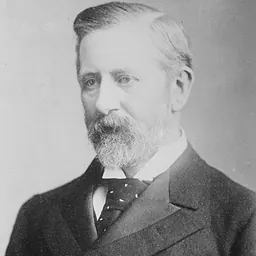


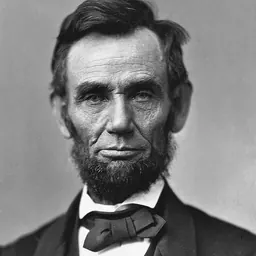
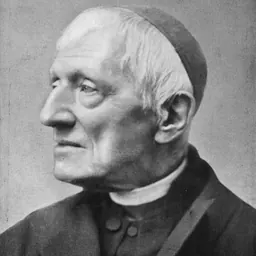
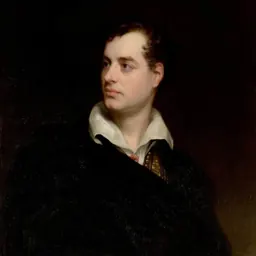
Related people
Same field, nearest in time




Contemporaries
People whose lives overlapped Richard Lyons, 1st Viscount Lyons's



Frequently asked questions
Who was Richard Lyons, 1st Viscount Lyons?
British diplomat (1817-1887)
When was Richard Lyons, 1st Viscount Lyons born?
Richard Lyons, 1st Viscount Lyons was born on 6 April 1817 in Lymington.
When did Richard Lyons, 1st Viscount Lyons die?
Richard Lyons, 1st Viscount Lyons died on 5 December 1887 in London.
What was Richard Lyons, 1st Viscount Lyons's occupation?
Richard Lyons, 1st Viscount Lyons was a diplomat and politician.
What nationality was Richard Lyons, 1st Viscount Lyons?
Richard Lyons, 1st Viscount Lyons was British.
Sources & further reading
· Wikipedia: Richard Lyons, 1st Viscount Lyons
· DBpedia: Richard Lyons, 1st Earl Lyons
Cite this page
APA: Biography.guide. (2026). Richard Lyons, 1st Viscount Lyons. https://biography.guide/richard-lyons-1st-viscount-lyons/
MLA: "Richard Lyons, 1st Viscount Lyons." Biography.guide, https://biography.guide/richard-lyons-1st-viscount-lyons/.
Chicago: "Richard Lyons, 1st Viscount Lyons." Biography.guide. https://biography.guide/richard-lyons-1st-viscount-lyons/.
Data last updated: 2026-09-20 · Spot an error? Report a correction.
Page generated 2026-09-27 05:26 UTC