
About Richard Lee Morton
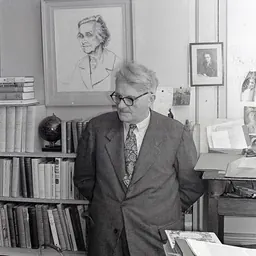
Lived 1889 – 1974 (aged 84). Richard Lee Morton was an American historian, editor and teacher.
Richard Lee Morton (September 20, 1889 – September 8, 1974) was an American historian, professor, author, and editor who led the history department at the College of William & Mary in Williamsburg, Virginia, United States. While a professor at William & Mary for nearly 40 years, Morton helped relaunch the William and Mary Quarterly in its third series and served as its editor. Morton was considered a leader among the college's staff and led the faculty's response to the 1951 William & Mary scandal. Morton authored and co-authored several histories on Virginia, including his 1960 Colonial Virginia, a two-volume text that became the standard work on the subject.
After his 1959 retirement from William & Mary, the college named an academic hall for him. Morton Hall was renamed in 2021 due to racist and white supremacist ideas in some of Morton's works, including his doctoral thesis, The Negro in Virginia Politics. The William and Mary Quarterly began awarding a prize named for Morton in 1986; the prize has since been renamed.
Early life and education Morton was born in Prince Edward County, Virginia, on September 20, 1889, to John Robert Morton and Mildred Henry Morton . From the Falkland area of the county, Morton was first educated in a log schoolhouse. He attended undergraduate at Hampden–Sydney College in Hampden Sydney, Virginia, graduating with a Bachelor of Arts degree in 1910. He then received a Master of Arts degree from the University of Virginia in Charlottesville, Virginia, in 1915. He received another Master of Arts degree from Harvard University in 1917. Morton completed his PhD at the University of Virginia in 1918.
In 1917 and 1918, Morton was the Phelps Stokes Fellow at the University of Virginia. The fellowship was sponsored by the Phelps Stokes Fund to encourage interest in African-American history from white southern scholars in hopes of improving cooperation between races.
Career Teaching Morton would later say that, while a student at the University of Virginia, he had told a professor that the " William & Mary is going to grow. That man, Chandler, is a promoter. He'll build that place." In 1919, Morton became an associate professor of history and political science at the College of William & Mary in Williamsburg, Virginia, where he would teach for 40 years. He was made professor of history and the chairman of the college's history department in 1921.
On January 14, 1922, the college formally opened the Marshall–Wythe School of Law. Led by the lawyer and later Virginia governor John Garland Pollard, Morton was one of several professors from the college to begin teaching at the new law school. In practice, the law school did produce law degrees but comprised little more than professors who had a new title but remained within their original departments at the college. After Pollard left the school in 1929, it gradually faded into obscurity over the 1930s.
1951 scandal
In the years preceding the 1951 William & Mary scandal, the William & Mary Indians football program had an era where the college had a run of winning seasons in what was referred to as "big-time" football under the successive head coaches Carl M. Voyles and Rube McCray. The William & Mary Indians men's basketball team, under head coach Barney Wilson, had also enjoyed success in the prior seasons. In 1951, it became public knowledge that the coaching staff and college athletic department had falsified grades and pressured professors into giving students on the football team better scores. As the misconduct was revealed, the college faculty met on July 3, 1951, and chose Morton as the chairman of a faculty board to investigate the misconduct by McCray and Wilson.
On September 17, 1951, the William & Mary faculty voted unanimously to support a document criticizing the administration of the college's athletic program. The document described the athletic program as a malignant presence at the college in the wake of the scandal. Morton signed the original document, which was published in The Flat Hat on September 20 and became known as the "Manifesto" on campus. In response to the scandal, McCray, Wilson, and president Pomfret resigned. Alvin Duke Chandler, a vice admiral in the US Navy and son of J. A. C. Chandler, was selected to become William & Mary's next president.
Writing and editing Morton's first article, "The Virginia State Debt and Internal Improvements, 1820–38", was published in the Journal of Political Economy in 1917. A 1920 negative review in The Journal of Negro History said "the whole study is from the white man's point of view" and that Morton believed racial harmony had been achieved in Virginia through the exclusion of African Americans from politics. Morton's thesis was later reprinted. The Institute of Early American History and Culture was created in December 1943, Its establishment part of the then-William & Mary president Pomfret's push for increased research activity by the college. As an independent organization, it was jointly sponsored by the college and Colonial Williamsburg. One of the roles the institute would take on was publication of the William and Mary Quarterly. The quarterly, which had been edited by the college's librarian Earl Gregg Swem, had previously focused on Virginian history and genealogy. In January 1944, with Morton as its new head editor, it began publishing its third series with a broadened scope that included the history from 1492 to 1815 in the area that became the US. Morton remained the journal's editor until 1947.
Personal life and death
On December 20, 1919, Morton married Lillie Estelle Dinwiddie. Known as Estelle, Morton's wife would assist in his historical writings.
Morton lived in Chandler Court neighborhood of Williamsburg, a suburban development conceived by John Garland Pollard which housed many William & Mary faculty adjacent to the campus. Morton had his home built in 1923 across the common green on Chandler Court from Swem. Morton also had a house built in the neighborhood in 1931 to serve as rental property.
Swem and Morton were neighbors for about 30 years. Swem, who was from Iowa but had adopted conservative values of the Old South, had been a founding editor of the second series of the William and Mary Quarterly. Morton had rarely left Virginia since his birth but had liberal political and social values. Swem said that he and Morton lived amicably near one another and did not discuss their political differences. Morton and his wife would give Swem and his wife rides to vote, with Morton commenting that their votes would cancel each other out.
Morton died in Williamsburg Community Hospital in Williamsburg on September 8, 1974, after a period of declining health. At the time of his death, his wife was being treated as a patient in the same hospital. Two sisters and a brother, all residents of Virginia, survived Morton, as did his daughters. His funeral was held in the Williamsburg Presbyterian Church.
The Art Commission of the Commonwealth of Virginia commissioned the artist David Silvette to paint a portrait of Morton for display in Morton Hall. When Silvette presented the portrait to the commission in 1972, the commission conditioned their acceptance of the painting on Silvette modifying it. A series of court cases followed, with Silvette arguing that the commission's requirement that he modify the painting was a violation of Silvette's First Amendment right to free expression. The Virginia Supreme Court and federal District Court for the Eastern District of Virginia both rejected Silvette's argument. The painting of Morton was placed on display in Morton Hall without modification.
The Richard L. Morton Award, a prize awarded by the William and Mary Quarterly to an article with an author who was in graduate research when they made the article's final submission to the journal, was established in 1986. It has since been renamed as the WMQ New Voices Prize.
Don’t just read it —
keep it.
Full-length biographies made to live with: read them, listen on the way to work, watch them tonight.
- E-book
- Audio
- Video
Instant download · yours to keep · every purchase keeps this site free
Important facts
People in Richard Lee Morton's life
Named in this biography and alive at the same time


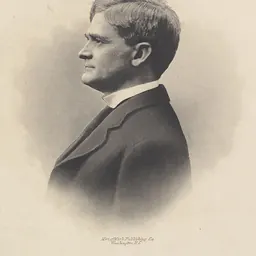




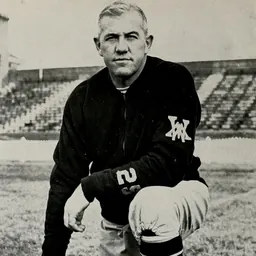
Related people
Same field, nearest in time
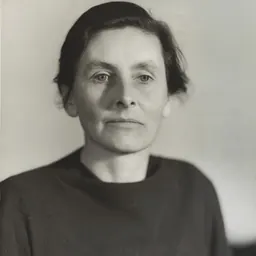

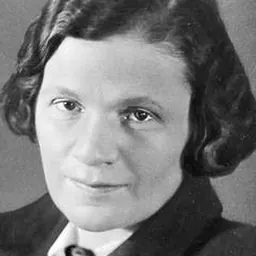

Contemporaries
People whose lives overlapped Richard Lee Morton's




Frequently asked questions
Who was Richard Lee Morton?
American historian, College of William & Mary professor, and editor of the William and Mary Quarterly
When was Richard Lee Morton born?
Richard Lee Morton was born on 20 September 1889 in Prince Edward County.
When did Richard Lee Morton die?
Richard Lee Morton died on 8 September 1974 in Williamsburg.
What was Richard Lee Morton's occupation?
Richard Lee Morton was a historian, editor and teacher.
What nationality was Richard Lee Morton?
Richard Lee Morton was American.
Sources & further reading
· Wikipedia: Richard Lee Morton
Cite this page
APA: Biography.guide. (2026). Richard Lee Morton. https://biography.guide/richard-lee-morton/
MLA: "Richard Lee Morton." Biography.guide, https://biography.guide/richard-lee-morton/.
Chicago: "Richard Lee Morton." Biography.guide. https://biography.guide/richard-lee-morton/.
Data last updated: 2026-09-20 · Spot an error? Report a correction.
Page generated 2026-09-27 04:59 UTC