
About Richard L. Hay
Lived 1926 – 2006 (aged 79). Richard L. Hay was an American geologist and writer.
Richard LeRoy Hay (April 29, 1926 – February 10, 2006) was an American geologist whose most famous work was as the principal geologist working with Mary Leakey at Olduvai Gorge, the site of many important hominid finds in the study of human evolution. His scientific impacts went much further, however, including fundamental contributions to our understanding of the interactions of water, minerals, and organisms near the Earth's surface. He held the position of Professor of Geology at the University of California, Berkeley for 26 years (1957-1983) and at the University of Illinois for another 11. His life and scientific contributions were celebrated with a special session of the Geological Society of America at the national meeting in 2007.
Early life and education Hay was born in Goshen, Indiana, to parents Edward Hay, a dentist, and Angela Hay. He attended Northwestern University where he received a bachelor’s degree in 1946 and a master’s in 1948. He obtained a PhD from Princeton University in 1952.
Academic career In 1955, after serving two years in the U.S. Army Corps of Engineers, Hay began his career in academia when he joined the faculty at Louisiana State University in Baton Rouge as an assistant professor. which continues to be the unsurpassed book on the subject. Hay himself would become a top petrographer, a skill which would prove instrumental in much of his work. Hay’s work also provided the definitive geological framework for two famous hominid-bearing sites in East Africa, Olduvai Gorge and Laetoli, and discovered the mega-replacement of Cambrian-Ordovician strata throughout the U.S. mid-continent by low-temperature potassium feldspar.
Hay’s work at Olduvai Gorge and the establishment of a detailed understanding of that complex stratigraphy took twelve years of field study. His geological knowledge and skill in sedimentary petrography were instrumental in this long-term endeavor, during which Hay was able to work out a complete geological history and paleogeography of the gorge area, analyzing sediments which were deposited over the last two million years. In his establishment of a chronology of the various sedimentary beds at Olduvai, it could be shown among other things, that there were multiple hominid taxa living contemporaneously at Olduvai. The resulting publication of his work at Olduvai, Geology of the Olduvai Gorge (1976) was a seminal study of the environment of early humans in East Africa and continues to be a foundational tool for scientists studying early human origins in East Africa.
Honors Hay was a Fellow of the American Association for the Advancement of Science, a Fellow of the Geological Society of America (GSA), and a Fellow of the California Academy of Sciences; he was recognized by each for his outstanding contributions to geology. Hay received both the Kirk Bryan Award in 1978 and the Rip Rapp Archaeological Geology Award in 2000 from GSA in recognition of his Geology of the Olduvai Gorge. In 2001, Hay also received the Leakey Prize, one of the most distinguished awards in the field of human origins.
The following is an excerpt from Hay’s acceptance speech for the Leakey Prize in 2001:“My acquaintance with Olduvai began in 1961 with a look at rock samples which my colleague Garniss Curtis brought back for K-Ar dating. At that time I was interested in the zeolites of desert lakes, and these samples were loaded with zeolites. I was quick to accept an opportunity to go there in 1962. The main purpose was to work on the stratigraphy of Bed I and resolve some of the controversy over the age of Zinjanthropus, who had been given the almost unbelievable age of 1.75 million years. The stratigraphy of the gorge quickly proved to be an irresistible puzzle. I love puzzles, and this one took me 12 years to get most of the pieces in the right places. The zeolites were great fun and developed into a nice line of evidence about the paleoclimate. … I thank you very much for this honor today, and I wish all of you the same enjoyment in your work that … I experienced at Olduvai Gorge.”
Death He died of pulmonary fibrosis on February 10, 2006 at his home in Tucson, Arizona.
Don’t just read it —
keep it.
Full-length biographies made to live with: read them, listen on the way to work, watch them tonight.
- E-book
- Audio
- Video
Instant download · yours to keep · every purchase keeps this site free
Important facts
People in Richard L. Hay's life
Named in this biography and alive at the same time



Related people
Same field, nearest in time

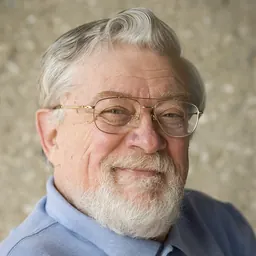
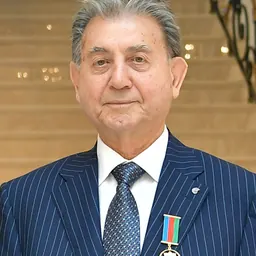


Contemporaries
People whose lives overlapped Richard L. Hay's


Frequently asked questions
Who was Richard L. Hay?
American geologist (1926–2006)
When was Richard L. Hay born?
Richard L. Hay was born on 29 April 1926 in Goshen.
When did Richard L. Hay die?
Richard L. Hay died on 10 February 2006 in Tucson.
What was Richard L. Hay's occupation?
Richard L. Hay was a geologist and writer.
What nationality was Richard L. Hay?
Richard L. Hay was American.
Sources & further reading
· DBpedia: Richard L. Hay (geologist)
Cite this page
APA: Biography.guide. (2026). Richard L. Hay. https://biography.guide/richard-l-hay-geologist/
MLA: "Richard L. Hay." Biography.guide, https://biography.guide/richard-l-hay-geologist/.
Chicago: "Richard L. Hay." Biography.guide. https://biography.guide/richard-l-hay-geologist/.
Data last updated: 2026-09-22 · Spot an error? Report a correction.
Page generated 2026-09-27 05:04 UTC